
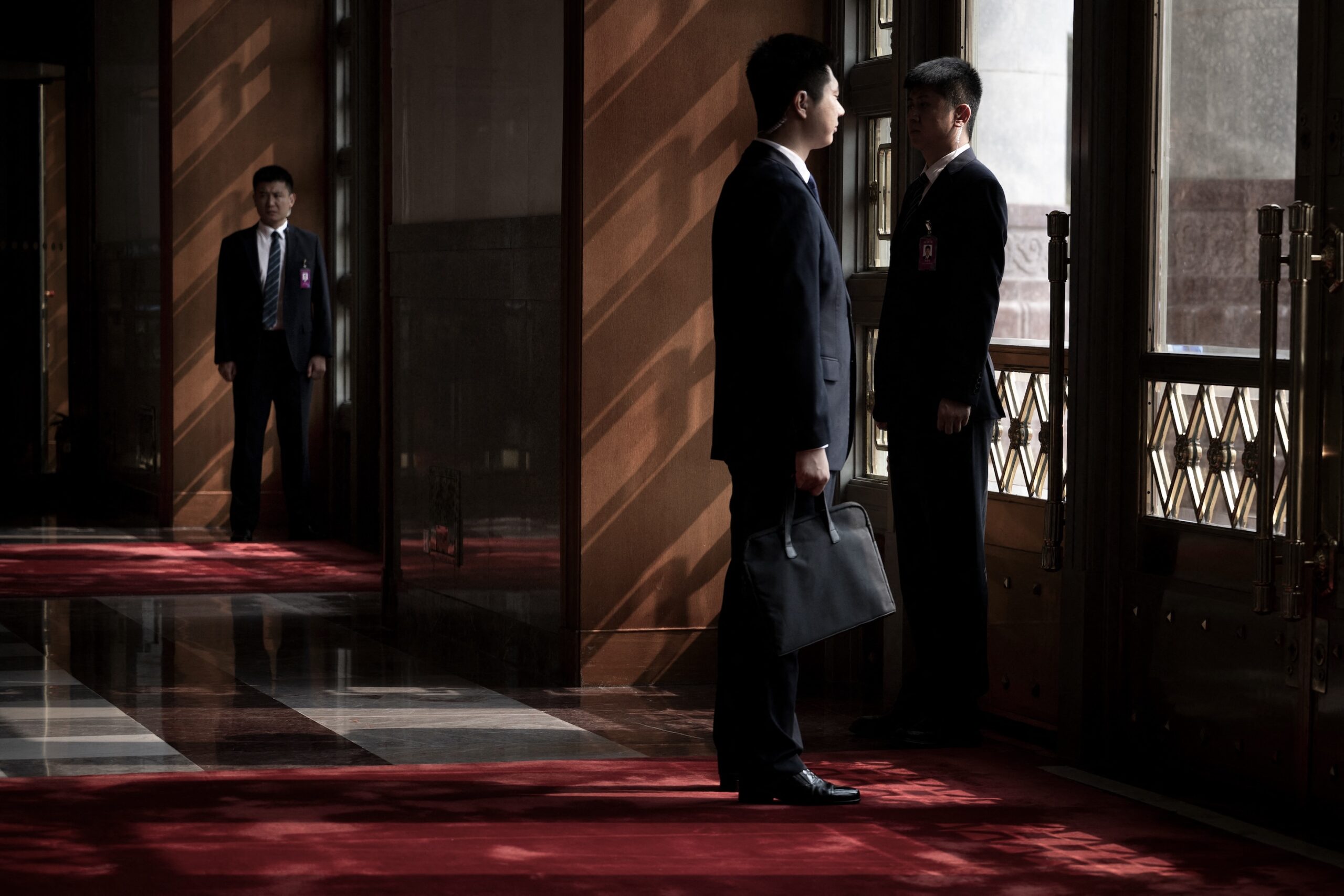
Since the establishment of the Communist Party of China in 1949, every summer in July and August, the Beidaihe Resort Area in Qinhuangdao City, Hebei Province, is heavily guarded. Communist Party elders and high-ranking current leaders gather in Beidaihe for vacation-style meetings, and each year there are hidden stories of power struggles within the Party circulating.
Most observers believe that in recent years, the Beidaihe meetings have shifted from a time of elder statesmen governing to a focus on power struggles that extend beyond the official meetings in Beidaihe. This year, the so-called vacation in Beidaihe has evolved into a forum for high-level Communist Party officials to conspire to suppress internal dissent and expand their influence externally. However, as power reaches its peak, it often signals the late stage of a political regime.
Since Xi Jinping came to power in 2012, rumors have been rife in Beidaihe, with the changing stories of power struggles clearly outlining the trajectory of power shifts.
The year 2012 marked a power transition, with political unrest and turmoil in the Zhongnanhai leading up to the 18th National Congress of the Communist Party of China.
In February 2012, Wang Lijun, the Vice Mayor of Chongqing and Director of the Public Security Bureau, sought refuge at the U.S. Consulate in Chengdu, triggering a political tsunami within the Communist Party’s top echelons and leading to the downfall of Bo Xilai, the ambitious Chongqing Party Secretary who sought to climb higher.
At the Beidaihe meeting held in August of the same year, fierce factional struggles ensued. During that period, the senior Communist Party officials held only a few days of meetings, discussing the final list of over two thousand delegates for the upcoming 18th National Congress, with no consensus on the proposed new leadership list. Retired elder statesman Jiang Zemin and then-Party leader Hu Jintao engaged in heated disputes over personnel arrangements for the 18th Congress, with Hu ultimately leaving the Beidaihe meeting dissatisfied.
Following this Beidaihe meeting, Xi Jinping, who was set to succeed at the 18th Congress, suddenly disappeared at the end of August. International media reports presented different versions of the “story.”
Some said that at the time, a military officer attempted to assassinate Xi but failed; others claimed Xi suffered a “back injury” while swimming. Some foreign media reported a brawl and violent acts during an internal meeting of the “second generation reds,” where Xi Jinping was hit by a chair thrown at his back. However, the more prevalent narrative was that Xi erupted in anger due to dissatisfaction with political arrangements.
Insider sources revealed that Xi only learned towards the end of his succession process that he was not the ultimate decision-maker, as the elders had a hand in the arrangements. Xi then refused to cooperate, adopting a confrontational stance that unnerved the elders. Driven by the common interest of preserving the Party, the elders made concessions, appeasing Xi Jinping and enabling his re-emergence.
At the subsequent 18th National Congress, the then-General Secretary Hu Jintao announced that he had decided to relinquish all his positions and transfer power fully to Xi. Xi Jinping, in turn, praised Hu for his “upright conduct.”
The 2013 Beidaihe meeting focused on how to handle the retirement of Zhou Yongkang in 2012. Rumors of “strangulating Zhou Yongkang” circulated during the Beidaihe meeting, creating quite a stir.
Around the time of the Beidaihe meeting, Zhou Yongkang attempted to assassinate Xi Jinping at least twice: once by planting a timed bomb in the meeting room and another by injecting poison into Xi Jinping while he underwent a medical examination at the 301 Hospital. Sources revealed that these assassination attempts were carried out by Zhou’s assistant and bodyguard Tan Hong, who was arrested on December 1 of that year.
Xi Jinping’s consolidation of power after taking office disrupted the financial paths of the power elite, fueling their resentment, with some factions attempting to impeach Xi Jinping during the Beidaihe meeting. The situation was complicated, and Xi Jinping even temporarily relocated to the Western Mountain Military Command Center to be prepared for any emergencies.
Ahead of the 2014 Beidaihe meeting, on July 29, Xinhua News Agency unexpectedly announced the “initiation of investigations” against Zhou Yongkang.
The agenda of the Beidaihe meeting that year involved the discussion of three individuals related to anti-corruption efforts, including Zhou Yongkang, who had already been announced to have fallen, and Li Chuncheng and Guo Boxiong, whose announcements were pending. The anti-corruption campaign, particularly the struggle related to Zhou Yongkang, was a focal point, with overseas media describing it as “tumultuous waves at Beidaihe.”
By mid-August, sources revealed that major interest groups within the Party, using proxies at the top levels, pressured Xi Jinping and Wang Qishan to influence the judicial trial of Zhou Yongkang. There were even explicit suggestions from Jiang Zemin’s political elders for a trial focusing on Zhou’s family members, secretaries, and subordinates, followed by a disciplinary action against Zhou Yongkang. The tough-talking political elders from the Jiang faction and the current committee members affiliated with them engaged in heated arguments with Xi and others during the meeting. In June 2015, Zhou Yongkang was ultimately sentenced to life imprisonment.
The 2015 Beidaihe meeting coincided with the height of Xi Jinping’s anti-corruption campaign since taking office. The case of Guo Boxiong, one of the most challenging and sensitive, was resolved just before the National Day military parade.
In July that year, Zhou Yongkang’s former associate, Zhou Benshun, was announced to have fallen from grace in Hebei, becoming the first provincial Party secretary to fall after the 18th National Congress. Hebei is strategically important for guarding the capital and is located near Beidaihe, where Zhou Benshun had visited before his downfall.
After Zhou Benshun’s fall, former Hong Kong journalist Jiang Weiping revealed that Zhou Benshun had participated in a second political coup involving Jiang Zemin and Zeng Qinghong. He had prepared a top-secret report challenging the Xi Jinping administration, a so-called “political bomb,” which led to Xi Jinping swiftly taking action against him.
The 2016 Beidaihe meeting was preparatory for the 19th National Congress of the Communist Party of China coming a year later. With five out of seven members of the Political Bureau due to retire due to age, there was intense infighting at the Beidaihe meeting.
Yu Zhengsheng, Zhang Dejiang, and Zhang Gaoli negotiated their retirement at the Beidaihe meeting, bargaining for more privileges in their future. After Zhang Gaoli’s retirement, a scandal involving his connection to tennis star Peng Shuai emerged, which Xi Jinping overlooked as per the prior agreements made at the Beidaihe meeting.
At this meeting, Wang Qishan was explicitly instructed to retire to the secondary line and assume the position of Vice President. Xi Jinping exerted great effort to make this happen because Wang Qishan’s anti-corruption work had been highly successful.
Since coming to power, Xi Jinping’s relationship with Premier Li Keqiang had become increasingly tense. At the March Two Sessions, there were scenes of mutual disregard between the two, foreshadowing Li Keqiang’s subsequent removal from office after the 20th Congress. Li Keqiang’s fate raised suspicions of assassination, burdening Xi Jinping with clouds of doubt.
In the run-up to the 2017 Beidaihe meeting, rumors of a coup were circulating. Sun Zhengcai, the former Chongqing Party Secretary, who was once seen as a “crown prince,” was suddenly placed under investigation on July 24 of that year. This was just ahead of the 19th National Congress of the Communist Party, which was to take place in October the same year.
Official reports accused Sun Zhengcai of having extreme political ambitions and inflating his personal desires. Mainland media publicly revealed that Sun Zhengcai’s mistress had prepared a dragon robe for him and prayed to him daily at home.
Some overseas political analysts speculated on the reasons for Sun Zhengcai’s downfall, suggesting he might have been involved or plotted a form of coup – rallying anti-Xi forces around him, positioning Sun Zhengcai as their leader to challenge Xi Jinping to a decisive battle.
In the lead-up to the 2017 Beidaihe meeting, there were reports of Xi Jinping having bulletproof glass installed in Villa 0 at Beidaihe. Security measures at the Beidaihe Resort Area were heightened to the highest level by the Central Commission for Discipline Inspection.
In March 2018, Xi Jinping successfully removed term limits for the President, sparking controversies. Around the time of the 2018 Beidaihe meeting, various rumors and messages circulated widely on the internet.
At that time, the most widespread rumors included: 1) Wang Huning was forced to step down due to the failure in the China-US trade war; 2) Hu Chunhua would become the successor to the General Secretary position; 3) a second round of constitutional amendments would bring back term limits for the President. There were also rumors suggesting that a group of elders jointly petitioned the Politburo, pointing out the left-leaning tendencies and personality cult emerging after the 19th National Congress of the Communist Party, demanding an expanded meeting of the Political Bureau.
Another rumor suggested that “the Number One will rest, the Great Sea will lead.” In this case, “the Number One” referred to Xi Jinping, and the leading “Great Sea” was allegedly one of the members of the Political Bureau and Vice President, Wang Yang.
In the 2019 Beidaihe meeting, topics such as the ongoing China-US trade war and the Hong Kong “anti-extradition bill” were reportedly discussed. Hong Kong media revealed that Hu Jintao had issued a rare warning to current high-ranking officials, cautioning them not to become villains in Hong Kong. Wen Jiabao also made a statement to Xi Jinping, “We have said what we need to say; you handle the situation.” However, in the end, Xi Jinping did not heed the advice of Hu and Wen.
In the run-up to the 2020 Beidaihe meeting, the Chinese regime faced a series of internal and external crises, including the COVID-19 pandemic, floods in the Yangtze River, the implementation of the Hong Kong National Security Law, and the escalating tensions between the US and China, causing a national stir.
According to reports from Hong Kong media, high-ranking Communist Party officials extended their stay during the Beidaihe vacation time in 2020. Apart from Li Zhanshu returning to Beijing halfway to preside over the NPC Standing Committee meeting, the rest of the officials did not appear until August 16.
During this time, it was exposed by foreign media that the relatives of Politburo Standing Committee members Li Zhanshu and Wang Yang owned a total of 51 million worth of luxury homes in Hong Kong. Prior to the Beidaihe meeting, Xi Jinping confiscated the assets of the Tomorrow Group of the elder Party families, including Xiao Jianhua, who subsequently issued a strong statement refuting official claims. These events sparked a lot of speculation and conjecture.
In early August 2021, a video was circulated by netizens showing a checkpoint at the exit of the Beidaihe expressway, barring cars coming from Haidian and Changping in Beijing, either turning them back or placing them under a 14-day quarantine. This raised suspicions that despite the ongoing COVID-19 pandemic, Communist Party leaders may still have been meeting in Beidaihe.
On July 31st before the Beidaihe meeting, Xi Jinping chaired a collective study session of the Political Bureau on the theme of “strengthening the military,” followed by Party media emphasizing “military loyalty” and “absolute leadership.” With the pandemic escalating and the military also struggling, there was a sense of unease in Xi Jinping about the stability of the armed forces.
2022 was the year leading up to the 20th Congress of the Communist Party of China, and rumors circulated about Xi Jinping having a “brain aneurysm,” reported first by foreign media and then spread widely on Chinese social media platforms abroad. During the Beidaihe meeting, there was a period where political rumors of “Xi stepping down, Li taking over” circulated.
After the Beidaihe meeting, Xi Jinping visited the Northeast, while Li Keqiang went on a tour to Shenzhen, with their speeches indicating a growing separation. Xi Jinping emphasized safeguarding the Red territories during his visit to the Liaoshen Campaign Memorial Hall, while Li Keqiang paid tribute to Deng Xiaoping in the south, advocating for reform and opening up. However, the Xi Jinping-Xi Li relationship was strained, with Xi Jinping’s administration censoring Li Keqiang’s speeches on public platforms.
Xi Jinping unsurprisingly secured a third five-year term at the 20th Congress and removed members like Li Keqiang, Wang Yang, and Hu Chunhua, affiliated with the faction, from the Politburo. Under international media scrutiny, Xi Jinping harshly expelled former Party Secretary Hu Jintao, who had voiced objections to the personnel arrangements, from the venue, with no one daring to protest.
While Xi Jinping emerged victorious, the country witnessed a “blank paper movement,” challenging his much-criticized “zero-COVID” policy.
In 2023, a year of Xi Jinping’s seemingly consolidated power reign, Beidaihe meetings should have ceased. Even if the senior officials were vacationing there, they would have been under tight surveillance. However, some living Communist Party elders found themselves entangled in rumors once again.
During those months, top military and political figures handpicked by Xi Jinping began to be purged. General Qin Gang, the former Foreign Minister of the Communist Party, was suddenly removed from office after being missing for a month, followed by the disappearance of Li Shangfu, the Minister of National Defense at the end of August. Several foreign media outlets reported that Li Shangfu had implicated eight military officials from the Department of Equipment Development. Before that, several former and current commanders and deputy commanders of the Rocket Force had been detained.
The Nikkei Asian Review published two articles on September 5 and 21 of the same year alleging that during the Beidaihe meeting, a group of elders led by former State Vice President Zeng Qinghong criticized Xi Jinping, and former Central Military Commission Vice Chairman and General Chai Haotian applied pressure on Xi Jinping with a grave expression.
The accuracy of these reports remains unconfirmed. However, the Third Plenum of the 20th Central Committee, which should have taken place the previous autumn, was repeatedly delayed and finally held in July 2024. Before the Third Plenum, two former Ministers of National Defense, Wei Fenghe and Li Shangfu, were expelled from the Party, stripped of their military positions, and demoted from their rank of General.
This illustrates the intense internal power struggles within the Zhongnanhai, compelling Xi Jinping to make tough decisions.
As the Chinese economy continued to decline post-lockdown, both economic and political risks increased simultaneously, leading authorities to increase internal clean-up efforts to deter disloyalty. Even Qin Gang, the Foreign Minister handpicked by Xi Jinping, suddenly fell from grace, becoming the center of scandal and the subject of an attempted cover-up. Two former Ministers of Defense, Wei Fenghe, was charged with “loyalty breaches,” implying involvement in treason, while Li Shangfu was implicated in bribery, with authorities unwilling to disclose the recipient.
During the Beidaihe meeting in 2024, rumors of a “political upheaval” circulated widely. A screenshot of a conversation attributed to the Red Second Generation General Yang Xiaoping was shared online, ominously stating, “Awaiting that thunderous moment.” Speculation surfaced about Xi’s possible resignation due to illness, with Hu Chunhua or Ding Xuexiang taking over, while a sensational story of Hu Jintao’s family poisoning and the arrest of Wen Jiabao’s relatives circulated (later debunked as rumors by various fact-checkers). Simultaneously, reports emerged of Liu Yuan and other retired military officials boycotting the August 1st event, treating Zhang Yuxia and Liu Zhenli as “prerequisites in the military.”
Scholar Yuan Hongbing in Australia revealed that some Red Second Generation families had reached a consensus to widely disseminate Xi Jinping’s alleged betrayal of reform and opening-up, his disastrous impact on the country, and his despotic behavior, aiming to incite widespread condemnation against Xi Jinping.
In the shadowy world of Chinese politics, it is challenging to discern fact from fiction in the rumors surrounding the Beidaihe meetings. Some may originate from factional leaks, reflecting the real concerns of officials and the Red Second Generation, while others may simply serve as emotional outbursts in overseas communities. However, in Chinese history, during times of turbulent political rumors, they often coincide with fervent public sentiments and expectations of momentous change or regime change. Consequently, international observers have long used Communist Party political rumors to analyze the evolving political dynamics.
*(Original news source: Epoch Times)*