
Children’s tooth decay remains a common issue in Chinese families in Southern California, but frontline dentists have observed a gradual increase in the emphasis on “preventive dental care” by parents in recent years. The policies in American schools promoting early check-ups and the growing awareness of preventive care are quietly changing the landscape of children’s oral health in the Chinese community.
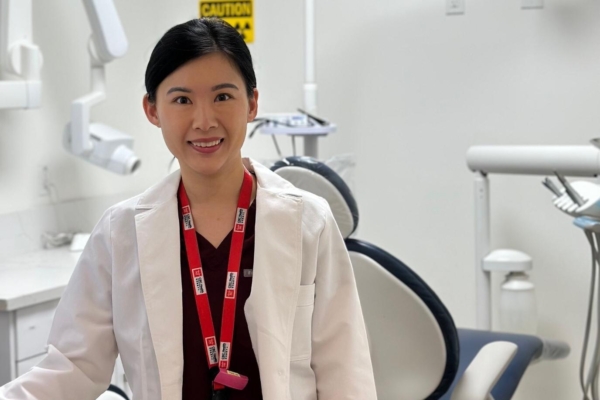
Having delved deep into dental services at the Chinatown Service Center (CSC) for many years, Dr. Kelly Lien noted an improvement in Chinese families’ awareness of children’s dental health, stating that while progress is slow, more and more parents are taking the initiative to bring their children in for regular dental check-ups and early prevention.
She found that in recent years, American schools have started requiring parents to submit proof of dental check-ups, indirectly pushing families to place greater importance on their children’s oral health.
When discussing the most common causes of tooth decay in children, Dr. Kelly Lien identified three main issues prevalent among the Chinese community. First is dietary habits, where frequent consumption of sugary and starchy foods without rinsing the mouth afterwards leads to cavities. Inadequate cleaning, with many only brushing their teeth in the morning, contributes to tooth decay. Finally, the lack of fluoride protection is also a common factor.
Dr. Kelly Lien particularly emphasized that many parents still hold the misconception that it’s okay if baby teeth decay because they will eventually be replaced by permanent teeth. However, the health of baby teeth directly impacts the alignment of permanent teeth and future oral development.
She recommended that parents schedule the first dental check-up for their child around the age of one or within six months of the eruption of the first tooth. “Many parents wait until the child complains of pain before seeking treatment, but often by then, it’s already too late,” Dr. Lien stressed, highlighting the critical timing of checking a child’s teeth during their early years.
In terms of daily care, Dr. Kelly Lien emphasized that proper brushing and cleaning between teeth are indispensable. She advised people to follow the “2-2-1 rule”: brush with fluoride toothpaste twice a day for at least 2 minutes each time and use dental floss at least once a day to remove plaque.
Regarding the popular technological dental tools in recent years, such as electric toothbrushes and water flossers, Dr. Kelly Lien expressed positive affirmations. She mentioned that when used correctly, electric toothbrushes perform better in removing plaque than traditional manual cleaning.
While water flossers can serve as an aid, traditional dental floss remains the “gold standard” for cleaning between teeth and cannot be completely replaced.
In addition to children’s healthcare, Dr. Kelly Lien also cautioned against the DIY teeth whitening remedies circulating on social media for teenagers and adults.
Many influencers recommend using lemon juice, baking soda, activated charcoal, or high-concentration hydrogen peroxide for at-home teeth whitening. Dr. Kelly Lien bluntly stated that these unproven remedies could potentially cause permanent enamel damage to the teeth, leading to severe tooth sensitivity and gum irritation.
“Many damages are irreversible once done,” Dr. Kelly Lien urged people not to easily believe in online rumors. For any teeth whitening or health needs, it is crucial to seek professional dental assistance to avoid sacrificing dental health to save a few bucks.
The Chinatown Service Center has 9 medical service locations in Southern California, with dental services as a core offering covering Chinatown, Alhambra, Monterey Park, San Gabriel, and Hacienda Heights, among other Chinese communities. Apart from dental treatment, some centers also provide family medicine, optometry, and mental health services, striving to offer convenient, affordable, and diverse medical care to community residents.