
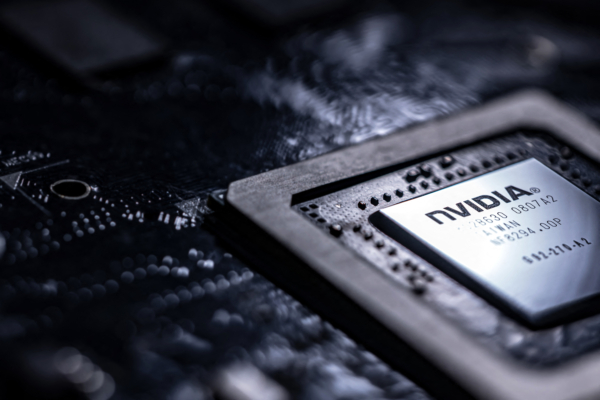
Since the U.S. government allowed the sale of NVIDIA’s H200 chips to China in January this year, the Chinese Communist Party (CCP) has imposed a ban on purchasing these chips, claiming to support the development of domestic chips. Analysts believe that this is actually a way for Chinese companies and institutions to exploit “loopholes” in the U.S., using various methods to steal advanced chips or chip usage rights from the U.S. The so-called “Law of Taodin” chips by Huawei are viewed by industry experts as mere “marketing rhetoric” and cannot change China’s low position in chip production.
On May 31st, the U.S. Department of Commerce introduced new regulations that require subsidiaries of Chinese companies—even those located outside of China—to comply with a licensing system for the sale of advanced chips.
The main chips requiring a sales license include NVIDIA’s top-tier “Blackwell” and “Rubin” processors, as well as AMD’s MI350x chip.
The “Blackwell” series, which debuted at the end of 2024, surpassed the H200 to become the most powerful AI chip in the market.
Reports indicate that over the past year, tens of thousands of such high-end chips and processors have allegedly entered China through Chinese AI company subsidiaries in Malaysia and Thailand. Additionally, there have been cases involving the illegal export of H100 and H200 chips worth $160 million, as well as server illegal shipments totaling $510 million.
Chinese affairs scholar Wang He told Epoch Times that the U.S. loophole is a “big problem,” as a large number of advanced U.S. chips entering China allows the CCP to utilize the most advanced chips in areas such as artificial intelligence and military development, posing a significant blow to U.S. policies aimed at widening the technological gap between the U.S. and China.
However, Wang He believes that the CCP always “seizes opportunities” and even without this loophole, through extensive smuggling, China would still manage to get many U.S. chips inside its borders; hence, the U.S. blockade of advanced chips to China may not have the intended effect as envisioned by the U.S. government.
A report by Bloomberg on June 2 revealed that at least seven Chinese universities that provide support to the Chinese military and defense industry, including Beijing University of Aeronautics and Astronautics and Northwestern Polytechnic University—sanctioned by the U.S. as part of the CCP’s “Seven Sons of Defense”—have been seeking to obtain rights to use the H200 chip since June 2025.
The report stated that in addition to purchasing H200 through third parties, some Chinese universities also lease computing services from overseas data centers, allowing remote use of H200’s computing power.
As the H200 chip itself has not entered China, it is not considered an “export” under current U.S. regulations. However, some U.S. national security officials believe this is a major regulatory loophole in terms of controlling advanced AI chips.
Su Ziyun, Director of the Taiwan Institute for Defense Strategy and Resources, stated that this “rental” method is actually another form of intellectual theft.
He explained that on the Chinese side, their AI system continuously queries websites of U.S. AI companies, extracting the core of these models. By setting up repetitive questions from ‘a, b, c’ to ‘x, y, z,’ they can deduce a model’s baseline, then adapt it for their own use, which constitutes a form of intellectual theft.
Su Ziyun believes that despite the CCP’s claims of independent research and development, industry players still need to resort to various methods of “stealing” to acquire advanced U.S. technology.
Bloomberg also discovered that since 2011, over 25 universities and laboratories collaborating with the Chinese military and defense industry have been using or seeking to obtain lower-grade NVIDIA AI chips. Six of these universities have been sanctioned by the U.S. for engaging in missile and nuclear technology research.
Su Ziyun further analyzed that China currently uses relatively outdated chip processes internally to construct hardware architecture, resulting in significant energy consumption. Although the CCP can compensate with electricity, the approach is bulky and inefficient, akin to using truck engines in cars that require turbo engines, leading to suboptimal performance.
The CCP’s refusal to purchase the approved H200 chips from the U.S. is officially stated as aiming to boost independent research. Chinese telecom giant Huawei recently introduced the “Law of Taodin” chip, claiming to “change the global chip game rules,” sparking a frenzy on the mainland.
On May 25th, Huawei announced that the company has designed and mass-produced 381 advanced chips based on the “Law of Taodin” over the past six years, with plans to launch a new generation Kirin chip using the law this autumn. Huawei also aims to achieve a level comparable to TSMC’s 1.4 nanometer process by 2031.
Su Ziyun stated that Chinese AI operators exploit loopholes in the U.S. to “smuggle” advanced chip processes or engage in “another form of intellectual theft,” highlighting that Huawei’s “Law of Taodin” is a form of “misleading” and “marketing rhetoric.”
He explained that the “Law of Taodin” is basically an old technology; it was likely used by TSMC about ten years ago, referred to as “chip stacking.”
NVIDIA CEO Huang Renxun appeared in Taipei on May 28th, and when asked about Huawei’s “Law of Taodin” by Taiwanese media, he responded that it is a breakthrough for Huawei but not a threat to TSMC.
He emphasized that TSMC and Taiwan have been using chip stacking and 3D packaging technologies for nearly 10 years, indicating the advanced nature of TSMC’s technology.
Su Ziyun believes that Chinese domestically produced chips still have many technological shortcomings. He noted that Huawei is currently stuck in chip manufacturing processes and may use the “Law of Taodin” to mislead the market. He also pointed out that whether it is the “Law of Taodin” misleading for Huawei’s chips or China smuggling chips from Southeast Asia, Japan, or Taiwan, it shows that China’s current domestic chips can only compensate for computing power deficiencies through mass production.
Wang He expressed that the CCP often “overestimates itself” and seeks to establish an independent chip system through “overtaking on curves.” The key question is, according to Wang He, “What is the actual technical capability of the CCP?” He warned that if the CCP places all its bets on Huawei, it will lead to a technological decoupling between China and the U.S., resulting in a significant gap in China’s chip technology compared to the most advanced global technologies in the West.
Su Ziyun believes that the CCP’s ban on H200 chips may gradually become a case of turning a blind eye, allowing industry players to still obtain H200 chips through various methods, even though they may not be the most advanced. He noted that this advanced compute power could enhance the capabilities of their software models.
He stated that the U.S. strategy is to restrict the CCP’s progress on the software front, maintaining a technological gap with the CCP. Through TSMC’s technology, the U.S. and democratic countries aim to continuously widen this gap, akin to a scenario of “chip acupuncture,” preventing the CCP from advancing, thereby keeping the CCP at its current level.