
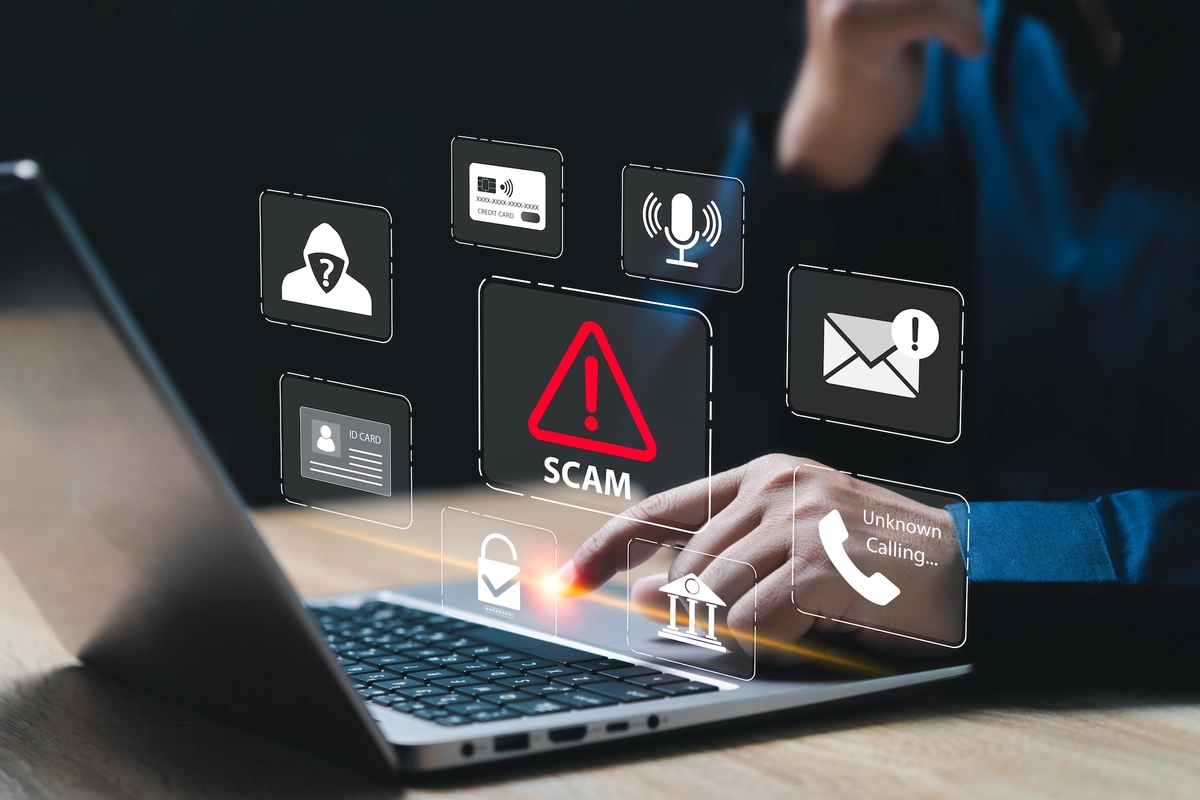
The year 2026 kicked off with a surge of investment scams making their way through social media and messaging apps, preying on unsuspecting individuals seeking opportunities to grow their wealth. It often starts with a seemingly authentic video or a “friend” on the internet introducing a fantastic money-making opportunity. The investment platform appears professional, promising impressive returns, and some individuals even claim to have already made money successfully. All of this easily convinces people that it’s a secure investment when, in reality, it’s just the first step in the latest investment fraud schemes of 2026.
According to the North American Securities Administrators Association (NASAA), these scams, along with other investment frauds, are rapidly spreading through social media and communication platforms. In 2024, state securities regulators conducted over 8,800 investigations, resulting in the recovery and penalties totaling over $259 million. However, these figures only represent reported and investigated cases, with the actual losses being far more severe.
Here are some methods to help protect yourself from financial losses before diving in:
Before investing any funds, the first step in determining whether an investment is secure is to verify through official channels.
You can check if the investment advisor, broker, or company is formally registered on FINRA BrokerCheck (brokercheck.finra.org) or the U.S. Securities and Exchange Commission (SEC)’s Investor.gov.
If the other party:
– is not legally registered
– cannot clearly explain how the investment generates profits
– guarantees certain profits
It is crucial to halt any further progress, verify thoroughly, or even steer clear of the investment altogether.
NASAA tracks the latest risks investors face each year based on enforcement actions and investigations by state securities regulators.
Taking into account these two sources, the most common investment scams from 2025 to 2026 included:
In 2024, NASAA initiated 463 investigations involving digital assets while also looking into numerous social media scams, impersonation scams, and Ponzi schemes, signifying the rapid spread of online investment fraud.
Advancements in AI technology have made scam operations look more credible than ever. According to NASAA’s annual investor risk survey, 22.2% of state regulators believe that the use of AI-generated deepfake videos and celebrity voice imitations to promote false investments will continue to rise. Additionally, 38.9% of regulators anticipate an increase in professionally crafted AI-generated content to make scam investments appear more authentic.
These false videos are becoming increasingly realistic. Scammers create videos featuring prominent figures, especially tech executives or financial celebrities, endorsing investment platforms with guaranteed returns. The visuals are seamless, with lip-synced audio, but the entire video is entirely AI-generated.
Two straightforward principles can help you spot these AI scams:
– If a prominent figure suddenly endorses an investment on social media, remain highly skeptical.
– Any legitimate investment cannot guarantee profits.
Furthermore, there are specific criteria to consider:
– The investment personnel or company is duly registered with FINRA, the SEC, or state securities regulators.
– Their licensing and disciplinary history can be verified through BrokerCheck or the EDGAR system.
– Investment risks are clearly elucidated in writing, not downplayed or hidden in fine print.
– There is no pressure to invest immediately, and confidentiality about the opportunity is not demanded.
– Investment returns are described as “possible outcomes” or “estimates,” not guaranteed profits.
– The other party contacts you through text messages, social apps, or social media proactively.
– Celebrities or influencers energetically endorse an investment that seems “too good to be true.”
– Guarantees of profits with no risks involved.
– Access to the investment platform is only through private links or unfamiliar apps.
– Requesting upfront fees, taxes, or other charges before allowing withdrawals of your funds.
Before making any transfers, complete the following seven verifications:
– Use FINRA BrokerCheck (brokercheck.finra.org) to verify if the other party is legally registered and has any violation records.
– Check companies and investment products via SEC Investor.gov and the EDGAR database.
– Utilize NASAA’s Contact Your Regulator tool to locate your state securities regulator for your investment products.
– Search the SEC investor alert database for any warnings or complaints related to the platform or name.
– Request an official prospectus or detailed information document from the other party; a lack of documentation implies inadequate protection.
– Use search engines to look up the company name with terms like “scam” or “complaint” for relevant information.
– Consult with a licensed professional you trust before investing any funds.
If any of these verifications cannot be completed due to a lack of relevant information, it likely indicates that you should steer clear of the investment.
It’s best to report as early as possible. Each complaint may prompt regulatory authorities to launch investigations, protecting more investors in the process.
You can report to the following entities:
– Your state securities regulator: NASAA’s Contact Your Regulator
– FINRA: finra.org/investors/have-problem
– U.S. Securities and Exchange Commission: sec.gov/tcr
– FBI Internet Crime Complaint Center: ic3.gov
If the target of fraud is an elderly family member, promptly alert both the local adult protective services agency and the state securities regulator.
In 2024, NASAA received over 6,500 notifications of suspected financial fraud targeting vulnerable adults, presenting a 52% increase from the previous year and a substantial 492% surge from 2020.
What is a “Ponzi scheme”? How does it operate?
A Ponzi scheme is a long-term investment scam where fraudsters typically establish trust with victims through dating apps, social media, or “misdirected messages” over a few days or weeks. They then recommend a fake investment platform (often involving cryptocurrencies) that displays high profits on paper. When victims attempt to withdraw their funds, the scammers request various fees or even shut down the platform, disappearing with the funds.
If you’ve already transferred funds to a suspected fraudulent platform, what should you do?
Immediately cease making further transfers, even if the platform shows profits in the account or demands additional fees for withdrawals. Those account balances are almost always false, and continuing to pay will not retrieve your money.
Preserve all evidence, including screenshots, chat records, transaction histories, and the contact information of the other party, and report the incident promptly to the U.S. Securities and Exchange Commission (sec.gov/tcr), the FBI’s IC3 (ic3.gov), and your state securities regulator. While recovering funds from cryptocurrency scams is challenging, reporting early increases the likelihood of regulatory investigations.
You can access FINRA BrokerCheck (brokercheck.finra.org), input the broker or investment advisor’s name, and ascertain their registration, license, work history, and past complaint or disciplinary records. If the individual recommending the investment cannot be found in both official databases registered by the SEC, refuse the investment and alert your state securities regulator immediately.