
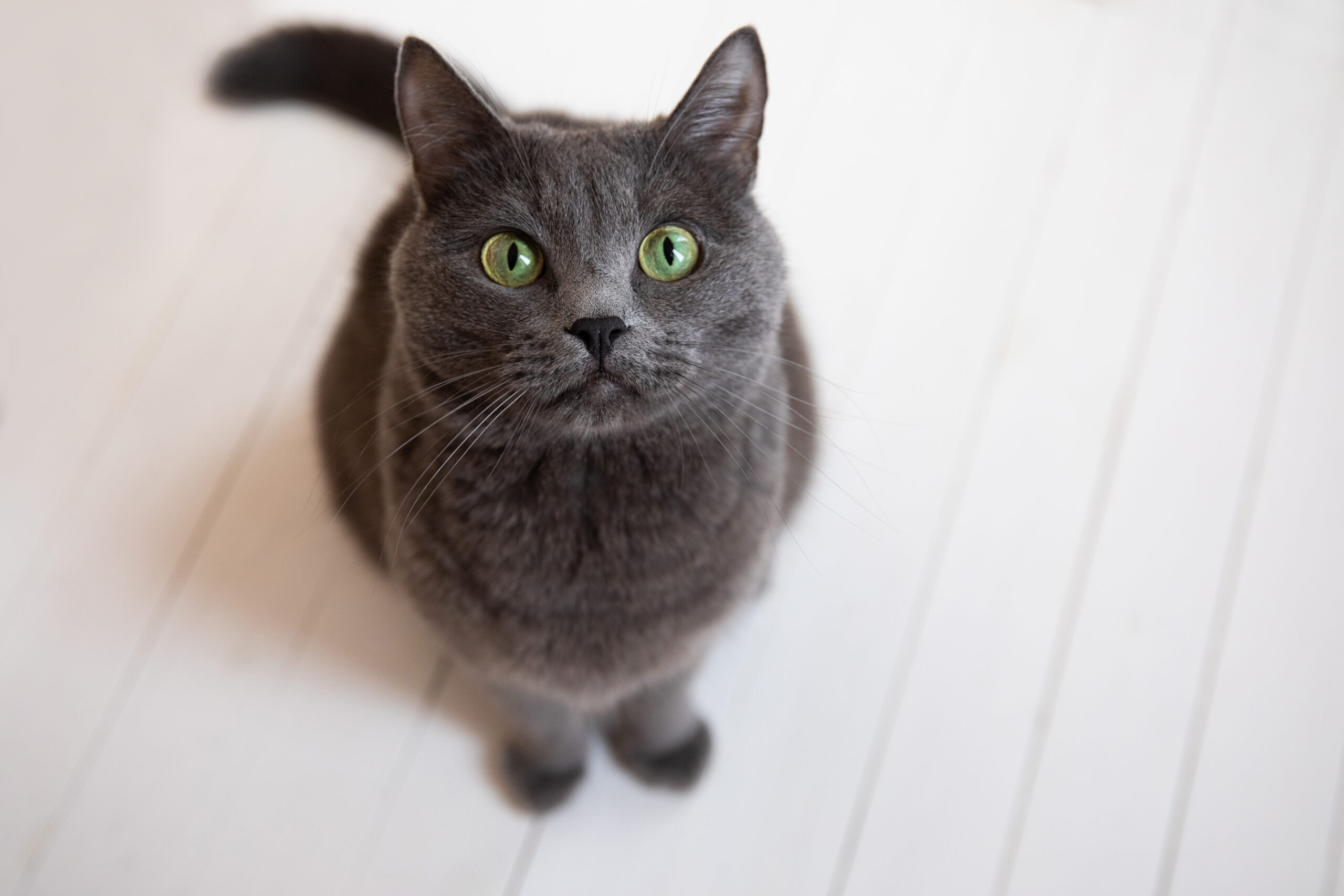
Cats have always been known for their peculiar behavior. Perhaps you have noticed that when you close the door, your cat goes into a frenzy, a reaction that can be both baffling and frustrating. Experts have now provided an explanation for this phenomenon.
According to a report from the UK’s Daily Express, compared to dogs, cats are enigmatic pets. They often do not easily show emotions, making it difficult for people to understand their thoughts.
Amanda Campion, a cat behavior specialist with over 30 years of experience, explained in a video shared on social media why cats “hate” having doors closed behind them. The reason lies in their territorial instinct.
Campion explained that because cats are animals with a sense of territory, closing a door may have a negative impact on their “psychological map” of the territory (i.e., your home).
When you close the door and the cat is left on the other side, it will meow incessantly. However, it is not deliberately causing trouble; it is simply responding to the sudden and unexpected change in its environment because a closed door disrupts its “psychological map” of the territory.
“It’s about curiosity and the desire for control because cats naturally enjoy exploring. Try opening a door and see its reaction. It’s not very dramatic,” Campion said.
Campion’s explanation sparked discussions among internet users. One commenter said, “In our house, we have an open-door policy. Even if we try to close the door, our cat’s loud meows prevent us from doing so. But I really enjoy hearing the sound of the cat roaming around the house when I’m getting ready to sleep.”
The American Society for the Prevention of Cruelty to Animals (ASPCA) points out that a cat’s sense of territory can vary widely, from the entire residence or a part of it to the yard, neighborhood, or even the whole community.
Both male and female cats possess a territorial instinct, but male cats typically have a larger territory than females. Aggressive behavior in cats due to their territorial instinct is usually directed towards other cats but can also target dogs or humans.
This aggression may be selective. A cat may display aggression towards certain family members or specific cats while remaining peaceful with others.
In addition to territorial instincts, cats may exhibit aggressive behavior due to fear, defense, play, redirection, petting, pain, maternal instincts, predatory instincts, and other reasons. Redirection refers to a situation where a cat cannot access the target it wants to attack (such as being separated by a window), so it attacks nearby objects or individuals instead.
As for how to handle a cat’s aggressive behavior, Cats Protection, a charity organization in the UK, provides 5 key points:
– A cat deemed to have “behavior issues” may simply be displaying normal feline behavior.
– If your beloved cat’s behavior changes, it could be a sign of stress, fear, or illness, and you should take them to the vet immediately.
– Do not punish your cat for “behavior issues” as it will not only be ineffective but may also increase the cat’s stress.
– You have a legal obligation to fulfill your cat’s needs, including their need to exhibit normal behaviors.
– By addressing the causes specifically, you can reduce negative behaviors like fighting in your cat.