
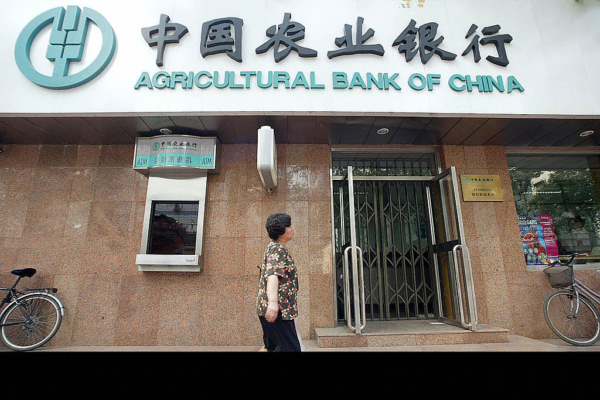
The speed of withdrawal of rural township banks in mainland China continues to accelerate. As of the end of May, 97 rural township banks have revoked their financial licenses since the beginning of 2026, with nearly a hundred exiting within the year. Recently, cases of consolidation of rural township banks have continued to emerge in various regions, with some institutions either being absorbed and merged or restructured as branch offices.
According to a report by “Securities Times Online” on June 2, journalists from “Securities China” found through inquiries to the public financial license information released by the China Banking and Insurance Regulatory Commission that by the end of May, 97 rural township banks have completed the revocation of their financial licenses since the beginning of 2026. The pace of rural township bank withdrawals has significantly accelerated in the past two years: from May 2024 to early February 2026, over 400 rural township banks were revoked in less than two years. In 2025 alone, 310 rural township banks completed the revocation of their financial licenses, with 103 rural township banks exiting from May 31, 2024, to the end of the year. Prior to this, the number of rural township banks exiting each year was usually only single digits.
Recently, multiple rural township banks in different regions have continued to be consolidated. On May 29, the Mengzi Rural Township Bank under Shanghai Agribusiness Bank absorbed and merged four Shanghai Agribusiness Bank series rural township banks in Kaiyuan, Gejiu, Jianshui, and Mile. The four merged rural township banks were restructured as branches under the Mengzi Rural Township Bank.
Additionally, on May 28, four Fumin Rural Township Banks in Xinmin, Shenbei, Faku, and Liaozhong were revoked of their financial licenses, and their business, assets, debts, and credits were taken over by Shengjing Bank.
As for the forms of exit, the withdrawal of rural township banks mainly includes being absorbed and merged by the initiating banks, restructuring as branch offices, being merged by other rural township banks, and individual institutions dissolving and revoking their licenses, etc. Chinese media refer to this pattern as “village-to-branch” or “village-merging-village”.
Public information from the China Banking and Insurance Regulatory Commission previously indicated that by April 20, 2026, 72 rural township banks had completed revocations and exits within the year, significantly higher than the 27 banks during the same period last year. Over a month later, the latest analysis by Chinese media shows that the number of revocations is close to a hundred.
While rural township banks are exiting in large numbers, the risk issues of small and medium-sized banks in mainland China continue to draw external attention. In recent years, some rural township banks with relatively small scales and weaker risk resistance capabilities have seen continuous exposure of problems in asset quality, corporate governance, and equity structures. Since the beginning of 2026, many rural township banks have exited through dissolution, absorption and merger, and the transfer of assets and liabilities.
The risk of rural township banks has previously raised concerns in society. In 2022, there were incidents where depositors in multiple rural township banks in Henan and Anhui provinces were unable to withdraw their funds, leading to numerous depositors facing obstacles in safeguarding their rights. Following the incidents, doubts about risks in small and medium-sized banks in mainland China and regulatory loopholes persist.
Epoch Times reported on May 8 that the pressure of local government debt in China has emerged in sync with risks in the banking system, such as rural township bank consolidations, credit card scale reduction, and deteriorated bank asset quality. Some analysts believe that the risks in the Chinese banking industry do not only exist in individual small banks but are intertwined with factors such as the downturn in the real estate market, local government debt pressure, and slowing economic growth.
Public records show that rural township banks were piloted around 2007, mainly providing financial services to counties and rural areas. According to the Securities Times, in 2021, the number of rural township banks in China reached its peak, totaling 1651. After years of expansion, a large number of rural township banks have been revoked, merged, or restructured as branch offices in recent years, leading to a continuous decrease in the number of independent legal entities.