
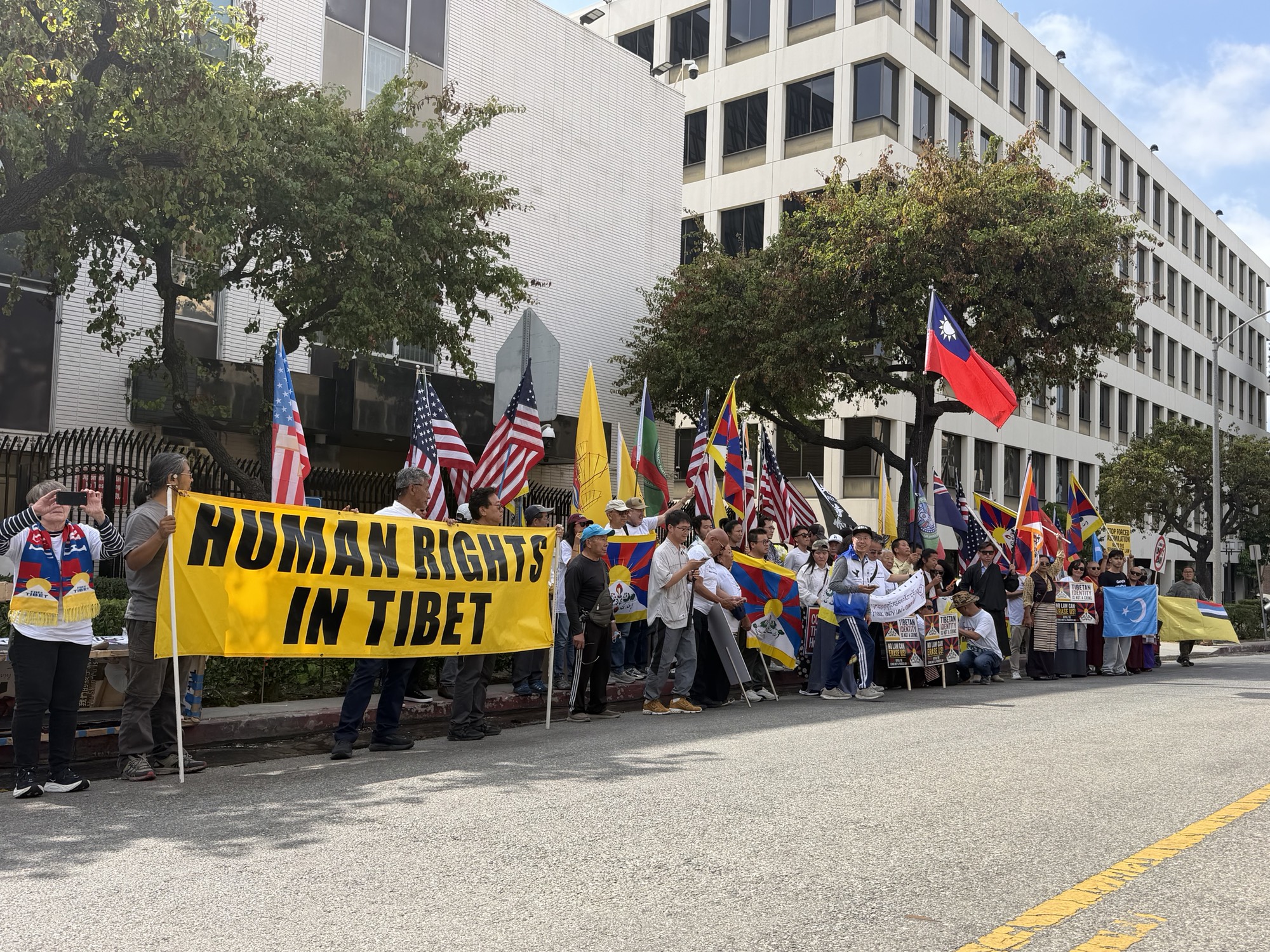
In recent years, the Chinese Communist Party (CCP) has become increasingly brazen in its cross-border repression of overseas scholars, activists, and diaspora groups, while at the same time escalating political suppression of foreign citizens within China under the pretext of espionage.
Renowned American think tank, the Council on Foreign Relations (CFR), Senior Fellow for Southeast Asian Affairs, Joshua Kurlantzick, in a recent article, warned using the case of Min Zin, a Burmese-American political scholar, as an example. He highlighted that the CCP’s international crackdown on dissenters and opposition figures is expanding and intensifying. If strong countermeasures are not taken by the US and Western democratic societies, the CCP’s repression of overseas scholars, activists, and diaspora groups will only worsen.
Min Zin, after being expelled from school for participating in the Burmese pro-democracy movement during high school in 1988, spent years in hiding to avoid arrest. He eventually crossed into Thailand in 1997, and later made his way to the US where he applied for political asylum and became an American citizen.
According to Min Zin’s LinkedIn profile, he graduated from the University of California, Berkeley in 2016 with a master’s degree in political science and government. He later founded the Institute for Strategic and Policy Studies in Burma and has been its executive director since then. He has conducted academic exchanges in China without incident.
Kurlantzick revealed that based on monitoring by Scholars at Risk, on June 3rd of this year, Min Zin went missing while en route to Kunming for a conference. For over a week, his family and colleagues had no information about his whereabouts or condition.
The news of Min Zin’s arrest by the CCP in Kunming was exposed by the US media on June 11. The CCP’s Ministry of Foreign Affairs officially confirmed this news on June 12, stating that Min Zin was arrested for allegedly engaging in “spy activities that endangered the national security of China.”
Kurlantzick pointed out that Min Zin’s research covers civil-military relations, democratization, and ethnic conflicts. The Institute for Strategic and Policy Studies in Burma also has a dedicated China affairs department that analyzes and studies Chinese infrastructure investments in Burma and China’s support for the Burmese military government.
Kurlantzick believes that the fundamental reason for Min Zin’s arrest is that his research is a thorn in the side of the CCP, not the espionage charges concocted by the CCP.
Previously, the CCP would have shocked the international community by arbitrarily listing charges to arrest foreign scholars. While it remains unsettling today, it is not surprising. This is because the CCP’s reach in transnational repression has grown longer, but the cost of detaining foreign citizens and transnational repression has decreased, making cases like Min Zin’s commonplace, even targeting American citizens at will.
The article points out that the CCP is undoubtedly the primary enforcer of transnational repression globally. Freedom House confirms that since 2014, there have been 319 violent incidents linked to the CCP, accounting for nearly a quarter of all recorded cases worldwide. These are just the documented cases, with the actual number much higher.
The CCP employs extreme measures in its transnational persecution and repression, including digital surveillance of overseas diaspora communities and intimidation of Chinese exiled dissidents’ families residing in China. Under the guise of anti-corruption, the CCP’s “Operation Fox Hunt” involves covert threats and coercion forcing individuals to return to China or take their own lives.
A 2022 investigation by the non-profit organization Safeguard Defenders found that the CCP has established over 100 secret underground police stations in more than 50 countries, including the US, to monitor and intimidate overseas Chinese communities. From April 2021 to July 2022, approximately 230,000 people were forced to return to China.
A report by the International Consortium of Investigative Journalists (ICIJ) last year detailed the operational methods of CCP’s transnational repression. Interviews with over 100 individuals targeted by the CCP in 23 countries revealed harassment of their families within China after speaking out overseas. Some reported surveillance by the CCP, while others faced threats and assaults by operatives sent by the CCP.
The article notes that behind the CCP’s transnational persecution and repression is the United Front Work Department, which monitors Chinese students overseas, influences and guides overseas Chinese organizations and public opinion.
A 2024 report by Amnesty International revealed that nearly 900,000 Chinese students abroad live under pressure from the United Front Work Department, including being photographed during protests, surveilled on campuses, and reported by classmates. The CCP threatens overseas students that their actions will cause trouble for their families back in China.
The CCP has also turned the Interpol’s red notice system into a tool for its transnational repression activities, coercing foreign law enforcement agencies to arrest dissidents in the name of law enforcement cooperation.
Citing the ICIJ report, the CCP pressured Malaysia to detain and deport Abdulhakim Idris, an American citizen and head of the Uyghur Research Center.
The ICIJ investigation also discovered that the CCP has infiltrated dozens of false civil society groups within the UN human rights system. These CCP-controlled non-governmental organizations (GONGOs) appear independent but are tasked with monitoring participants in UN meetings to suppress or disrupt criticisms of the CCP.
The author points out that while the CCP is not the only country engaging in transnational persecution and repression, it is the largest and most brazen. Transnational repression is worsening globally, with a report earlier this year by Freedom House showing 126 new incidents of transnational repression in 2025 alone. The number of governments implementing transnational repression has surged from 38 to 54 in just a few years. In 2025, countries like Afghanistan, Benin, Georgia, Kenya, Tanzania, and Zimbabwe have also begun partaking in transnational repression and persecution.
In the past, transnational repression was predominantly carried out by powerful nations, but now many smaller countries, observing impunity when others engage in transnational persecution, are also following suit. Many authoritarian governments collaborate to capture and extradite refugees and dissidents, as evidenced by Thailand coordinating with the CCP, Cambodia, Laos, and Vietnam to detain and expel individuals.
Fortunately, Western democratic countries have started pushing back in some aspects. The Group of Seven (G7) issued a statement in June 2025 condemning transnational repression, Canada has amended laws against transnational repression, and the FBI has repeatedly stated that the CCP’s clandestine operations in the US pose a genuine national security threat.
The author’s final recommendation is for the US to do more in combating CCP’s transnational repression. This could involve publicly and explicitly demanding the release of Min Zin, warning the CCP of consequences for arresting scholars, engaging in stern discussions with the CCP on its transnational repression practices, imposing targeted sanctions on CCP officials responsible for transnational repression, providing travel guidance and advice for scholars and researchers on sensitive topics related to China, and more.