
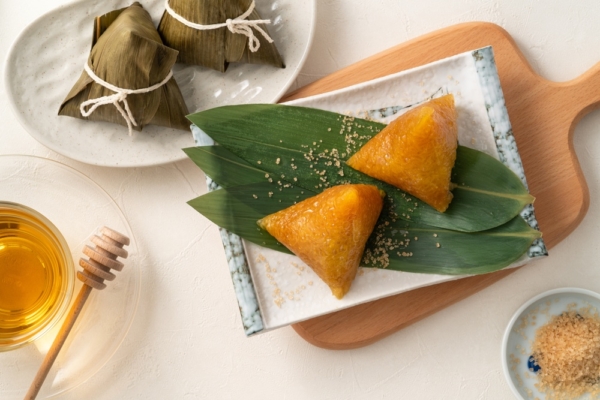
The traditional Chinese festival of Dragon Boat Festival has passed, during which Chinese people around the world observe the tradition of eating zongzi. Businesses also take this opportunity to introduce zongzi in various flavors for customers to choose from. However, every year after the Dragon Boat Festival, there are many unsold zongzi left. So where do these zongzi go? Discussions on this topic have become a hot search on June 22.
According to the lunar calendar, the fifth day of the fifth month is Dragon Boat Festival, which fell on June 19 this year. Dragon Boat Festival is one of the four traditional Chinese festivals. Over time, customs like hanging Zhong Kui’s image or drinking realgar wine have gradually faded, but the tradition of eating zongzi has been preserved among the people.
Multiple media reports suggest that mainland Chinese businesses have three main ways of dealing with unsold zongzi after the Dragon Boat Festival.
Firstly, they offer discounts and promotions. Just after the festival, zongzi counters are labeled with “discount,” “special sale,” “buy one get one free,” etc. coupled with enthusiastic sales staff, attracting customers looking for deals. Additionally, vacuum-packed zongzi typically have a shelf life of 6 to 9 months, while frozen zongzi can last 12 to 18 months, leaving a window for subsequent discounted sales.
Secondly, many large businesses sell the remaining zongzi at low prices to markets below the county level, townships, and various breakfast shops to clear their inventory.
Thirdly, unsold zongzi may be returned to the manufacturers. The person in charge of a chain supermarket in Jiangxi revealed that after closing their doors on the day of the Dragon Boat Festival, all the zongzi are taken off the shelves to be returned to the manufacturers as per pre-signed contracts for refunds. Manufacturers would then distribute the zongzi based on factors like shelf life: some for staff welfare distribution, some in bulk to breakfast shops and other dining channels, or sell to discount platforms or clearance merchants for circulation.
An employee engaged in the retrieval of near-expiry food products disclosed that unsold zongzi that have not expired yet would be sold at low prices through offline group purchases, while zongzi that are briefly expired but not spoiled will be sold to feed mills for processing into pig feed, etc.
A distributor expressed that once zongzi are taken off the shelves, making a profit is out of the question, so it is imperative to promptly deal with them to reduce inventory costs.