
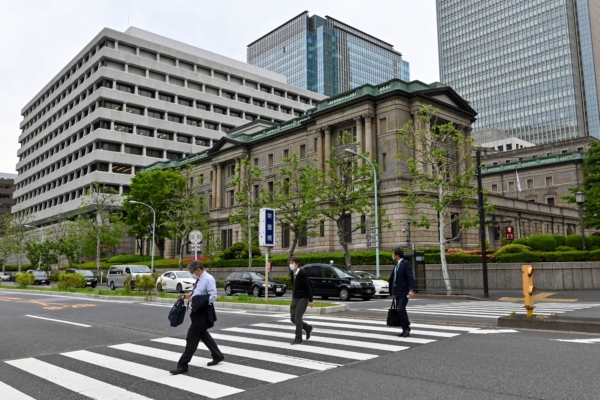
Japan’s central bank, the Bank of Japan, announced on June 16th that it would raise its policy interest rate from around 0.75% to around 1%, effective from June 17th. This increase marks the highest level of Japan’s policy interest rate since 1995, reaching a new high in 31 years.
This rate hike is the fifth increase by the Bank of Japan since it ended its negative interest rate policy in March 2024 and began the process of normalizing its monetary policy. With the policy rate reaching 1%, deposit rates, mortgage rates, and corporate financing costs are likely to rise further in the future, impacting households and businesses broadly.
According to Japan Broadcasting Corporation (NHK), the Bank of Japan stated that the ongoing tensions in the Middle East, particularly the escalation of the situation involving Iran, have driven up international oil prices. At the same time, the yen continues to weaken, further increasing import costs. With energy prices and exchange rates playing a role together, Japanese businesses are expanding their price hikes, intensifying concerns in the market about the risk of inflation rising.
The Bank of Japan believes that maintaining the current rate could further exacerbate upward price pressures, so it is necessary to raise rates to curb the risk of inflation and prevent prices from rising too quickly.
Due to the hospitalization of Bank of Japan Governor Kazuo Ueda for treatment of an infection caused by a gallbladder cyst, Deputy Governor Ryozo Himino chaired the meeting in his absence. This is a rare occurrence of the Bank of Japan making significant policy adjustments in the absence of the Governor in recent years.
Among the eight policy board members who participated in the final vote, seven supported the rate hike, while one opposed it. The dissenting member, Toichiro Asada, believed that the main risks posed by the situation in the Middle East are related to economic growth and employment pressure, rather than further upward inflation, and thus advocated for keeping the rate unchanged.
After the meeting, Deputy Governor Shinichi Uchida of the Bank of Japan held a press conference in the afternoon in place of Ueda to explain the basis for the rate hike decision and the future direction of monetary policy.
In addition to the rate hike, the Bank of Japan conducted a midterm assessment of its government bond purchasing program, deciding to halt further reductions in bond purchases starting in April 2027 and maintain a monthly purchase level of around 2 trillion yen.
During the period of implementing large-scale monetary easing policies, the Bank of Japan made significant purchases of government bonds, becoming the largest holder in the Japanese bond market. Since initiating the normalization of monetary policy, the Bank has gradually reduced the scale of bond purchases. However, in May of this year, the Japanese bond market experienced significant volatility, with long-term government bond yields rising to levels seen about 29 years ago, sparking concerns about the stability of the financial market.
In this context, the Bank of Japan decided to pause further reductions in bond purchases to avoid tightening market liquidity and significant yield fluctuations. However, the Bank also stated that if long-term rates rise too quickly, it will flexibly expand bond purchases according to market conditions to maintain market stability.
With the policy rate being raised to 1%, Japan’s policy interest rate has reached its highest level since 1995. Since the burst of the asset bubble in the 1990s, Japan has maintained a long period of ultra-low-interest rate environment, implementing zero interest rates and negative interest rate policies to stimulate the economy. The Bank of Japan ended its negative interest rate policy in March 2024 and officially began the normalization of its monetary policy, subsequently raising the policy interest rate multiple times.
According to data released by the Japanese Ministry of Public Management, Japan’s inflation level has been consistently higher than the Bank of Japan’s target of 2% in recent years. With upward price pressure showing no sign of easing significantly, the market generally expects the Bank of Japan to continue advancing its process of normalizing monetary policy in the future.