
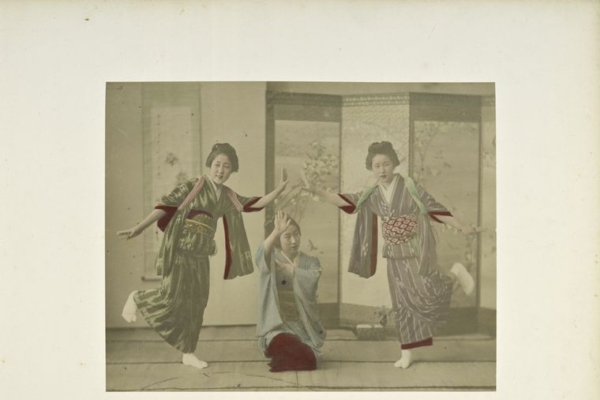
Before the advent of color film, photographic works often required meticulous manual coloring, making these photos not only records of daily life but also precious pieces of art.
The New York Public Library Digital Collections released hand-painted photographs from 19th century Japan on Thursday, providing a glimpse of the beauty of this ancient artistry. These photos capture historical scenes of Japan post the end of its isolationist policy, showcasing the transition of people from the samurai society to the industrialization process of the Meiji era.
These everyday scenes are not only vivid but also imbued with a sense of nostalgia, including portraits of samurais posing in armor, women and children engaged in daily household chores, and young women conversing in garden settings. They depict Japan’s political, social, economic, and artistic landscape from the 1870s to the early 1900s.
The introduction of photography into Japan was very early, occurring less than ten years after the invention of photography technology in Europe. The country imported its first silver-plate camera in 1848, and more advanced photographic techniques were introduced by the Dutch in Nagasaki in the 1850s.
The New York Public Library stated that photography technology spread from Europe and the Americas to Asia in the context of “colonial expansion,” taking root locally and being developed by native photographers who not only learned from European and American photographers but also were influenced by travelers, soldiers, and traders.
Kusakabe Kimbei (1841–1934) was a representative photographer of the Meiji and Taisho periods in Japan. He was renowned for his exquisite hand-colored photographs and memorial portraits documenting traditional Japanese culture, contributing to the commercial success of “Yokohama shashin.”
Kimbei learned from British and Italian photographers, including Felice Beato. Beato was one of the earliest photographers in East Asia and one of the first war photographers, known for documenting the British military actions in China.
Kimbei inherited the elaborate hand-coloring technique and opened a large photography studio in Yokohama in 1881. He later expanded to open a branch in Tokyo’s Ginza district.
Over a hundred years ago, Japanese cityscapes and the daily work routines of the people were vividly portrayed in these photographs, showing pedestrians bustling on the streets, merchants and laborers busy with their daily livelihood.
This article referenced reports from the American arts and culture website, My Modern Met.