
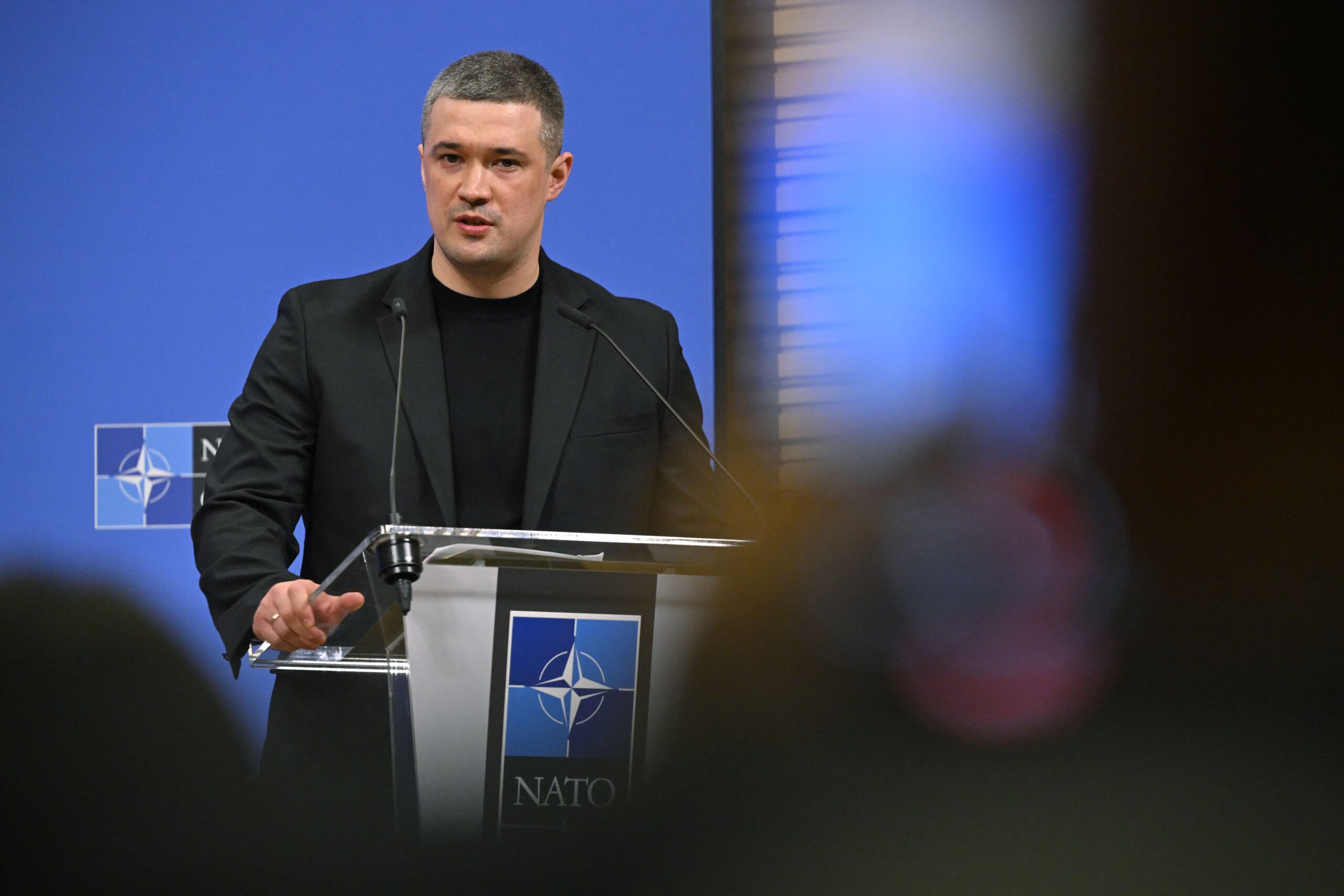
On Wednesday, July 15, Ukrainian President Zelensky announced that he would dismiss the current Minister of Defense, Mykhailo Fedorov, as part of his government’s reshuffle. He also nominated Serhiy Koretskyi, the CEO of the state-owned oil and gas company Naftogaz, to replace Prime Minister Yulia Svyrydenko.
Fedorov, 35, became the Minister of Defense in January this year, making him the youngest defense minister in Ukrainian history. Prior to that, he served as the Minister of Digital Transformation and gained attention for his efforts in developing drones and digitalizing the defense system. He enjoyed high popularity both domestically and among Western allies, earning bipartisan praise.
Fedorov confirmed his resignation on social media platform X, expressing his honor and gratitude for serving the Ukrainian people as the Minister of Defense. He highlighted achievements and shortcomings during his tenure, including cooperation with Elon Musk’s SpaceX to prevent Russia from exploiting the Starlink satellite network to guide drones, assisting Ukrainian forces in disrupting Russian supply lines and isolating Crimea.
He mentioned his initiatives to develop the drone industry in Ukraine and enhance defense capabilities against Russia, as well as reforms in military contracting systems, acknowledging the necessity of unpopular changes.
Fedorov also admitted on Facebook to three unachieved goals, such as not fully completing defense reforms to NATO standards, failing to establish a culture of accountability among decision-makers, and not fully implementing transparent procurement processes in the military. He pledged to continue supporting the country’s development through innovation and organizational capacity.
Subsequently, Fedorov’s advisor and prominent online influencer Serhii Sternenko announced on Telegram that he would cease assisting the Ministry of Defense. Sternenko praised Fedorov as the most outstanding Minister of Defense in Ukrainian history and criticized bureaucratic obstacles hindering genuine reform progress.
Interior Minister Ihor Klymenko has been proposed as the next Minister of Defense, pending parliamentary approval. His spokesperson Mariana Reva expressed surprise at Zelensky’s nomination but assured compliance with the president’s decision.
Klymenko previously led the National Police from 2019 to 2023 and assumed the Interior Ministry following the tragic death of former Minister Denys Monastyrsky in an air crash.
When asked about the dismissal of Fedorov and the nomination of Klymenko, President Zelensky declined to provide direct comments. He emphasized the importance of unity and coordination within the Ukrainian military, stressing dialogues between the military and the Ministry of Defense, resolving conscription issues, and enhancing air defense capabilities as top priorities.
Several parliament members and military observers expressed doubts regarding Fedorov’s replacement. Chairman of the Verkhovna Rada Committee on Foreign Affairs Oleksandr Merezhko praised Fedorov’s reputation among international partners, suggesting his name had become synonymous with genuine defense reforms.
An anonymous parliament member from the ruling party disclosed to Kyiv Independent that the decision to replace Fedorov might stem from conflicts between the Defense Ministry and senior military officials. The anonymous source mentioned Zelensky considering conscription and mobilization issues and expected the new appointee to address these matters promptly.
The change in the Minister of Defense comes amidst another wave of high-level reshuffling within the Ukrainian government. Prime Minister Svyrydenko, who took office in July last year, submitted her resignation on the 13th, which was approved by the parliament on the 14th. According to Ukrainian law, the resignation of the prime minister requires parliamentary approval, resulting in the entire government stepping down once approved.
The resignation of the Prime Minister was prompted by President Zelensky, who announced a government reorganization on Sunday, the 12th, to align with adjustments in political and strategic directions. The new strategy focuses on implementing defense cooperation agreements with allies, producing “Patriot” air defense missiles in Ukraine in collaboration with the United States, establishing a new European air defense system, enhancing energy security, and restructuring the diplomatic team.
Zelensky thanked Svyrydenko on social media for her clarity, stability, and efficiency while serving as prime minister and acknowledged her contributions to the government over the years. He proposed a new role for Svyrydenko in a crucial partnership area but did not disclose specifics.
Zelensky announced the nomination of Serhiy Koretskyi as the new prime minister. Koretskyi, former director of the subsidiary of Naftogaz, Ukrnafta, and CEO of Naftogaz since May 2025, was chosen due to his experience in managing the energy industry, crucial for Ukraine’s upcoming winter energy challenges.
A parliamentary vote on the nomination is expected on the 16th. With Zelensky’s “Servant of the People” party holding a majority in parliament, it is anticipated that the candidate favored by Zelensky will likely be approved.