
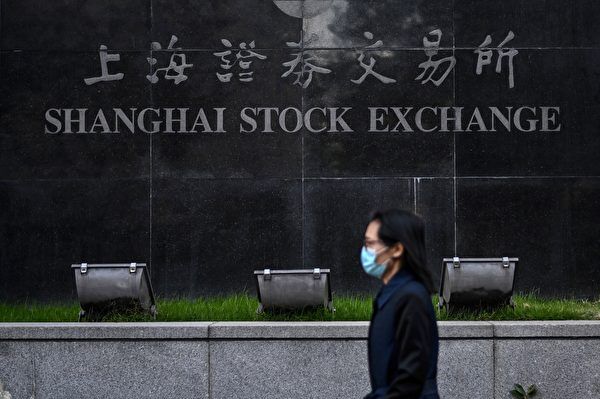
On May 25, 2026, a rare scene unfolded in the A-share market on the mainland of China: all three major indices rose, but most investors did not make money.
By the closing bell, the Shanghai Composite Index rose by 0.96%, the Shenzhen Component Index rose by 1.66%, and the ChiNext Index surged by over 2%. On the surface, the market sentiment seemed positive, but in reality, over 3,700 stocks in the market fell, with nearly seventy percent of individual stocks closing in the red, highlighting the typical pattern of “index gains, stock losses.”
According to a report by the Daily Economic News, on that day, the A-shares experienced a rebound from the bottom, but the overall sentiment of individual stocks was weak. The market displayed three anomalies: the surge in trading volume indicated a widening divergence in fund allocation, signs of further consolidation and clustering; the relationship between technology and non-technology stocks showed signs of diminishing importance; and the dissemination of new variables triggered by the “Taoist Law” in the afternoon.
Firstly, with the Hong Kong stock market closed due to a holiday, the absence of northbound funds led to a substantial increase in trading volume in the A-share market, reaching over 3.21 trillion yuan, an increase of over 300 billion yuan.
Financial information influencer “Boss Broadcast,” with 6.063 million followers, analyzed that this reflected the intensification of disagreements among domestic investors: the bulls concentrated on increasing their positions in technology stocks, while the bears took profits at high levels and exited, resulting in pure internal fund shuffling games.
Secondly, the traditional phenomenon of “technology rising, traditional sectors falling” began to malfunction, with sectors like semiconductors, liquor, and coal all simultaneously rising in the morning session but funds rapidly flowing back into technology stocks in the afternoon.
Thirdly, market funds were increasingly concentrated in clustering around technology stocks, while other sectors were gradually marginalized.
The immediate trigger was the announcement by Huawei about the new technological concept of the “Taoist Law” during midday trading. Upon this news, funds swiftly poured into technology sectors such as chips, storage, and printed circuit boards (PCBs).
Several influential voices on Weibo, including “Midnight Autumn Song ZY,” expressed that this news was like a shot of adrenaline, igniting semiconductor and PCB sectors in the afternoon. For many investors, the actual implementation of the technology was not the most critical aspect; the key was the compelling narrative of “domestic substitution.” Funds continued to overwhelmingly focus on technology, while other industries remained out of favor. The market saw extreme differentiation, making it challenging for average retail investors to profit. Behind the seemingly lively market trend, the underlying sentiment in the A-share market actually reflected heightened financial anxiety.
Many market analysts believe that another core issue in this round of the market is the limited inflow of new funds. Currently, the A-share market is still engaged in a game of “existing fund trading,” meaning the same pool of funds is switching between different sectors.
Articles shared by “Midnight Autumn Song ZY” pointed out that internal funds were churning back and forth. The essence of this market trend is a “false prosperity” in the indices, with all the money being sucked into technology stocks, leaving other stocks even bleeding. This kind of market scenario, resembling “half water, half flame,” is unsustainable in the long run.
The topics surrounding the “Three Anomalies in A-share Market” on May 25 also sparked heated discussions among many netizens.
One user commented, “Those who are enlightened know it’s time to sell and enjoy the final frenzy!”
Some investors, however, remained cautious about the market enthusiasm triggered by the “Taoist Law.” They believed that the current hype surrounding the “Taoist Law” still primarily resided in the realm of concepts and emotions and was yet to be considered a substantial breakthrough in semiconductor technology. The rise in the semiconductor sector this time was mainly due to the concentration of funds clustering around technology stocks, coupled with the market’s expectation of technology stocks entering a profit-driven stage, rather than representing any significant breakthrough in technical research and development.