
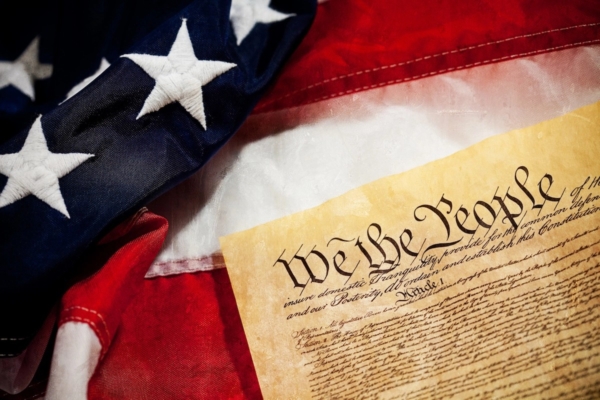
The upcoming 250th anniversary of the founding of the United States is drawing near, and the non-partisan civic organization “USA250-OC” in Orange County, Southern California has been promoting a “250-second” historical review activity since last year. This activity involves sharing a short story related to the founding of America at the beginning or end of meetings. Have you ever wondered why the Founding Fathers felt the need to add the Bill of Rights after signing the Constitution?
The 18th story on the “USA250-OC” website titled “From ‘No’ to ‘the Ayes Have It'” delves into the events of 1787. Representatives from the 12 newly independent states engaged in intense debates over issues such as the meaning of liberty, the balance of governmental powers, and the future of representative democracy for over four months. This ultimately led to the creation of the Constitution, which continues to shape the operation of the U.S. government and the lives of its citizens. While many crucial issues were addressed, such as the establishment of strong versus weak executive powers and equal treatment for small and large states, the topic of slavery was avoided to prevent further division among states that could have hindered the formation of a federal government.
On September 17, 1787, 81-year-old Benjamin Franklin prepared a speech to be read by Pennsylvania delegate James Wilson. In his speech, Franklin expressed some reservations but ultimately supported the Constitution, recognizing its near-perfection and acknowledging that no better alternative was expected or guaranteed. Following his remarks, the delegates unanimously agreed to sign the Constitution, with the exception of delegates who refused to sign, such as Edmund Randolph and Elbridge Gerry.
Edmund Randolph’s refusal to sign came as a surprise, considering his significant contributions to the new Constitution, including the Virginia Plan. On the other hand, Elbridge Gerry, who played a key role in the Great Compromise, raised multiple objections to the final draft. Five days before the Convention adjourned, Gerry proposed the addition of the Bill of Rights, a motion seconded by George Mason of Virginia. However, their proposal did not pass, and both representatives ultimately voted against the Constitution.
Following these events, Massachusetts and other states convened assemblies to debate and ratify the Constitution, leading to the emergence of the Bill of Rights. Virginia, under Randolph’s support, eventually ratified the Constitution amidst ongoing discussions about the necessity of a Bill of Rights to safeguard individual liberties on a national level, thereby solidifying the tenets of the Constitution.
The journey of the Bill of Rights from twelve proposed amendments to the final ten was marked by intricate debates within Congress and among the states. While some, like James Madison and George Washington, questioned the need for additional amendments, others argued that listing protected rights exhaustively could undermine unmentioned rights. Eventually, after significant opposition at the Constitutional Convention and state ratification meetings, the promise of amendments proved pivotal in garnering support for the Constitution.
The story of the Bill of Rights continued to unfold as Congress deliberated and passed a series of amendments, culminating in the formal signing of the twelve proposed amendments by key figures such as Frederick Muhlenberg and John Adams. Over time, as more states ratified the amendments with varying conditions, the original twelve were condensed to ten, paving the way for the Bill of Rights to be enshrined in the U.S. Constitution.
Today, as we reflect on the historical significance of the Bill of Rights, we remember how the ten amendments provide unparalleled protections for the freedoms and rights of American citizens and residents. With each December 15th marking Bill of Rights Day, we pay tribute to the enduring legacy of these vital rights enshrined in the fabric of American democracy.