
US officials said on Sunday (May 31) that US Secretary of State Marco Rubio had separate phone calls with Lebanese President Joseph Aoun and Israeli Prime Minister Benjamin Netanyahu, formally proposing a ceasefire plan aimed at achieving “progressive de-escalation”.
The US official disclosed to media outlets such as Reuters, Axios, and others that representatives from both Lebanon and Israel are expected to travel to Washington this week to begin new rounds of diplomatic negotiations on the proposal.
According to the plan, Iran-backed Hezbollah must immediately cease all attacks on Israel. In exchange, Israel will commit to no further escalation of military action towards the Lebanese capital of Beirut.
US officials stated that this arrangement “will create space for gradually easing tensions and effectively halting hostile actions”.
Despite President Aoun actively seeking support from domestic political leaders for diplomatic mediation, the stance of Lebanese Speaker Nabih Berri remains ambiguous.
US officials described Berri’s response as “vague and disappointing”. Although Berri claims to guarantee Hezbollah’s compliance with the ceasefire, he insists that Israel must “stop firing first”.
US officials bluntly stated, “Hezbollah obeys Tehran and has no interest in the welfare of the Lebanese people,” accusing Iran of seeking to prolong the conflict for political leverage.
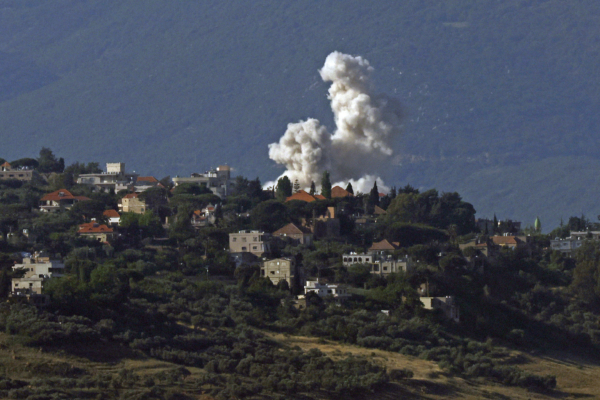
Meanwhile, the ground situation remains severe. The Israeli military announced on Sunday that troops had captured the strategically significant 900-year-old castle of Beaufort Castle in southern Lebanon and surrounding ridges.
Prior to this, Hezbollah launched its most intense firepower attack on northern Israel since the April ceasefire, leading to school closures and activity restrictions in the area.
The US government reiterated that protecting civilians is of utmost importance. The senior official emphasized to the media, “The US does not expect Israel to silently endure ongoing attacks by terrorist organizations on its civilians. The quickest way to stop escalation and protect civilians on both sides is for Hezbollah to cease fire immediately.”
The international community is closely monitoring the situation. The UN Security Council, at the request of France, is expected to hold an emergency meeting on Monday to discuss the conflict between Israel and Hezbollah.
UK Foreign Secretary Yvette Cooper and German Foreign Minister Johann Wadephul voiced concerns over the escalating violence, calling for both sides to halt military operations and warning that further offensives could trigger a serious humanitarian crisis.
Secretary-General of the Arab League Ahmed Aboul Gheit condemned the military actions for violating Lebanese sovereignty and international law.