
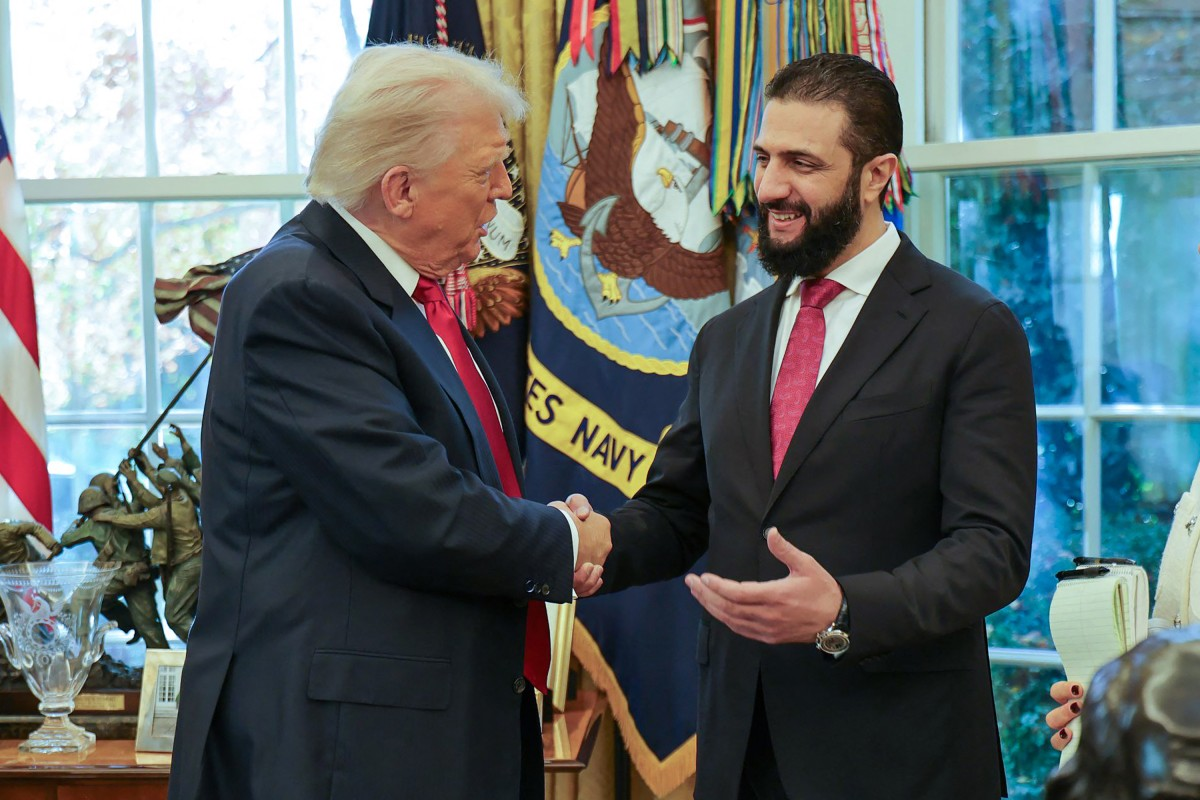
On Sunday, July 12, the new Syrian parliament held its inaugural session. This marks the first major gathering since President Ahmed al-Sharaa overturned the Bashar al-Assad regime 19 months ago. Despite the current limited powers of the parliament, it is seen as a significant milestone in the country’s political transition. According to the temporary constitutional declaration, the parliament has the authority to propose bills, review laws, and participate in the drafting of a permanent constitution.
The newly convened parliament, known as the People’s Council, is seen as a test for the Sharaa government to establish a more inclusive political order. Since the overthrow of the Assad regime, the Sharaa government has been actively improving relations with Western countries and pledging to rebuild Syria and usher in a new era of freedom. However, internal political divisions and sectarian tensions still pose challenges to reforms.
In a speech to the Damascus Council, Sharaa urged the members to build the parliament into a “responsible and capable model” and to foster a culture of dialogue, rule of law, and respect for institutions, ultimately shaping it into a “platform for seeking truth and justice.”
Sharaa emphasized that improving the economy, strengthening public services, and attracting international investment are among the parliament’s top priorities. He stated, “Syria is writing a history that showcases the courageous spirit of its people, and we bear a dual responsibility of building the nation and the individual.”
In response, UN Deputy Special Envoy for the Syrian crisis, Claudio Cordone, commented that the inaugural session of the new parliament is a “key milestone in the country’s political transition.” He added that the international community will closely monitor its work and stand ready to provide support.
According to the transitional constitutional declaration, the new parliament can propose and pass laws, but its power remains restricted within the presidential framework.
Under Syria’s interim governance arrangements, out of the 210 seats, 140 members were elected by regional electoral groups last year, with the remaining 70 directly appointed by Sharaa on July 1st this year. The new members serve a term of 30 months with the possibility of reappointment, and they will temporarily exercise legislative authority until a permanent constitution is passed and national elections are held.
Officials explained that establishing this election system is necessary as Syria has experienced years of conflict, resulting in millions of displaced people, making it challenging to obtain accurate population data and voter lists for holding general elections.
Critics argue that this gives the executive branch excessive control over the parliament list. However, Sharaa responded that once the damaged infrastructure and missing census documents are repaired to enable nationwide general elections, he would support holding the elections.
After the members took their oaths of office, Abdel Halim al-Awak was elected as the Speaker with 99 votes. The primary task of this parliament is to establish relevant committees to participate in drafting a permanent constitution, laying the foundation for democracy after decades of oppressive rule by the Assad family.
According to the Syrian Arab News Agency (SANA), al-Awak comes from the northeastern Hassakeh province and served as a judge in the Justice Department for ten years. He was also one of the many officials who defected from the Assad government in the early stages of the Syrian uprising and went into exile in Turkey.
Currently, the parliament has a total of 21 female members, with 15 being nominated by Sharaa. While the authorities have not disclosed the specific proportions of members from ethnic and religious minorities, unofficial statistics indicate that in the seats won last year, 10 were secured by minority groups such as Kurds, Christians, and Alawites (the Assad-affiliated sect).
It is noteworthy that there are currently four vacant seats in the parliament. One seat is vacant due to the death of a member, while the other three seats are reserved for the Druze-majority province of Sweida.
Officials stated that the election of representatives from the Sweida province would be postponed until conditions are deemed suitable. Since last July, the region has been outside government control following clashes between government forces and local Druze armed groups.