
This Monday (June 1st), Vietnamese President To Lam and Philippine President Ferdinand Marcos Jr met at Malacañang Palace in Manila, Philippines. Marcos stated that maintaining peace, stability, and freedom of navigation in the South China Sea remains non-negotiable for both countries.
According to reports from “Diplomat”, Lam’s two-day state visit to the Philippines is the first by Vietnam’s top leader to deepen bilateral cooperation between the two nations.
After the meeting, Marcos announced that both the Philippines and Vietnam agreed to elevate their relationship to a strengthened strategic partnership. In the face of increasing global instability, both countries share common interests in “maintaining regional peace, stability, and a rules-based order”.
Marcos further emphasized that enhancing their partnership reaffirms Vietnam’s unique and enduring position as the Philippines’ sole strategic partner in Southeast Asia. The future relationship between the two countries will be defined through broader cooperation, stronger political and defense collaboration, and connections between their peoples.
Lam stated that the Philippines is an important regional partner for Vietnam, expressing Vietnam’s desire to closely work with the Philippines to further enhance the substance, comprehensiveness, and effectiveness of their strategic partnership.
Lam’s visit coincides with the upcoming 50th anniversary of diplomatic relations between the Philippines and Vietnam on July 12. Additionally, due to concerns over China’s increasingly assertive actions in the South China Sea, the two countries have intensified their relationship to a strategic partnership over the past decade.
A decade ago, China began land reclamation activities in the Spratly Islands. In 2024, Marcos mentioned that maritime cooperation is the cornerstone of their strategic partnership. Now, he and Lam reiterated that safeguarding peace, stability, as well as freedom of navigation and overflight in the South China Sea is non-negotiable.
Marcos emphasized that both countries are firmly committed to peacefully resolving disputes within the framework of international law, including the United Nations Convention on the Law of the Sea (UNCLOS) and the 2016 arbitral ruling, which found that many of China’s claims in the South China Sea violate UNCLOS.
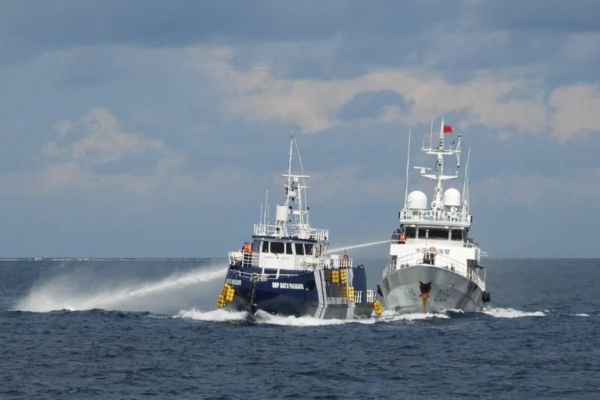
Since establishing diplomatic relations, the Philippines and Vietnam have agreed to enhance their military-to-military contacts through joint naval patrols, training, and exercises. In 2024, they conducted their first joint maritime law enforcement exercise in the South China Sea. Both nations are dedicated to resolving sovereignty disputes in the South China Sea, enhancing coast guard cooperation, and preventing incidents of conflict in disputed waters.
Among the four agreements signed on that day by the Philippines and Vietnam, there was a renewal of a defense cooperation memorandum of understanding signed in 2010 between their defense ministries, aimed at strengthening joint exercises and military education cooperation.
After delivering a keynote speech at the Shangri-La Dialogue in Singapore, Lam arrived in Manila. In his speech, he highlighted three major crises facing the world today: erosion of international rules and laws, slowing economic growth, climate change, and deteriorating trust between nations.
Lam called for stronger adherence to international law, creation of inclusive and sustainable growth mechanisms, enhanced dialogue, and increased transparency.