
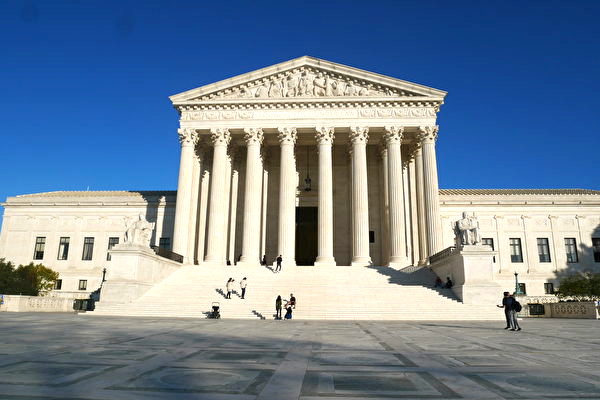
The US Supreme Court on Tuesday (June 2) temporarily stayed a lower court’s injunction with a 6-3 decision, allowing Alabama to use the congressional district map proposed by Republicans in the upcoming midterm elections.
This ruling is expected to reduce the number of districts where two African-American voters form a majority or near-majority to just one district, providing an advantage to the Republican Party in the battle for control of the House of Representatives.
The justices, in an unsigned decision, indicated that Alabama is likely to ultimately prevail against legal challenges to the district map. The challenge was brought forth by several plaintiffs, including a group of African-American voters.
These plaintiffs argue that Alabama’s advantageous Republican district map violates the Voting Rights Act and the commitment to equal protection under the US Constitution. The Voting Rights Act is a law enacted in 1965 aimed at preventing discrimination in voting.
The ruling stated, “The State is likely to prevail on the merits of both of these claims.”
“While federal courts should not force changes close to an election,” the justices added in the decision, “states have the right to determine whether altering electoral arrangements at the last minute serves their best interests.”
Supporters of the map in Alabama’s Republican Party argue that the state has the right to maintain “neutral political and policy objectives,” which does not constitute intentional racial discrimination. Previously, they also informed the Supreme Court that if the state were compelled to use the map approved by the lower court, voters would face “irreparable harm.”
This decision directly impacts the 2nd district represented by Democratic Congressman Shomari Figures.
The map proposed by the Republicans would consolidate two districts where black voters form a majority or near-majority into one district, potentially making Figures’ current seat a target to be flipped by the Republicans.
Against the backdrop of the Republican Party’s efforts to maintain a slim majority in Congress, this move is seen as a significant political advantage for the Republican Party ahead of the midterm elections.
Three liberal justices dissent with this ruling. Justice Sonia Sotomayor, in a dissenting opinion, called the ruling a “disregard for democratic values and the rule of law,” noting that the court is facing the “disorder” and “harm” it caused itself.
She criticized, “Just as Alabama has intensified racial discrimination, the Court has intensified chaos today. Because I choose to defend the rule of law and the equal right of all Alabamians to participate in democracy, I respectfully dissent.”
This controversy stems from the Supreme Court’s limitation of the effectiveness of the Voting Rights Act in April this year, prompting several Republican-led states in the southern United States to redraw district lines.
Challengers representing African-American voters pointed out that according to Alabama’s own acknowledgment of the election schedule, it is now too late to change the map and described in their filings, “Even mighty Hercules cannot complete the required task within the specified time.”