
As China’s labor costs continue to rise, the operating environment for Japanese manufacturing deteriorates locally, and the trend of global supply chain restructuring accelerates, Japanese local banks are gradually reducing their business presence in China. They are shifting the focus of their overseas business expansion to emerging markets in Southeast Asia and India.
According to the report from Nikkei Asia, citing public data and interviews with relevant banks, among the overseas branches of 61 local banks in Japan, although China still accounts for nearly half, the number has significantly decreased. Data shows that as of the end of March this year, the number of offices, branches, and local subsidiaries established by Japanese local banks in China has decreased to 40 locations, down by about 20% from 50 in April 2021.
In recent years, several local banks have successively downsized their operations in China. Hokkaido Bank closed its Shenyang office that had been in operation for nearly 20 years in May 2025, transferring related business back to Japan; Kyoto Bank also closed its Dalian office in 2025 and consolidated business operations to its Shanghai office. The banks cited that the maintenance costs of overseas branches continue to increase while customer demand is on the decline, leading to the decision to reduce operational scale.
During the rapid growth period of the Chinese economy in the 2000s, Japanese local banks made significant entries into the Chinese market. They became essential support for Japanese auto parts manufacturers and other small and medium-sized enterprises to expand their businesses in China by assisting them in understanding local tax laws, regulations, and investment environments. However, in recent years, with the declining competitiveness of Japanese carmakers in the Chinese market, the related demand has gradually diminished.
Reports indicate that the rapid rise of domestic new energy vehicles (EVs) in China in recent years has led to a continuous loss of market share for Japanese brands. Some Japanese carmakers, including Mitsubishi and Honda, have reduced production capacity in China or adjusted their business layout, further weakening the customer base of local banks in the Chinese market.
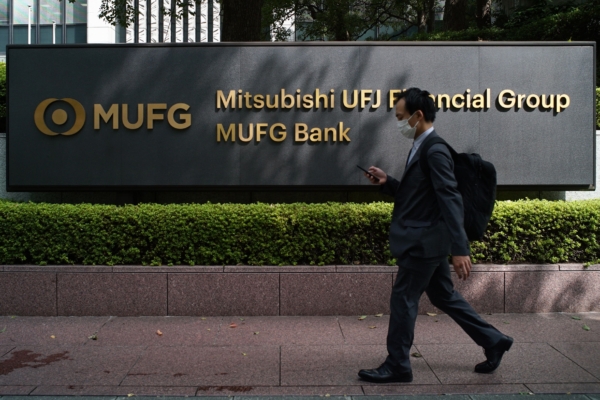
Not only local banks, but also the loan volume of the three major banking groups from Japan in China is showing a downward trend. By March 2026, the outstanding loans of Sumitomo Mitsui Banking Corporation in China (including Hong Kong and local subsidiaries) have decreased by about 40% over the five years; Mitsubishi UFJ Financial Group (MUFG) declined by about 20% during the same period; and the relevant loan balance of Resona Bank also decreased by over 30%.
Analysis shows that the rising operating costs such as labor and rent in China, along with deteriorating regulatory environments, are weakening the investment willingness of foreign enterprises in the country. Additionally, compliance risks brought about by the implementation of the National Security Law in Hong Kong, as well as geopolitical uncertainties, are prompting companies to reevaluate their supply chain layouts. Some Japanese firms are concerned that in case of deteriorating international situations, they may face risks such as trade disruptions, leading them to diversify their production and investment bases.
With the trend of “de-Chinafication” in Japanese corporate supply chains deepening, Japanese local banks are actively strengthening their presence in Southeast Asian markets. Singapore, with its mature financial system and regional financial center status, has attracted many Japanese local banks to establish branches as essential hubs for expanding into the ASEAN market.
Chiba Bank opened a branch in Singapore last year, covering markets in Thailand, Vietnam, and Australia, while actively exploring non-Japanese corporate clients. Sendai-based Bank of Yokohama has also entered Singapore, while Nishi-Nippon Bank based in Yamaguchi Prefecture established its first overseas subsidiary in Indonesia in April this year.
In addition to Southeast Asia, India, with the world’s largest population, is seen as the next significant growth market. In recent years, India has been actively attracting foreign investment to promote the development of semiconductor, data center, and high-tech industries.
The three major Japanese banks have been strengthening their presence in the Indian market, with MUFG’s actions particularly noteworthy. In December 2025, MUFG invested around $4.4 billion to acquire a 20% stake in Shriram Finance, one of the largest non-bank financial companies in India, becoming one of the most extensive foreign investment cases in the Indian financial industry in recent years.
On the side of local banks, the Kyoto Financial Group, the parent company of Kyoto Bank, plans to establish a representative office in India. If successful, it will be the first Japanese local bank to enter the Indian market. Due to the close collaboration of this group with manufacturing companies such as Nidec and Kyocera in Japan, they have high expectations for the new opportunities brought by the development of the semiconductor industry and data center construction in India.
Industry experts point out that despite many uncertainties in cultural, political, and business environments in India, with its vast population and economic growth potential, it has become a significant strategic direction for Japanese financial institutions and businesses to expand into overseas markets.
According to a survey conducted by the Japan External Trade Organization (JETRO) on the actual situation of Japanese companies operating overseas in 2025, the investment intention of Japanese companies in the Chinese market continues to decline. Only 21.3% of Japanese companies plan to expand their business in China in the next 1 to 2 years, reaching a new low since 2007. The enterprises planning to scale down, relocate, or withdraw from the Chinese market total 14.4%, exceeding the global average level of 6.3%.