
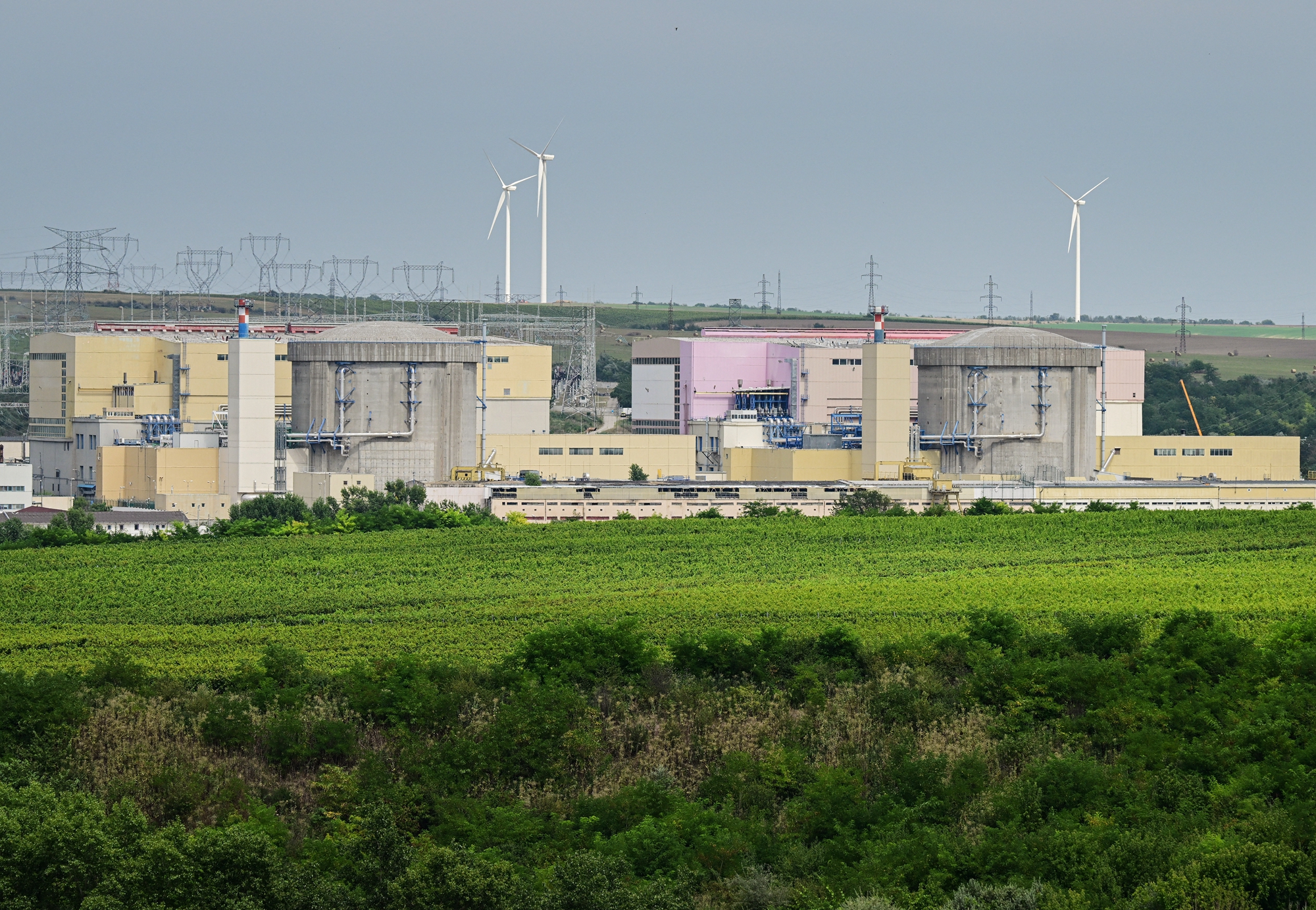
Europe’s second-longest river, the Danube, is currently facing a rare drought crisis. Due to water levels dropping to a historic low, the river’s flow is only about one-third of the average for August in previous years. Authorities in Romania have urgently taken extraordinary measures, preparing to sink barges filled with giant stones into the river to create a temporary barrier, guiding more water towards the Cernavoda Nuclear Power Plant to maintain power supply.
According to the British newspaper “The Independent”, Romania’s Danube River Water Management Authority stated that as of Thursday (August 6th), the flow of the Danube River passing through Romania had dropped to 1,400 cubic meters per second, reaching a historic low representing only about one-third of the average flow for August. This drought directly affects the Cernavoda Nuclear Power Plant located along the Danube River.
The nuclear power plant has two reactor units, providing approximately one-fifth of Romania’s national electricity. Due to the lack of water to provide sufficient cooling, Unit 1 has been forced to shut down, and authorities are currently working to keep the other reactor unit operational. In order to increase the water flow towards the nuclear power plant, the Romanian water department has taken measures such as clearing the riverbed and using explosives to remove rocks obstructing the flow. Due to limited effectiveness, authorities plan to start sinking four barges loaded with rocks into the river one by one starting at 12:00 GMT to create a temporary dam to channel water from nearby tributaries towards the nuclear power plant.
Romeo Urjan, the director of the Cernavoda Nuclear Power Plant, told Digi24 that the project is expected to take about a day to see improvements in water flow. If the sunken barges can effectively increase the water supply, the operating time of the reactor units at the plant can be extended to 9 to 10 days; if water levels do not improve, the existing reactor units may stop operating within 5 to 6 days.
Analyses from the Dutch international group ING Bank indicate that such measures can only address short-term issues and should not be seen as a long-term energy strategy. Clearing rocks from the riverbed or adjusting water flow may allow nuclear power plants to operate for a few more days, but it cannot increase new generation capacity, improve European grid connectivity, or enhance energy storage capabilities.