
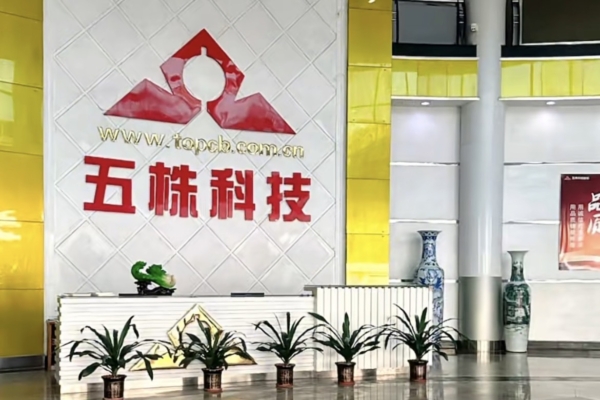
China’s economy continues to deteriorate, with a significant shift in industrial chains. Dongguan’s Five Sprout Electronics and Five Sprout New Energy, with a registered capital of 350 million yuan, recently issued closure notices. They announced the immediate cessation of production and business operations, along with the termination of all employee labor contracts. The announcement cited inability to sustain normal operations due to changes in market conditions and unsuccessful investment layouts.
According to the closure notice released on May 28th, Dongguan Five Sprout Electronics Technology Co., Ltd. and Dongguan Five Sprout New Energy Technology Co., Ltd. declared their official closure through shareholder resolutions and in conjunction with the progress of pre-restructuring procedures in accordance with the law. They will fully stop production and business operations. The notice also stated that the company will settle wages by June 6th and address employee economic compensation and other legal rights and interests issues in cooperation with employees through legal channels.
Public information indicates that Five Sprout Electronics was established in 2010 with a registered capital of 350 million RMB. The company primarily focused on the research and production of double-sided panels, multi-layer boards, high-density interconnect boards, and flexible circuit boards, involving fields such as communication equipment, automotive electronics, and medical devices. The company once held multiple patented technologies and was considered one of the larger PCB manufacturing enterprises in the South China region.
A professional in the Guangdong Printed Circuit Board (PCB) industry, Hu Jianbo, shared that it has become increasingly challenging for the PCB industry in China. Small and medium-sized enterprises are facing pressure from price wars, decreased orders, and rising costs simultaneously. Hu remarked, “In the past, with plenty of orders, expanding and acquiring equipment to increase production capacity seemed sufficient to cope. However, now with fewer orders, labor and material costs still rising, many business owners who had borrowed money for expansion in previous years are now burdened with debt, unable to sustain their businesses.”
Hu Jianbo highlighted that the period from the 2000s to around 2018 was the peak period for the PCB industry in Guangdong. During that time, the Pearl River Delta undertook the transfer of electronic manufacturing from Taiwan, Hong Kong, Japan, and Western countries. Factories were concentrated in areas like Shenzhen, Dongguan, and Huizhou, with orders and workers mainly concentrated in Guangdong. He noted a stark difference now, where labor costs have increased, orders are shifting away, and many factories are either moving out or shutting down. Observing some areas, he estimated that around seventy percent of enterprises may have already closed down.
Insiders in the industry explained that the golden period for the Guangdong PCB industry was roughly from the 2000s to around 2018. Subsequently, labor, environmental, and land costs increased in the Pearl River Delta. Orders began shifting to inland areas and Southeast Asia, while local governments in China frequently conducted tax inspections and adjusted industrial directions, leading many traditional PCB enterprises from expansion to elimination.
A company owner in Dongguan, Mr. Bi, told reporters that the continuous deterioration of China’s economic environment, coupled with tax inspections and market regulation visits, has made it challenging for many private enterprises to sustain operations, forcing them to choose closure. He stated, “In the first half of this year, companies in Guangdong are being audited everywhere. They always suspect you have two sets of books, one for them to see and one actual set. It was never like this before. A tax officer privately told me that they aim to eliminate a batch of enterprises now, pushing everyone towards the so-called technology industry trend. The whole country is now focusing on AI, and everyone is rushing into it.”
Mr. Bi believed that the recent industrial policies lacked continuity and market logic, frequently intervening in business development direction using administrative measures. He expressed, “The government is making decisions based on spur-of-the-moment thinking, focusing on real estate and new energy a few years ago, and now going all-in on AI. The Chinese economy has entered a vicious cycle, and what benefits can ordinary private enterprises gain?”
In online forums like Weibo and WeChat, there has been a continuous stream of information regarding business closures and shutdowns recently. Some netizens expressed concerns, with one comment stating, “It will only get more severe in the future.” Another comment highlighted, “More and more factories and companies are closing in Dongguan, turning it into a ghost town.”
Another netizen pointed out that Five Sprout Electronics, previously known as Yaxin Electronics, had operated in the local market for many years. Its exit from the market came as a surprise to many.