
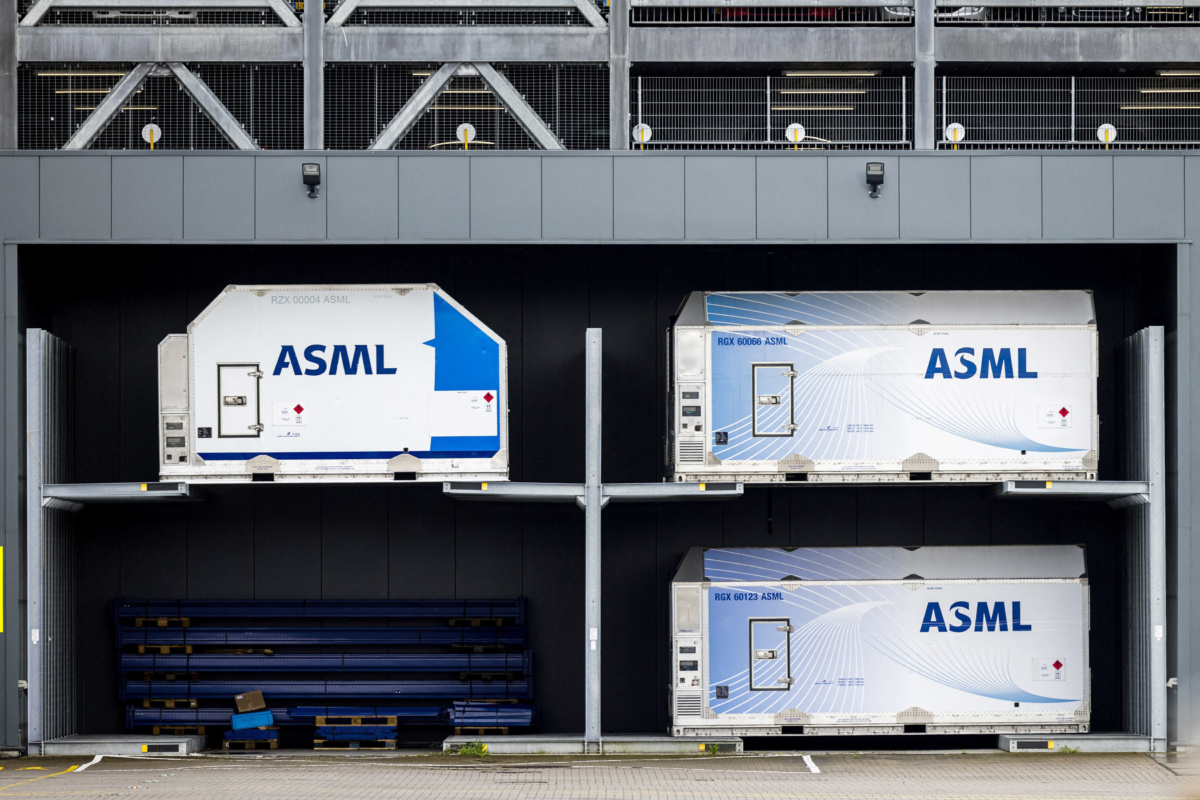
Global advanced chip equipment manufacturer ASML, based in the Netherlands, is becoming a prime target of infiltration for the Chinese Communist Party (CCP). An independent think tank in the Netherlands has issued a warning in its latest report, stating that CCP interference in the Netherlands poses a “systemic and longstanding challenge,” affecting the country’s strategic autonomy, economic resilience, and national security.
The Hague Centre for Strategic Studies (HCSS) and the China Knowledge Network in the Netherlands released a report on July 3 titled “Beyond Borders: Chinese Use of Foreign Interference Tactics in Dutch Strategic Industries.” This report delves into how the CCP targets the Netherlands’ semiconductor, maritime, and aerospace industries, engaging in economic and espionage warfare.
The report analyzes a variety of foreign interference tactics employed by the CCP, including cyber espionage, talent recruitment, economic leverage, information operations, legal pressure, and supply chain influence.
ASML specifically is named in the report as a key target of CCP infiltration. The CCP seeks to acquire critical technology through talent recruitment, academic infiltration, and reverse engineering, while also applying economic pressure on ASML through tactics like rare earth export restrictions. The report notes that the CCP’s limitation of rare earth exports in 2025 has posed potential supply chain delays for ASML.
ASML is the only commercial Extreme Ultraviolet (EUV) lithography machine company globally, essential for producing advanced semiconductors crucial for high-end smartphones, data centers, and weapon systems.
According to previous reports by Reuters, Chinese engineers who formerly worked at ASML have reverse-engineered a prototype of the EUV lithography machine.
The report categorizes the Dutch semiconductor industry as a high-strategic-risk area, with the CCP not only targeting ASML but also focusing on other companies like NXP Semiconductors and restricting the export of key materials.
Quoting Hans Horan, a strategic analyst from HCSS and one of the report’s authors, Nikkei Asia reports that acquiring Dutch expertise or influencing its companies can yield “disproportionate strategic value” in the global value chain.
In the maritime sector, Chinese state-owned enterprises such as COSCO Shipping Ports and China Merchants Port Holdings have gained a significant share of cargo capacity in the port of Rotterdam, acting as investors and terminal operators.
The report warns that the CCP could influence port operations through tactics like cyber espionage, data acquisition, and precise disruptions, potentially impacting European energy supply, industrial production, and even NATO logistics in times of crisis.
HCSS further warns that in the event of a conflict in the Taiwan Strait, the CCP’s influence on Dutch strategic industries could severely restrict the Netherlands’ policy choices, delay military preparations, and impede its participation in joint actions with allies.
The report presents specific recommendations to Dutch decision-makers, including establishing a national framework for foreign interference coordination and intelligence sharing, implementing risk-based security standards in strategic industries, establishing a public-private resilience fund, enhancing transparency and international coordination, and adopting a strategy of “managed interdependence,” integrating protective measures and reciprocal principles in engagements with the CCP.
Lastly, the report urges the Netherlands to shift from passive defense to proactive resilience building, maintaining strategic autonomy while upholding economic cooperation.