
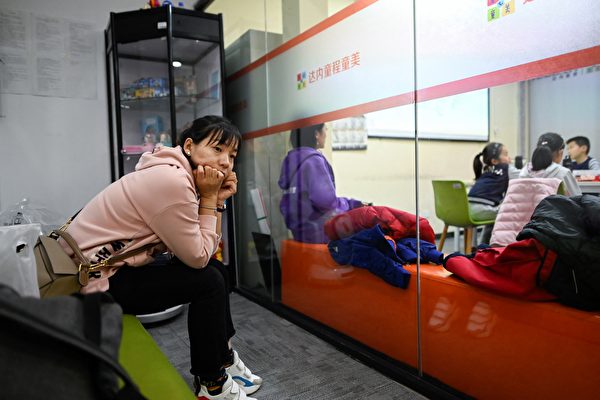
In early July, as schools in mainland China entered the summer vacation period, the office of the Ministry of Education of the Chinese Communist Party issued a notice demanding that schools across the country strictly prohibit early opening, delayed vacation, and organizing students for collective classes or make-up lessons during the summer vacation. In previous years, the summer vacation was typically an important enrollment season for art and sports training institutions. However, this year, some heads of training institutions have reported significantly lower enrollment rates during the summer, drawing attention to the changes in the education and training market.
According to a report by the Beijing Daily, despite official efforts in recent years to reduce students’ academic burdens and prohibit extracurricular subject training during the compulsory education stage, many parents still arrange for their children to participate in swimming, painting, taekwondo, and other interest courses during the summer vacation.
A recent video released by a head of a training institution in China has sparked attention on social media. The individual mentioned that enrollment in summer art training classes this year was significantly lower than expected, with programs like art, chess, dance, and music experiencing a shortage of students.
Expressing shock at the enrollment situation this summer, the head stated, “I saw the summer classes, and it made me want to cry. No one in the painting class, no one in the chess class. Only three students learning dance. One student for drum lessons, one for guitar.”
Perplexed, he questioned, “Where did everyone go? No one is learning dance, painting, basketball, or music. Why does it seem like everyone collectively disappeared this summer? What exactly is happening?”
The head of the institution raised doubts, asking if parents are no longer letting their children attend any interest classes. He recounted: “I saw a few teachers exchange knowing smiles. The awkward feeling was truly heart-wrenching. One teacher said, last year, the class was full of students. This year, there is only one student in this class. The contrast, the situation, the heartache, it’s truly unbearable.”
He expressed concern that if summer class enrollments are so dismal, how long can the bosses of these art training institutions persevere? Normally, the summer season is a peak period for training institutions. Expectations were for a flourishing period, but what money can be made from this year’s summer classes? Where can they make a profit?
He further criticized, “If they can’t even attract students during the traditional peak season of summer, the enrollment pressure in the autumn and end of the year will only increase.”
Videos related to this issue continue to circulate on platforms like TikTok, with comments from non-academic training practitioners from second and third-tier cities mentioning severe risks of closure and lease termination.
Behind the phenomenon of parents and children “disappearing” collectively, it is believed that there has been a profound shift in family consumption patterns due to changes in the macroeconomic environment. A Beijing financial blogger, under the pseudonym “Anxious Cola Cake,” indicated that the situation reflected by the head of the training institution signifies a shift in current family education consumption patterns.
He pointed out that in recent years, many families have experienced declining expected incomes, along with increased pressure from fixed expenses like mortgages and car loans, leading many parents to reassess their educational expenditures.
“Many families are now facing income decreases, coupled with substantial pressures from mortgages and car loans. How many people are willing to spend money on martial arts, drumming, and other courses for their children? Certainly much fewer than before.”
Citing an example, he mentioned that tuition fees for his child’s violin lessons cost over 10,000 yuan annually, which has become a significant burden for many families nowadays. “These types of training programs that require long-term investment, with delayed returns, are no longer a priority under economic pressures.”
He noted that in the past, many middle-class families enrolled their children in courses like violin, horseback riding, and painting not only to cultivate interests but also due to social factors and educational competition. The mentality of “if other children are learning, mine should as well” gradually led to an educational “arms race.”
However, with changing economic circumstances, this consumption pattern is now unraveling. “Previously, everyone talked about not letting children fall behind at the starting line. Now, many families are more concerned about avoiding financial issues.”
Looking ahead, he suggested that the education and training market might gradually move towards two directions: practical training that directly improves academic performance, professional skills, or job competitiveness, and community public service courses or low-cost interest classes offering high cost-performance ratios. Compared to the longer-term, high-cost art training programs like painting and violin that require substantial investment and have extended cultivation periods, they may face greater operational pressures.
In recent years, the Chinese extracurricular training market has been impacted by both the “double reduction” policy and a trend towards rational family consumption, along with a decline in the birth rate, leading to accelerated market differentiation. Industry insiders believe that high-cost, high-value, and long-term training programs like piano, art, and horseback riding are now facing direct operational pressures, whereas more practical or cost-effective training may become the new direction in the market. Those high-priced, high-value, and long-term investment programs like piano rooms, painting classes, and equestrian clubs are facing the most immediate operational pressures.