
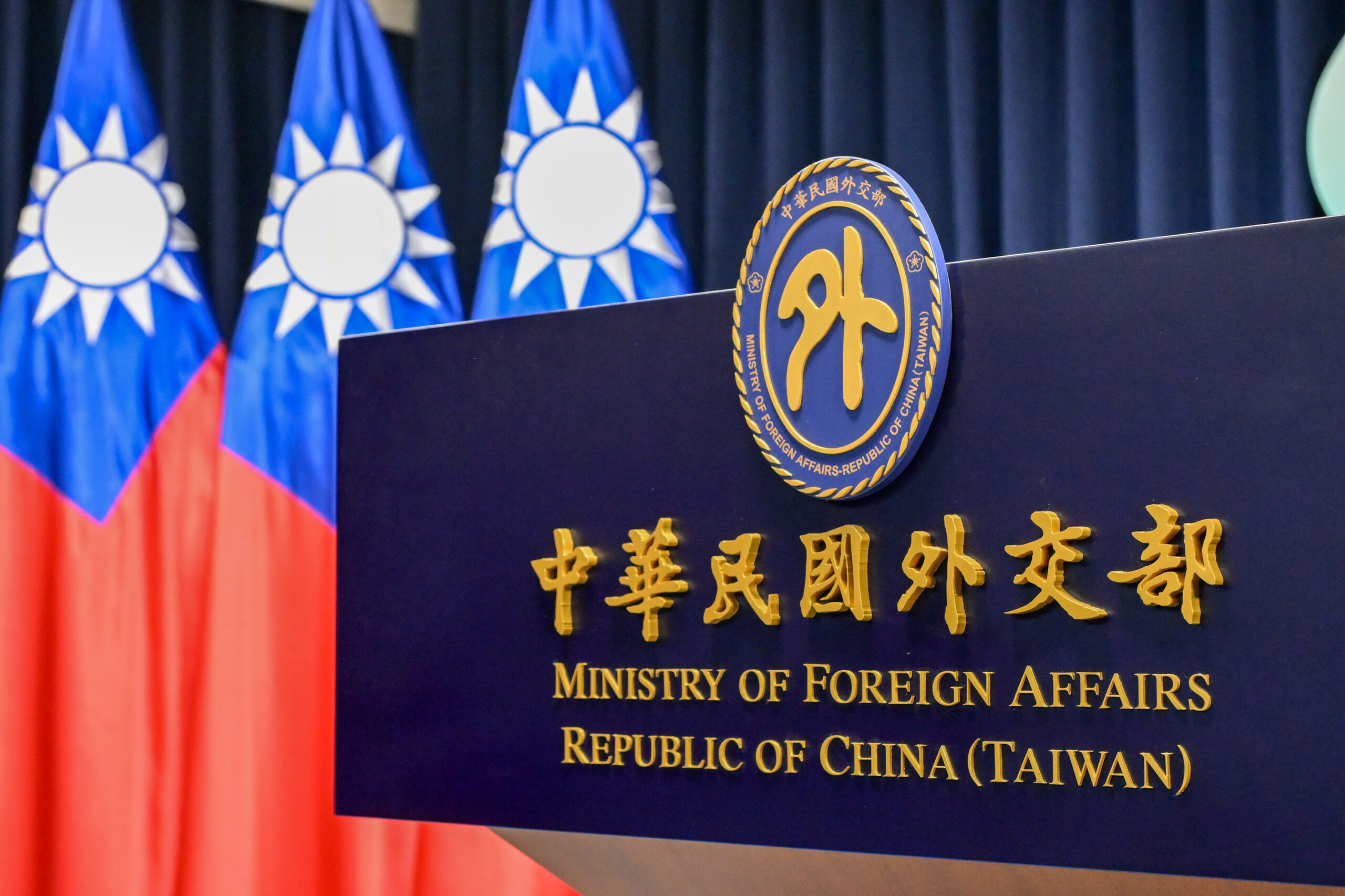
Philippines and the Chinese Communist Party’s arbitration case in the South China Sea reaches its 10th anniversary. The Ministry of Foreign Affairs of the Republic of China (Taiwan) reiterated that Taiwan’s stance on the South China Sea issues follows four principles and that its sovereignty claims and related policies remain unchanged.
Ten years after the arbitration ruling on the South China Sea case, the Philippines, Australia, Canada, Estonia, Germany, Italy, Japan, Latvia, Lithuania, New Zealand, Romania, Slovenia, the United Kingdom, and the United States jointly issued a statement reaffirming the legal binding nature of the ruling. They stated that the Chinese Communist Party’s claims in the South China Sea based on “historical rights” have no basis in international law.
The Ministry of Foreign Affairs reiterated that Taiwan’s sovereignty claims and related policies regarding the islands in the South China Sea have not changed. Taiwan adheres to the following “Four Principles” regarding the South China Sea issues:
1. Disputes in the South China Sea should be resolved peacefully in accordance with international maritime law, including the United Nations Convention on the Law of the Sea.
2. Taiwan should be included in multilateral dispute resolution mechanisms.
3. Relevant countries have an obligation to uphold freedom of navigation and overflight in the South China Sea.
4. The Republic of China advocates for the handling of South China Sea disputes through the “setting aside disputes, joint development” approach and is willing to promote regional peace and stability in the South China Sea in cooperation with relevant countries on an equal footing.
According to the Ministry of Foreign Affairs, based on the “Four Principles,” Taiwan continues to actively promote stability in the South China Sea and uphold the values of peace, humanitarianism, ecology, sustainability, and prosperity in the region through specific measures such as defending fishing rights, participating in multilateral negotiations, scientific cooperation, humanitarian assistance, and encouraging talent in maritime law research.
As a responsible member of the international community and a significant stakeholder in the South China Sea region, the Ministry of Foreign Affairs once again urges that discussions on any matters concerning our country’s interests and norms of behavior in the South China Sea region should not exclude Taiwan’s participation to ensure the legitimacy of such discussions.
The Ministry of Foreign Affairs states, “As a reliable maritime partner, our country adheres to international law and the law of the sea in asserting sovereignty and rights over the South China Sea islands, using Taiping Island as a base to promote maritime cooperation, environmental conservation, humanitarian assistance, and scientific research in the South China Sea region, demonstrating our responsible attitude towards actively promoting regional peace, stability, and shared development.”
The Ministry of Foreign Affairs opposes any unilateral expansionist actions, gray zone coercion, militarization, or other behaviors that undermine peace in the South China Sea and calls on all parties to abide by international law and principles of peaceful dispute resolution, avoiding any actions that escalate tensions, provoke conflicts, or disrupt regional peace and stability.
The Ministry of Foreign Affairs stated, “Our country will continue to cooperate with like-minded countries and regional partners to maintain peace and stability in the South China Sea, uphold freedom of navigation and overflight, and promote a free, open, peaceful, and stable international order.”