
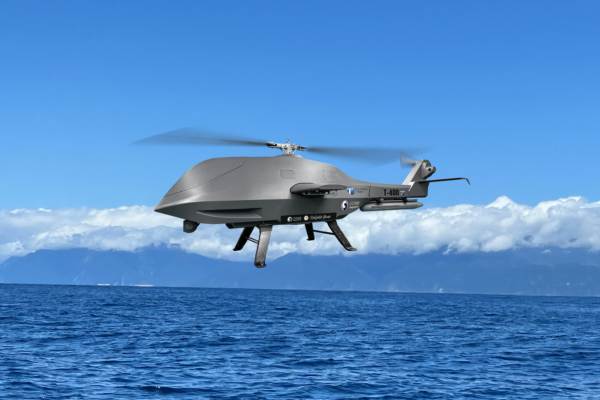
Under the dual driving forces of the ongoing catalyst of the Russo-Ukrainian war and the prevention of China’s military expansion, Taiwan and Ukraine have embarked on a deep “alliance for drone defense and reshaping of supply chains.” Leveraging Taiwan’s cutting-edge capabilities in semiconductor and microelectronics manufacturing, combined with Ukraine’s three years of combat-tested experience, the two countries are joining forces to build a “non-red supply chain” free from Chinese control.
This cross-border strategic cooperation is not only a key factor for Ukraine to maintain its front-line combat capabilities, but also a major layout for Taiwan to establish a “drone shield” and consolidate its democratic defense lines.
Just last week, Ukrainian drones bombed a refinery in Moscow multiple times. Ukraine has recently expanded its long-range drone strikes, relentlessly bombing Russian refineries and supply lines in Crimea.
According to Reuters, since May, Ukrainian forces have deployed hundreds of drones, penetrating 150 kilometers behind enemy lines, precisely striking key roads controlled by the Russian army and critical refineries near Moscow, severely disrupting over one-third of the fuel supply in the capital region.
This offensive not only led to explosions and fires in oil storage tanks, forcing gasoline prices in Russia to rise and causing long queues at gas stations, highlighting the powerful destructive force of drones in crippling enemy logistics and economies, further confirming the crucial role of unmanned vehicles in modern warfare.
The weapon power of Ukrainian drones has caught the attention of various parties. On June 19, Huang Chih-fang, Chairman of the Taiwan External Trade Development Council, personally met with Lviv IT Cluster, Ukraine’s largest technology industry association, to explore cooperation in ICT, defense technology, and semiconductor fields.
Lviv IT Cluster, which brings together over 300 IT companies and more than 100,000 talents, shared with Huang Chih-fang the industrial resilience in the midst of war, pointing out that the technology industry has become Ukraine’s second largest export revenue after agriculture, with as many as two-thirds of startups shifting towards the defense industry.
Huang Chih-fang’s visit focused on Ukrainian drone factories. He explicitly stated that Ukraine has rich combat experience in drone development in the era of artificial intelligence, while Taiwan’s drone industry is also flourishing, and both countries have huge cooperation potential in the defense industry.
He emphasized that Taiwan’s semiconductor and ICT industry accounts for 70% of exports, possessing strong hardware capabilities, while Ukraine has a deep foundation in STEM (science, technology, engineering, and mathematics) education. The combination of the two will become a huge advantage in joining the “talent alliance” in the future.
It is worth noting that Huang Chih-fang confirmed that Ukraine, although heavily reliant on Chinese components during the initial stages of drone production, has shifted towards selecting competitive and trustworthy Taiwanese products for the most critical “high-end flight control components.”
Behind Ukraine’s active switch to high-end Taiwanese components lies a profound distrust of the Chinese supply chain. According to a report by The Guardian in early May, in order to reduce security risks, Ukraine is actively excluding Chinese components from its drone supply chain.
China, which dominates the global drone market, has imposed export controls in recent years and has been accused by Ukraine of aiding Russia with military supplies, leading Ukraine, Europe, and the United States to increasingly look towards Taiwan as an alternative source.
Taiwan is actively seizing this opportunity to position itself as the “Asian hub” for producing “non-red” components. According to data from Taiwan’s think tank Democratic Society and Emerging Technologies Institute, driven by the war, Taiwan’s drone exports to Europe surged more than 40 times in 2025, with the main markets being Poland (over 30,000 units) and the Czech Republic (70,000 units).
Official trade data further shows that Taiwan’s drone exports in the first four months of 2026 have increased to 180,000 units, nearly 20 times the same period last year. DSET predicts that most of these exports are purchased through charitable organizations and then transferred through Central Eastern European countries for use at the Ukrainian front lines.
Bohdan Diorditsa, Chief International Alliance Officer of Vyriy, Ukraine’s top drone manufacturer, told The Guardian that the use of Taiwanese components in the industry is no longer surprising. He emphasized that Taiwan has world-class capabilities in the semiconductor and electronic integration fields, making it a “100% valuable partner.”
When discussing supply chain choices, he pointed out, “We manufacture weapons not because of market pressure or energy pressures; we manufacture weapons under the pressure of survival.” Artur Savchii, an analyst at the Serpent Island Institute in Ukraine, also noted that Taiwan can replace China and play a crucial role in areas such as lithium-ion batteries and other “micro components.”
Although Taiwan has a significant advantage in hardware manufacturing, its industry faces a fatal challenge: the lack of real combat verification. Marcin Jerzewski, Director of the Taiwan Office of the European Values Security Policy Center, has pointed out the core concerns of Western observers, asking, “Do Taiwan’s drones really have combat capabilities?”
The solution to this question lies in Ukraine, which has rich combat experience. Deputy Director Guo Yuren of the Taiwan Institute of National Policy stressed, in an interview with Epoch Times, that Taiwan’s ability to manufacture individual drones is high, but the country lacks the “system integration capability” to incorporate drones into digital battlefield management systems.
In contrast, Ukraine, which has experienced more than three years of war, has become the country with the highest integration capabilities in this field globally.
To address this gap, Taiwan’s National Chung-Shan Institute of Science and Technology signed a development agreement with the US defense technology company Auterion on June 17 last year to officially introduce drone software that has undergone combat testing in Ukraine. This agreement is expected to assist Taiwan in arming millions of military drones and unmanned vessels.
Meanwhile, Taiwan is actively showcasing self-developed products. Members of the Legislative Yuan’s National Defense Committee observed dynamic displays of unmanned vessels such as the “Seahawk 800” by Thunder Tiger Technologies, the “Carbon Guardian 1” by Carbon Base Technology, and the “Black Tide” by Lung Teh Shipbuilding on June 18, highlighting Taiwan’s progress in applying unmanned vehicles for patrol and combat support.
Taiwan announced in May this year that it plans to purchase at least 47,000 drones within three years, with the goal of reaching an annual production capacity of 180,000 drones by 2028.
Taiwan hopes to embed itself into the global supply chain and use this to resist potential military threats from China. Max Lo, a senior official at AeroSoarX, a company that produces dual-purpose drones, described this strategy as building Taiwan’s “drone shield,” which will become another protective barrier for the country.
Taiwan has set ambitious goals: to increase monthly production capacity to 100,000 drones by 2030. However, due to delays in the legislative budget, domestic government procurement orders have fallen behind the industry’s pace, forcing companies to seek markets overseas. Samara Duerr, a policy analyst at DSET, pointed out, “It is necessary to expand the international market, establish the ability to rapidly increase production in the future by expanding scale.”
External challenges are particularly daunting, with price competition being the most pressing issue. Competitors like Chinese company DJI enjoy absolute cost advantages due to their large scale, often pricing Taiwanese products up to three times higher.
Su Sheng-jie, General Manager of Thunder Tiger Technologies, revealed that they had sent systems for on-site testing in Ukraine. “They tried them out and liked them, but they found the (Taiwanese) prices were still too high, so they couldn’t make the purchase.”
He emphasized that Taiwan can only compete with China by expanding scale to reduce costs. Meanwhile, military expert Collin Koh from Nanyang Technological University in Singapore warned that Ukraine may enter the international market in a big way with self-produced drone models after the war, directly competing with Taiwan. Therefore, Taiwanese manufacturers are actively cooperating with overseas companies, with Thunder Tiger Technology even setting up a joint venture in the US to find niche markets.
Due to geopolitical constraints, Ukraine has not officially recognized Taiwan, and the cooperation between the two countries mostly avoids official levels and is carried out through B2B (business-to-business) forms or through intermediary countries such as Poland and the Czech Republic. According to a DSET report, currently, seven Ukrainian companies directly purchase flight controllers, batteries, and other components from four Taiwanese manufacturers, with the total value of direct exports to Ukraine from Taiwan reaching $20 million between 2022 and 2025.
As demand expands, cooperation between the two sides is deepening. The Taiwan Elite Drone International Business Opportunities Alliance (TEDIBOA) has signed a memorandum of understanding with the IRON Cluster in Ukraine, elevating the partnership to a quasi-official level.
In May 2026, IRON led a delegation to central Taiwan to seek component suppliers; Jiin Ming Industry of Taiwan revealed to Reuters that they are currently collaborating on an early-stage development project with a Ukrainian company, jointly developing a drone that may be sold back to Taiwan in the future.
This alliance between Taiwan and Ukraine in the drone industry has transcended commercial trade and become a front line for the global democratic camp to counter authoritarian expansion. Admiral Samuel Paparo, the highest commander of the US Indo-Pacific Command, stated that drones can create an “unmanned hellscape,” providing the US and its allies with response time to confront potential Chinese military actions against Taiwan.
Bryan Clark, a naval expert at the Hudson Institute in Washington, analyzed that drones help fill the gap in the island chain defense from Japan through Taiwan to the Philippines, countering China.