
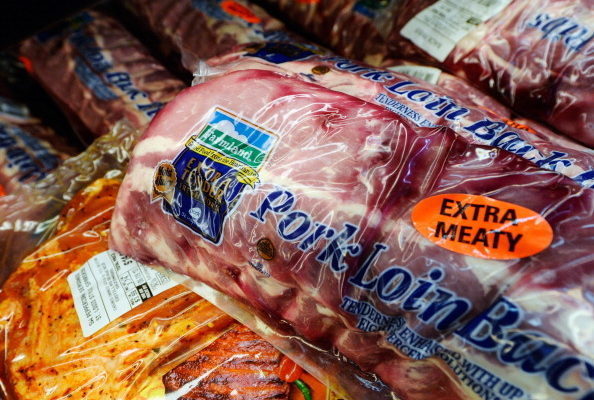
Recently, the news that the lincomycin in the pig’s backstrap produced by Wangkui Shuanghui Beidahuang Food Co., Ltd., a subsidiary of Henan Shuanghui Investment and Development Co., Ltd., exceeded the standard by 37.5 times has attracted attention online.
On May 14th, the Heilongjiang Market Supervision and Administration Bureau issued a notice regarding the supervision and random inspection of food safety (Issue 7 of 2026). According to the notice, the lincomycin content in the pig’s backstrap produced by Wangkui Shuanghui Beidahuang Food Co., Ltd. was found to be 7.70×10³μg/kg, exceeding the standard by 37.5 times, while the standard value is ≤200μg/kg.
Wangkui Shuanghui Beidahuang Food Co., Ltd. raised objections to the authenticity of the samples, but the regulatory authority stated that the objections raised by the company regarding the authenticity of the samples were not substantiated.
According to the information published on the bureau’s website, lincomycin is a type of lincosamide antibiotic produced by actinomycetes, which can inhibit bacterial protein synthesis and has antibacterial effects on most Gram-positive bacteria and some anaerobic Gram-negative bacteria. The “National Food Safety Standard Maximum Residue Limits for Veterinary Drugs in Foods” (GB 31650-2019) stipulates that the maximum residue limit of lincomycin in pig muscles is 200μg/kg.
Public data shows that prolonged consumption of animal products with excessive lincomycin may lead to gastrointestinal adverse reactions, allergic reactions, and liver and kidney dysfunction.
According to Tianyancha, Wangkui Shuanghui Beidahuang Food Co., Ltd. was established in 2008 and is located in Wangkui County, Suihua City, Heilongjiang Province. It is a meat processing enterprise under Shuanghui Group, focusing on meat processing, pig slaughter, pig by-product processing, and pharmaceutical intermediate extraction as its core businesses. The shareholders of the company are Henan Shuanghui Investment and Development Co., Ltd. and Heilongjiang Beidahuang Meat Industry Co., Ltd., holding 75% and 25% of the shares respectively. Ma Xiangjie, the CEO of Shuanghui, serves as the company’s legal representative and chairman.
Shuanghui Development stated that the root cause of the non-compliance issue this time was the failure in observing the drug withdrawal period in the upstream farming process, which led to the release of pigs for slaughter. During the pig slaughter and processing process, Shuanghui strictly implements the “Regulations on Pig Slaughter Management,” and implements requirements for full-process control such as pig entry inspection and meat quality inspection.
On May 25th, the topic labeled “Shuanghui subsidiary’s pig meat detected with antibiotics exceeding 38 times the standard” surged to the top of Weibo’s hot search list.
Netizens commented, “I thought big brands would be more trustworthy, but it’s not always the case.” “Shuanghui’s pork with antibiotics exceeding 38 times: a company with an annual revenue of 14 billion can’t even abide by the drug withdrawal period (ie. stopping medication before slaughter for drug metabolism). Will such an apology still be effective?”
“Long-term intake may cause disorders in the intestinal flora, increased burden on the liver and kidneys, and may even give rise to drug resistance. Shuanghui shifts blame to the farming end, but it can’t hide the loopholes in the entire supply chain supervision. With national meat enterprises repeatedly having issues, who can we trust for food safety?”
“This is not some small workshop, this is Shuanghui. Who hasn’t eaten Shuanghui’s sausage before? Veterinary antibiotics, exceeding the standard usage by nearly 38 times, it’s like a death sentence. If such a big brand is not safe, who can we trust for food in the future?”
“According to scientific knowledge, long-term or excessive intake of lincomycin may cause gastrointestinal reactions, allergic reactions, abnormalities in the blood system, and even cardiovascular side effects.” “Poor Chinese people, what else can we eat?!”
Financial data shows that in 2025, Shuanghui Development achieved operating income of 59.274 billion yuan, a slight decrease of 0.48% year-on-year. Fresh pork products contributed 29.250 billion yuan in revenue, a decrease of 3.57% year-on-year, with the revenue share dropping to 49.35%.