
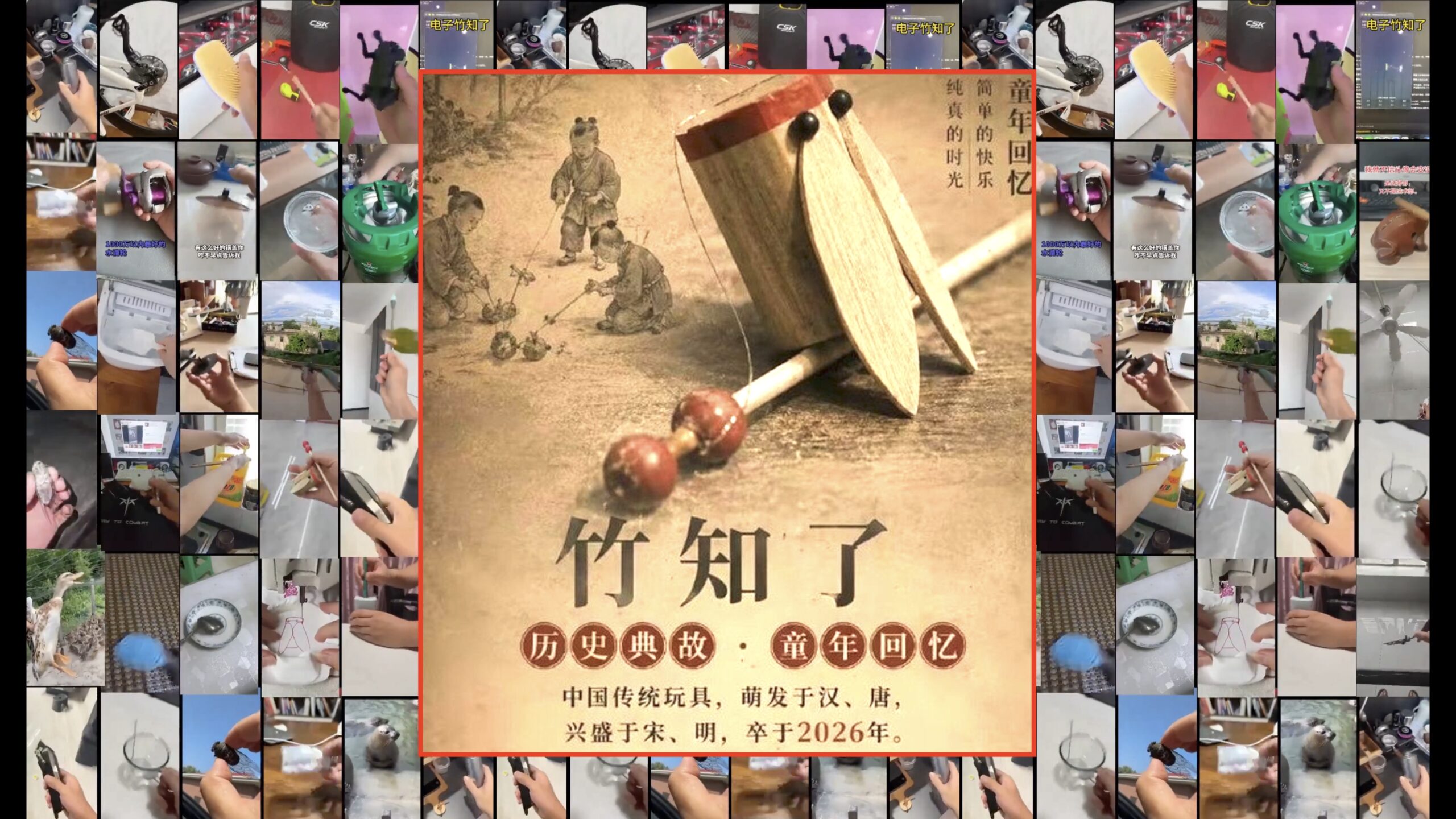
“Chirping Cricket” is a traditional children’s bamboo toy that has unexpectedly become the hottest topic on Chinese social media recently. Some netizens used “Chirping Cricket” to create short videos mocking Huawei, leading to a widespread deletion of these videos on platforms. However, this action has sparked even stronger backlash, with more satirical videos flooding major social media platforms. Analysts believe that this uproar has gone beyond just a simple joke and is a concentrated release of emotions that people have accumulated over time, with Huawei being used as an outlet for dissatisfaction towards the Chinese Communist Party.
This controversy traces back to the end of 2023 when Yu Chengdong, Chairman of Huawei’s Terminal Business Group and Head of HarmonyOS Auto, claimed at the M9 car launch event that the car was the “best SUV under 10 million yuan.” The audience’s astonished reactions to this statement became a widely referenced scene and a popular meme on the internet.
Recently, a video featuring the “Chirping Cricket” toy went viral. In the video, the toy’s chirping sound while moving is edited together with the astonishment from Huawei’s product launch event, accompanied by captions like “the best toy under 10 million yuan.” This video quickly spread on platforms like Douyin and Weibo.
In response to the online mockery, Huawei’s terminal department began reporting these videos to various social media platforms. Since the end of July, a group of short video creators has been receiving notifications from platforms stating that their videos were reported and taken down, with some accounts facing consequences. According to leaked platform notifications, complaints cited that the content ridiculed enterprises and entrepreneurs through homophones and metaphors, leading to a decrease in social reputation.
On the evening of August 4th, a spokesperson for HarmonyOS Auto posted an explanation on their official Weibo account, emphasizing that the complaints were part of routine rights protection work and targeted specific infringements, not the “Chirping Cricket” toy itself.
However, as reported by multiple media outlets, some of the removed videos were simple demonstrations or creations of the “Chirping Cricket” toy without mentioning Huawei’s name or related figures, leading many creators to question the broad scope of the complaints and the impact on ordinary users.
The wave of playing with the “Chirping Cricket” toy has put considerable pressure on Huawei.
Facing this, Huawei’s reporting and massive removal of videos has triggered a strong backlash, prompting a trend of imitation online, with a surge in daily new related videos surpassing 3,000.
Subsequently, netizens have started creating videos using everyday items like lids, wrenches, and pill bottles to mimic similar sounds, generating various versions of the content.
On Chinese e-commerce platforms, many sellers have directly added labels like “same style” and “far ahead,” resulting in a significant increase in sales for some within a short period, causing a supply shortage in some cases.
An incident involving a “Chirping Cricket” toy has caused a significant stir within the online community, with related videos garnering over tens of millions of views across various social platforms, creating a continuous buzz of “chirping” sounds.
In a recent development, a travesty involving a traditional bamboo toy called “Chirping Cricket” has gained popularity on the internet, with related video views quickly exceeding tens of millions and the sound of “chirping” echoing on various social platforms. The origin of this craze can be traced back to late July when a netizen discovered that the sound produced when shaking the “Chirping Cricket” resembled the astonishment from Yu Chengdong’s claim at the 2023 M9 event.
American political commentator Tang Jingyuan analyzed in his self-media program that the nature of this incident has shifted. Initially, Huawei hoped to quickly extinguish the situation through conventional methods but inadvertently fueled the fire further.
He pointed out that what began as a jest and mockery towards Huawei by netizens escalated due to the authorities’ widespread deletion and censorship on the content, triggering a public backlash. Numerous netizens began purchasing “Chirping Cricket” toys, filming videos, and some even went to Huawei stores to shake the toy in protest.
In his view, the “Chirping Cricket” toy is just the fuse, with the explosion being a release of long-standing social emotions. He highlighted that Huawei has a history of suppressing users, netizens, and even employees, creating an impression that “Huawei is untouchable.” This perception has been intentionally cultivated by Huawei, turning it into part of their corporate culture due to the backing of the Communist Party.
Tang Jingyuan further noted that many netizens’ ridicule and resistance towards Huawei have transcended mere sentiments towards a single company but have become a way to indirectly express discontent towards the Communist Party’s regime, commonly known as a “dog fighting its master” scenario. He believed that even with the risk of account suspension, numerous netizens continue to publish related videos due to this reason.
He emphasized that without the support of the Communist Party’s regime, Huawei would not have such immense control over public opinion. However, aligning deeply with the Communist Party also entails facing the repercussions that come with it.
Tang Jingyuan noted that many who once supported Huawei have publicly declared they will no longer purchase Huawei products. This shift is not merely a consumer choice but a change in values.
Meanwhile, Professor Zhang Tianliang from the University of Skyrocketing comments in his self-media program, stating that the essence of the “Chirping Cricket” incident is a common phenomenon of humorous wordplay in the Internet era. He mentioned that online culture inherently has a characteristic of “decentralization of authority,” making it easier for well-known companies and individuals to become fodder for secondary creations, a phenomenon not unique to China.
Zhang Tianliang believed that Yu Chengdong’s frequent use of grandiose expressions like “far ahead,” “redefine,” and “overpower” has made him an easy target for netizens’ mockery. Additionally, Huawei, carrying the symbolic significance of “national technology,” is often held to a higher standard by the public. When a company presents itself assertively or aggressively, it becomes more susceptible to ridicule.
He also pointed out that the expansion of this controversy was not due to the initial joke but stemmed from Huawei’s subsequent actions like deleting posts and limiting content. These moves triggered what is known in communication studies as the “Streisand Effect” – the more one tries to cover up or delete certain content, the more widespread it becomes.
According to a report by ThePaper, a lawyer in Shanghai believes that netizens purchasing and using the “Chirping Cricket” or producing short videos based on it are legitimate activities that do not infringe upon the rights of other entities. On the other hand, an associate professor from East China University of Political Science and Law stated that from the perspective of unfair competition law, mocking content targeting corporate executives, when causing a substantial or potential damage to a company’s reputation, could constitute infringement. He emphasized the need for companies to strike a balance between protecting their rights and public perception, with top executives expected to have a higher tolerance for criticism.
Business figures also joined the discussion. According to reports, a former tech company executive attributed this storm to the inflexibility of corporate crisis response mechanisms and contrasted it with a case where another tech enterprise founder effectively diffused a controversy regarding the pronunciation at a product launch event by self-deprecation, suggesting that Huawei should respond to taunts in a lighter manner rather than resorting to mass complaints.
In actuality, Huawei’s reporting of “Chirping Cricket” videos is not their first engagement with self-media in this manner.
Back in March 2025, HarmonyOS Auto’s legal department announced suing the self-media personality “I am Big Student” for disseminating defamatory remarks and rumor-mongering against the brand and products. Then in November of the same year, the Cyberspace Administration of China launched a special campaign, highlighting accounts like “I am Big Student” in their notifications.
In May 2026, HarmonyOS Auto’s legal department disclosed the outcomes of several reported self-media cases: the “I am Big Student” case was upheld in the second instance; the blogger was ordered to delete their comments, issue a public apology, and pay a compensation of 1.5 million yuan. The “Cavalry Captain – Mr. The Song Pavilion” case won in the first instance but was found guilty of reputational infringement, leading to an order for a public apology and a compensation of 400,000 yuan. Apart from this, HarmonyOS Auto reported several account operators to the police for long-standing rumor-mongering behavior, with some individuals administratively detained.
As the Huawei “Chirping Cricket” controversy intensifies, the Cyberspace Administration of China announced a specialized action on its official website named “Rectification of Deliberate Hype of Enterprise-Related Information,” leading to the disposal of multiple accounts. In their notice, the authorities cited specific cases like “Electric Car Xiaofei” and “Workplace Wudoumi,” accusing the relevant self-media of disseminating misleading information and tarnishing the commercial reputation of car companies, resulting in the closure of these accounts.
Regarding the official attribution of certain criticisms to “organized attacks,” Tang Jingyuan believed that this narrative could be used by the Chinese authorities as a prelude to further tightening control over public opinion. He predicted that if Huawei fails to address the underlying deep-seated emotions prompting the public backlash and solely relies on suppressing methods, the controversy is likely to escalate further.