
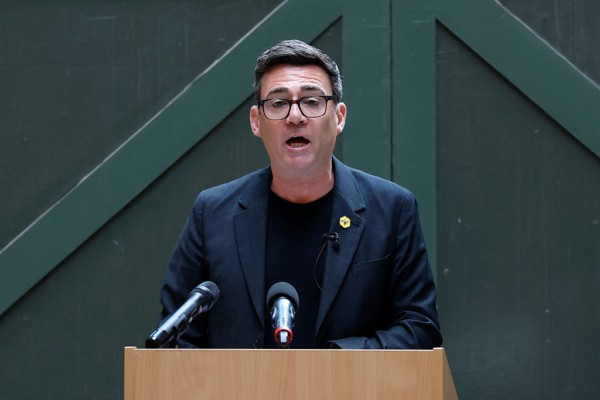
The newly appointed Prime Minister of the United Kingdom, Andy Burnham, announced on Tuesday (August 4) the postponement of the plan to release thousands of prisoners early, tightening the eligibility criteria. However, this move has not been able to quell the discontent from various sectors.
The Prime Minister stated on Tuesday that he would delay the plan to release thousands of prisoners early in England and Wales from the original schedule to October, excluding rapists, child sex offenders, and child groomers. However, domestic violence offenders and murderers will still be eligible for early release, including two men convicted of killing police officers.
Prior to this announcement, official predictions in the UK foresaw prisons reaching full capacity by November. Former Prime Minister Keir Starmer had initially planned to release up to 6,000 offenders in September under the new “Sentencing Act,” but with his resignation on July 20, the plan was put on hold.
According to the new “Sentencing Act,” prisoners serving four years or more will be eligible for release halfway through their sentence as long as they have not seriously violated prison rules, instead of the previous two-thirds rule. This change was scheduled to be implemented in stages, starting with prisoners serving less than 575 days and expanding to offenders serving over 12 years by June next year.
Now, Burnham has rescheduled the early release plan for some prisoners from September to October and amended the scope of prisoners eligible for release.
In a statement, he emphasized, “I fully understand the anger, anxiety, and pain that this policy has caused. Therefore, we have made significant adjustments by excluding rapists, serious child sex offenders, and other child groomers from the list.”
Burnham admitted that he had hoped to “further” exclude more criminals from the plan, but the prison system is facing a severe capacity crisis. Without taking action, the system may collapse, making it difficult to achieve in practice.
Responding to Burnham’s announcement, Conservative Shadow Justice Secretary Nick Timothy stated that while it is a “victory for victims,” it is “far from enough.”
He criticized that some child sex offenders and cop killers can still be released early, which is unfair to the victims. The psychological trauma endured by victims upon learning that the perpetrators are about to be free is a pain that can never be erased.
The early release of domestic violence offenders has also sparked dissatisfaction and warnings from domestic violence prevention groups.
Dame Nicole Jacobs, the Commissioner for Domestic Abuse, called not excluding domestic violence offenders from the early release list a “mistake” that undoubtedly puts “victims’ lives in danger.”
London Victims Commissioner Andrea Simon expressed concerns about the loopholes in this policy, particularly in the absence of enough qualified probation officers, which is causing extreme anxiety for many abuse survivors regarding their safety.
Moreover, the eligibility of the two killers of police officer Andrew Harper, Albert Bowers and Jessie Cole, for early release has stirred criticism from parliamentarians, victims, and frontline police officers.
The duo was sentenced to 13 years in prison for manslaughter in 2020, with the main perpetrator Henry Long not being included in the release list.
Debbie Adlam, Andrew Harper’s mother, expressed grief at the inclusion of her son’s killers in the release list, calling it “another betrayal” for the family.
National Chair of the Police Federation Tiff Lynch warned that allowing individuals who have taken an officer’s life to be released early, just to prevent prison collapse, severely damages public safety and confidence, causes immense pain to the families of the victims, and disregards the value of law enforcement. She hopes the government will reconsider this decision.
Thames Valley Police Chief Jason Hogg also expressed disappointment with the UK government’s decision. He stated, “According to the latest law named after Harper, these offenders, if convicted today, would face life imprisonment without the possibility of early release. We will continue to persuade the government to make the right decision.”
On the other hand, the UK Ministry of Justice has refused to disclose the specific number of prisoners who will not be released due to Burnham’s adjustments, and declined to reveal internal models predicting when prisons will reach full capacity again and if similar schemes will be reintroduced.