
Commemorating the 250th anniversary of the founding of the United States can be done in many ways. The non-partisan community organization “USA250-OC” in Orange County, Southern California, has proposed an initiative called “250 Seconds” to promote civic literacy.
The concept of “250 Seconds” involves setting aside 4 minutes and 10 seconds (250 seconds) at the beginning or end of a meeting to share inspirational stories of Americans, focus on historical events, revisit constitutional principles, and delve into the profound meanings of the founding documents and core ideals of the nation. USA250-OC suggests that this plan can be easily adopted by business owners, leaders of civic organizations, members of parent-teacher associations (PTA), city councilors, or other members of organizations that hold regular meetings.
Since July 4, 2025, the “USA250-OC” website has uploaded nearly 50 “250 Seconds” articles.
The opening story is titled “To Pray or Not to Pray: That Was the Question”.
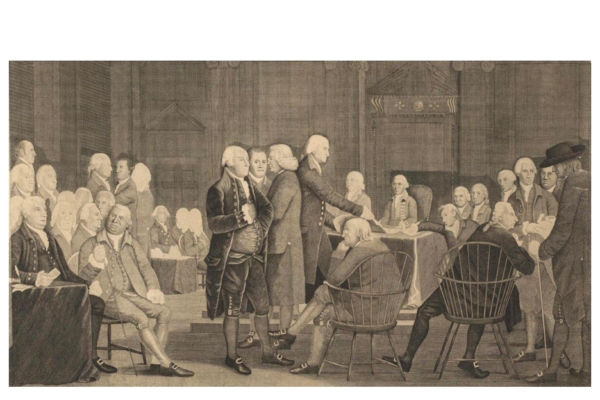
On September 5, 1774, the First Continental Congress convened in Philadelphia to discuss how to respond to the harsh measures of the British government.
On the first day, the delegates gathered at the City Tavern and then walked to Carpenter’s Hall. They submitted their credentials and agreed to reconvene the next day to discuss forming committees and setting meeting rules and agendas.
Attendees included figures such as John Jay, Richard Henry Lee (who later proposed the motion for independence), Peyton Randolph, Patrick Henry, Roger Sherman, George Washington, John Adams, and his cousin Sam Adams.
With British troops advancing towards the colonies, the delegates were aware of the grave danger they faced. Thomas Cushing from Massachusetts proposed that the meetings should begin each day with a prayer. However, John Jay from New York and Edward Rutledge from South Carolina objected, citing religious differences among Anglicans, Quakers, Baptists, Presbyterians, and Congregationalists.
Sam Adams rose and declared that as long as the gentlemen were “pious, virtuous citizens who love our country,” he would be willing to listen to their prayers. He then suggested that Anglican minister Rev. Jacob Duche lead the prayer at the next day’s meeting.
Many letters and diaries documented this moment. John Adams wrote to his wife, describing Rev. Duche’s prayer as deeply moving and capable of melting the hearts of all present.
The seventh story in the “250 Seconds” series is titled “1776 Independence by One Vote”.
On July 1, 1776, delegates from the thirteen North American colonies gathered at the Second Continental Congress for an unofficial vote on independence. Nine colonies supported independence, two opposed it, one abstained, and one delegate was undecided, emphasizing the need for unanimous agreement on the motion for independence.
A month earlier, Virginia delegate Richard Henry Lee had proposed declaring the colonies free and independent states, severing all political ties with Britain. Despite the ongoing battles at Lexington, Concord, and Bunker Hill for a year, the delegates’ support for independence remained uncertain.
New York abstained since their delegate had not received instructions from Albany (the state council passed it on July 9, with the delegate voting in favor on the 15th). South Carolina and Pennsylvania voted against, but the situation indicated a possible change of stance in the final vote. In this deadlock, Delaware became crucial.
Delaware sent three delegates: Thomas McKean supported independence, George Read opposed, and Caesar Rodney, who had been urgently called away to handle local affairs a few days prior, was absent from the initial vote.
To break the tie, McKean left the meeting and hired a fast messenger to deliver a letter to Rodney across the street, urging him to return for the vote the next afternoon.
Rodney was awakened after midnight, read the letter, quickly prepared his horse, wrapped a green silk scarf around his ulcerated face, and embarked on an 80-mile ride from Dover to Philadelphia. Even in fine weather, this journey was challenging, but with torrential rain, overflowing streams, impassable bridges, muddy fields, and dense forests, Rodney’s historic ride became perilous.
Congress President and Massachusetts delegate John Hancock, knowing McKean was working to bring Rodney back, postponed the vote as long as possible. Just in time, Rodney arrived, drenched in rain, covered in mud, and holding his riding crop. His relieved friends welcomed him, saying, “Thank heavens you made it.”
As Congress called the roll for voting in colonial order, McKean voted in favor, Read opposed, and with Rodney’s approval, cast despite his worn-out appearance, the resolution for independence passed; South Carolina and Pennsylvania also voted in favor on July 2. That day, the motion for independence was endorsed by twelve colonies with New York abstaining.
Two days later, Rodney wrote to his brother, stating that he had arrived in time despite the storm delays and cast his crucial vote for independence. They had finished reviewing the full text of the Declaration of Independence, which was approved on July 4, 1776, establishing it as the Independence Day of the United States.
The day before, the future second President, John Adams, wrote to his wife, outlining how Americans would celebrate Independence Day. He described it as the most “epochal day in American history,” to be commemorated with grand ceremonies, parades, performances, competitions, sporting events, gunfire salutes, bonfires, fireworks, and expressions of devotion to the Almighty, ensuring that such celebrations would be passed down for generations to come.