
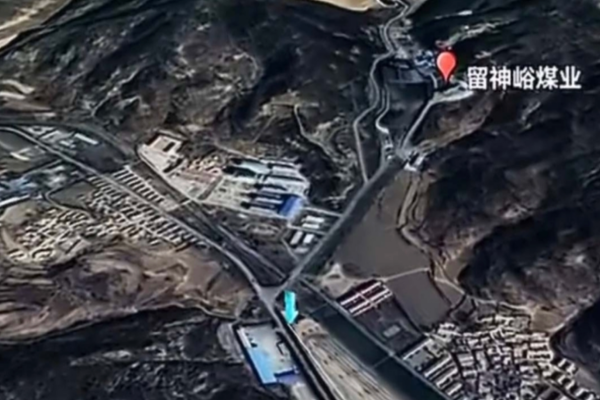
Recently, in China, the most severe mining disaster in 17 years has occurred, resulting in hundreds of confirmed injuries and fatalities. As the rescue and investigation efforts progress, more details and underlying issues of the accident have been gradually exposed. On May 25th, several long-term China experts and scholars appeared on the New Tang Dynasty Television program “News Analysis”, analyzing the institutional issues revealed by this mining disaster based on the information known to the public.
In the early morning of May 23rd, several foreign media outlets reported that according to the official Xinhua News Agency of the Chinese Communist Party, a gas explosion accident occurred in the Liushen Yu coal mine in Lucheng City, Shanxi Province on the night of May 22nd.
Initially reported that there were a total of 247 people underground, with 157 rescued including 4 fatalities, and 90 still trapped underground. Later, Xinhua News Agency cited the emergency management bureau of Qinyuan County, stating that the accident occurred at 7:29 pm on the 22nd with a total of 247 workers underground. By 6 am on the 23rd, 201 people had been safely brought to the surface, 8 confirmed fatalities, and the remaining 38 still trapped underground.
Around 9 to 10 am on the 23rd, Xinhua News Agency reported that Chinese Communist Party leader Xi Jinping issued instructions regarding the Liushen Yu coal mine explosion accident, directing efforts to treat the injured, organize search and rescue scientifically, handle follow-up work properly, identify the cause of the accident, and hold those responsible accountable. Chinese Premier Li Keqiang also issued similar instructions.
However, shortly after the directives from the top Chinese leadership, a bizarre twist occurred in the situation. The Liushen Yu coal mine explosion accident was reported on the prime-time news of China Central Television (CCTV). A few hours later, Xinhua News Agency and CCTV reported that as of 2:00 pm on the 23rd, the accident had resulted in a total of 90 deaths, 123 people hospitalized, 9 still trapped, with rescue efforts ongoing and the casualties statistics still being compiled. Surviving miners recounted that a major reason for the high death toll and injuries was due to the inhalation of toxic gases post-explosion.
Observers noted that following the directives from the Chinese leadership, the reported death toll from official sources jumped from the initial 8 to 90, a more than 11-fold increase within 7 to 8 hours.
According to official reports, the actual controller of the company involved has been taken into custody. The State Council of the Chinese Communist Party also established an investigation team, claiming to thoroughly investigate the cause of the accident and severely punish in accordance with the law and regulations.
After the accident, the insider information regarding the company’s violations and the background of the actual controller began to be exposed. It was discovered that this coal mine had been included in the national list of severely hazardous coal mines as early as 2024 and had been fined for safety hazards last year. The coal boss behind the implicated mine had appeared on China’s rich list and had served as a delegate to the Shanxi Provincial People’s Congress.
Public information indicates that the Shanxi Tongzhou Group Liushen Yu Coal Industry Co., Ltd. was established on August 18, 2010, belonging to the Shanxi Tongzhou Coal Coking Group Co., Ltd., with a high gas level in the coal mine. In 2010, the annual production of the mine was 1.2 million tons.
The Tongzhou Group was established in 1995, with a registered capital of 200 million RMB, and the legal representative is Han Rongyao, with Ren Tiezhu as the controlling shareholder and actual controller. Ren Tiezhu personally holds 79.6% of Tongzhou Group’s shares.
According to mainland media reports, Ren Tiezhu had a personal wealth of 1.6 billion RMB and ranked 20th on the Hurun Rich List of Shanxi. The conservative estimate of his wealth is around 8 to 10 billion RMB. Ren Tiezhu had also served as a delegate to the Shanxi Provincial People’s Congress, Vice Chairman of the Shanxi Private Enterprises Association, and was awarded the National May 1st Labor Medal.
However, in 2024, the Liushen Yu coal mine had been included in the national list of seriously hazardous production coal mines, categorized as a high gas mine with high gas concentrations.
According to information from Tianyancha, in 2025, the Shanxi Tongzhou Group Liushen Yu Coal Industry Co., Ltd. had been penalized twice. One penalty involved the urgent stoppage protection pull line beneath the track downhill in the three mining areas being pressed by cables in multiple locations, preventing the personnel on the carriage from pulling it, rendering the emergency stop ineffective; the other penalty involved the top plate of the track groove being broken without reinforcement support measures. Another penalty involved some zero-shift workers entering the mine without wearing reflective work clothes. The total fines for the two penalties amounted to 50,000 RMB.
Although it was reported that Ren Tiezhu had been taken into custody following the mining accident, the former Shanghai entrepreneur Hu Liren believed that the possibility of Ren Tiezhu himself being held accountable was unlikely.
Hu Liren stated that China experiences a significant number of disasters daily, with a considerable portion being mining accidents, yet what the outside world learns is only a small fraction. He recalled visiting Shanxi about 20 years ago, where local officials told him that incidents of various sizes in local areas are typically handled by local governments without reporting to the central government, as reporting could lead to local officials being held accountable.
Hu Liren analyzed that in the Chinese bureaucratic system, if a local official were to be genuinely held accountable, it would often lead to higher-level officials being implicated. This is closely related to the long-standing issues of buying and selling official positions and corruption within the Communist Party. When an official encounters trouble, it can potentially implicate the entire hierarchy of interests within the government.
He believed that the Liushen Yu coal mine could have operated for so many years likely because the coal mine boss had already played the role of a “white glove” (money launderer) for the higher echelons of the Chinese Communist Party.
Hu Liren stated that individuals like the actual controllers of these types of coal mines who can make it onto China’s rich lists likely have relationships beyond just local interests, potentially involving officials at the central level, even reaching deputy national-level officials as proxies for their interests.
According to Hu Liren’s information, the actual death toll of this accident could potentially reach as high as 300 people. Despite this, he believed that the Chinese Communist Party is unlikely to relinquish an important proxy for their interests merely over a few hundred lives. He stated that the Communist Party may continue operating through this mining platform, just with a switch to another “white glove” because this is how the Communist Party system operates.
Hu Liren further analyzed that in China, following significant disasters, officials often deal with a few local officials under the guise of corruption issues. However, after some time, some of these disciplined officials might be reassigned to other positions.
He cited the example of the Amoy Gardens fire in Hong Kong, where few if any officials were held accountable, and even the Shandong companies involved in alleged falsifications were not thoroughly investigated. Eventually, the investigation focused mainly on the construction teams. Hu Liren believed that the current handling of such issues between Hong Kong and mainland China reflects very little difference fundamentally.
Therefore, he assessed that this Shanxi mining disaster might at most hold accountable officials at the county or city level, while officials at the provincial level might not face repercussions.
Hu Liren added that Xi Jinping has been in power for over ten years, most top officials in Shanxi are either his appointees or approved by him. If this group were to be removed now and replaced with another batch, they would still operate under the same system, and problems would likely persist. He believed that the current Chinese Communist Party is preoccupied with power struggles, and officials are more concerned with preserving their own positions, with safety issues taking a back seat.
Additionally, the Liushen Yu coal mine was recently exposed to allegedly having issues related to “black pits” and “black labor.”
According to the New Jing Daily on the 26th, citing Xinhua News Agency, the investigation revealed that the company involved not only had two sets of drawings but also two sets of monitoring systems. The two sets of drawings corresponded to the 9th and 10th coal seams where the explosion occurred as well as the plan of the 2nd coal seam. The preliminary investigation found that the coal produced from the clandestine workface was neither included in production output nor taxed. The implicated coal mine also fabricated fake doors resembling tunnel walls with wire mesh, snake skin bags, and spray that matched the color of the tunnel closely to deceive inspectors.
Previously, miners had disclosed to the media that miners involved in “clandestine operations” did not carry positioning cards. Even if they did, they were unable to function properly. This indicates that the mine involved in this incident likely fits the description of a “black pit” according to common terminology.
The incident also exposed falsification in the number of workers going underground. The mine system displayed 124 people going underground when there were actually 247 workers in operation. This meant that 123 individuals were almost “non-existent” in the system records, referred to as “black labor.”
Moreover, the implicated coal mine was reportedly found to have not signed labor contracts directly with some miners. Some of the miners belonged to an outsourced team, and there were suspected instances of wage arrears at the involved coal mine. Some workers claimed they hadn’t received their wages since the end of February.
In light of these findings, senior current affairs commentator and host of “Jingyuan Forum” Tang Jingyuan analyzed that this accident revealed at least three systemic issues, indicating that similar safety accidents may be difficult to avoid and could recur in the future.
Firstly, the regulatory oversight in the Communist Party appears to be superficial. Tang pointed out that over 100 individuals involved in the accident were suspected to be “black labor,” indicating it was not an isolated incident or short-term behavior but a consistent operation of the company over a long period. This indicated a severe disconnect between official oversight and the actual operations of companies, rendering regulation almost ineffective.
Secondly, the problem of “black labor” is relatively common in China’s mining industry. Tang noted that many mining companies employ black labor mainly to reduce extraction costs. Black laborers typically lack formal employment status, insurance, and labor protections. In case of accidents, companies could provide lower compensation privately, significantly lower than the compensation standards for formal employees. Tang believed that this approach essentially allows unscrupulous firms to exploit miners to the maximum extent for their benefit.
Thirdly, there appears to be a deep connection between local government achievements and mining company interests. Tang stated that the penalization the company received due to safety issues previously was low, and the rectification was merely for show. With a major accident now occurring, revisiting the earlier penalties and reforms appeared to be a farce.
Tang pointed out that this suggested the possibility of significant interplay and murky connections between local regulatory bodies and businesses. It indicated that despite symbolic penalties and nominal reforms, companies continued operations after significant incidents, even allowing hundreds of black laborers to work underground.
Tang further analyzed that there seemed to be an inevitability behind the entire incident. The achievements of local officials, local economic interests, and enterprise mining profits become entwined, coupled with systemic corruption and excessive extraction, ultimately leading to the continuous accumulation of safety risks.
He emphasized that the large number of “black labor” individuals going underground likely relates to over-extraction. Excessive extraction could lead to a series of safety issues during mining. For example, to lower costs, companies might not adhere to regulations concerning dust suppression with water mist during drilling or excavation, resulting in the accumulation of a large amount of coal dust underground. When coal dust mixes with gas and encounters an ignition source, it could trigger a severe explosion.
Tang indicated that these problems are all created by systemic operations. The event was not a one-time accident or the fault of a few individuals accidentally violating regulations but the result of long-term accumulation under the existing system.
He believed that similar incidents had occurred repeatedly in the past, and with them happening again now, it indicated that as long as the Communist Party’s system remained in place, similar tragedies might continue to occur.
Dr. Shen Mingshi, a researcher at the Taiwan Institute for National Defense and Security Studies, pointed out that in Western countries, mining sites typically prioritize safety measures, with local governments regularly inspecting or penalizing the mines and providing certain labor rights protections. However, the mining scenes in mainland China under the governance of the Communist Party are different.
Dr. Shen quoted the 2003 film “Blind Shaft” directed by Li Yang to describe the situation of black laborers in China’s “black pits.” He expressed that the recent reports of issues related to “black pits” at enterprises like the Tongzhou Group suggest that the coal mine was only authorized to extract coal from specific seams but was illicitly mining unapproved areas.
He highlighted that to clandestinely mine additional coal seams, more workers would be needed. As recruiting formal workers was costly, companies often resorted to black labor. With severe unemployment issues in mainland China, people might take the risk of going underground to earn more money. However, these individuals had little protection regarding labor contracts, safety measures, insurance, and compensation.
Dr. Shen suggested that this could be one of the reasons why the initial death toll was significantly underreported by officials. If the deceased were black laborers, companies or local governments could reduce compensation standards and privately settle with them for a lower amount. In the movie “Blind Shaft,” each black laborer in the mine received a compensation of 20,000 RMB.
Experts unanimously agreed that this mining disaster was not a simple random accident nor caused by a few individuals’ violations but rather a culmination of regulatory failure, collusion between officials and businesses, black labor practices, profit redirection, and longstanding pressures on local achievements.
Hu Liren believed that similar events might occur more frequently in the future, potentially escalating. Tang Jingyuan also emphasized that as long as these systemic operations and corrupt structures remained unchanged, similar tragedies might reoccur.
The mining disaster in Shanxi has exposed critical systemic issues and challenges in mining regulation and labor practices in China. It underscores the urgent need for comprehensive reforms to address the systemic failures and prevent such incidents from happening again in the future.