
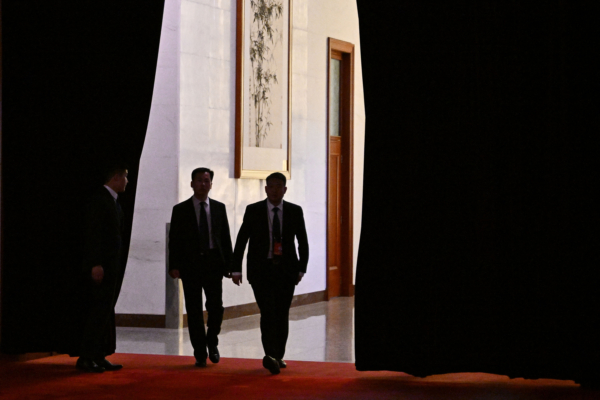
The ongoing anti-corruption campaign in the Chinese Communist Party continues as authorities reported handling a total of 21,889 cases related to violations in April this year, criticizing and disciplining 27,852 individuals. The report revealed that the majority of issues, 20,485 cases to be exact, involved officials at the township and department levels, accounting for 93.6% of the total cases addressed. Analysts believe that systemic corruption within the Communist Party is the root cause of corruption, and the clean-up in the officialdom is more about political deterrence rather than genuinely eradicating corruption at its source.
The Central Commission for Discipline Inspection of the Communist Party of China announced in a report on May 25th that in April 2026, a total of 21,889 cases violating the Party’s eight-point code of conduct were addressed nationwide. In terms of the number of people disciplined, 27,852 individuals received criticism and sanctions, with 18,649 facing disciplinary measures. According to official statements, this marked the 152nd consecutive month of monthly report releases.
According to the official report, in April, issues related to neglect of duty, inaction, misconduct, and pretense that seriously affected high-quality development were addressed in 9,448 cases, accounting for 83.6% of the total formalism and bureaucratism issues handled.
The report also highlighted issues of hedonism and extravagance. Violations involving the acceptance of valuable products and gifts, irregular eating and drinking, and inappropriate distribution of subsidies or benefits comprised 58.6%, 20.0%, and 11.7% respectively of the total cases related to hedonism and extravagance handled that month.
Mr. Wu, a Chinese Communist Party historian, noted that the common phrases “neglect of duty, inaction, misconduct, and pretense” are emblematic. He mentioned how many grassroots officials are not ignorant of what needs to be done but rather lack the courage or willingness to act, often engaging in superficial actions to appease their superiors, which only perpetuates a facade of diligence and compliance.
Since the beginning of 2026, the anti-corruption campaign in China has extended its focus to officials at the county, township, and village levels. The report indicated that in April, issues involving provincial and ministerial-level leadership were addressed in one case, department-level leadership in 108 cases, county-level leadership in 1,295 cases, and officials at the township and department levels in 20,485 cases. Notably, officials at the township and department levels accounted for the highest proportion, at 93.6%.
Mr. Wu believes that this distribution underscores the authorities’ emphasis on investigating corruption at the grassroots level. He emphasized that while there are indeed issues with grassroots officials, those higher up also wield significant control over resources, projects, approvals, and personnel decisions, suggesting that many problems at the grassroots level stem from directives and policies issued by superiors.
Mr. Wang, an active online individual from Hubei province, noted how the authorities’ reports reflect the admission that despite the enforcement of the eight-point code of conduct for over a decade, corruption at the grassroots level continues to proliferate. He expressed skepticism, indicating that the intent behind these reports may be more focused on political deterrence rather than genuine anti-corruption efforts.
Mr. Fang, an insider within the Chinese system, suggested that all instances of corruption, big and small, within China ultimately trace back to the Communist Party. He pondered the motivations behind the aggressive anti-corruption campaign, questioning whether it truly aims to reform the system or merely serves as a means to maintain authority through fear and control.
The stern demeanor in the Chinese Communist Party’s officialdom is viewed by many as a long-term strategy to sustain authority through coercion rather than a sincere endeavor to eradicate the root causes of corruption.
Since the introduction of the Central Eight-point Regulations in 2012, the Chinese government has consistently used them as a flagship policy to rectify the work ethic within the Party and government institutions. The monthly reports from the Disciplinary Inspection Commission have continuously highlighted issues such as irregular dining and gifting, distribution of subsidies, formalism, and bureaucratism.
As of now, the complete list of cases related to the issues highlighted in the April report has not been made public, and specific details regarding issues involving provincial and ministerial-level officials remain undisclosed. For many Chinese netizens, the lingering question raised by these monthly reports is why, despite over a decade of anti-corruption efforts, similar problems continue to surface on a monthly basis.