
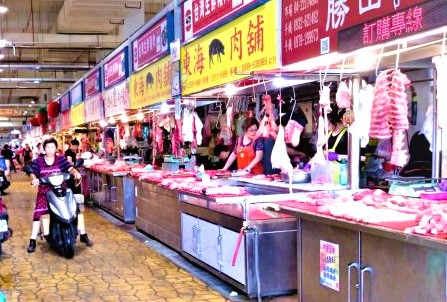
As of August 4, the average price of pork in Chinese wholesale markets has dropped to 15.77 yuan per kilogram. At the same time, the average price of foreign three-element pigs at the slaughtering stage has fallen by over 9% from the peak in early July. Leading pig farming company Muyuan Foods saw a year-on-year decrease of 25.59% in the average price of commercial pigs in July. Data shows that as pork prices continue to decline, mainland pig farming companies have been operating at a loss for 10 months.
According to a report by the “China Securities Journal” on August 5, on August 4, the average price of foreign three-element pigs at the slaughtering stage in China was 10.33 yuan per kilogram, a decrease of over 9% from the peak in early July. The nationwide average price of pork in wholesale markets dropped to 15.77 yuan per kilogram. The main contract price of pig futures, 2609, briefly fell to 10,635 yuan per ton, hitting a new low since listing.
The bi-weekly monitoring data from the National Bureau of Statistics shows that in late July, the price of pigs (foreign three-element) fell by 5.5% compared to the previous period.
With the decline in pork prices, life has not been good for pig farming companies. According to a report by “BT Finance” from Beijing Leading Way Times Cultural Media Co., Ltd on August 5, data from Shandong Zhuochuang Information Co., Ltd., a Chinese bulk commodity information service enterprise, showed that pig farming entered a state of loss starting in mid-September 2025. By mid-July 2026, the self-bred and self-raised pig loss cycle had reached 10 months. The average profit for self-bred and self-raised pigs in the first half of 2026 was -221.33 yuan per head, a year-on-year decrease of 202.79%. Meanwhile, the average transaction price of foreign three-element pigs nationwide in the first half of 2026 was 10.40 yuan per kilogram, a year-on-year decrease of 29.92%.
Official data from the Chinese Communist Party shows that losses occurred even earlier. According to the Ministry of Agriculture and Rural Affairs, free-range pig farming began to operate at a loss in June 2025, while large-scale pig farms shifted from profit to loss in August 2025.
The losses in the pig farming industry were starkly evident in the mid-year reports of 2026. The “Economic Observer” reported that the mid-year performance forecasts of 20 listed pig farming companies on the A-share market showed that these companies are expecting a combined net loss for the first half of the year, with total losses reaching as high as 18.338 billion yuan. In the same period in 2025, these 20 listed companies collectively made nearly 14 billion yuan in profits.
Of these companies, Muyuan Foods expects a net loss of 5.7 billion to 6.7 billion yuan in the first half of 2026, compared to a profit of 10.53 billion yuan in the same period last year. Additionally, New Hope Group anticipates a net loss of 1.6 billion to 1.8 billion yuan, after making a profit of 755 million yuan in the same period last year, while Tangren Food projects a loss of 1.5 billion to 1.6 billion yuan for the first half of the year.
All 20 listed pig farming companies mentioned in their mid-year performance guidance for 2026 that the downward cycle in the pig industry and the significant drop in pig selling prices have led to a decline in profits or losses in their pig breeding businesses in the first half of the year.
In a post-market report released by Muyuan Foods on August 5, titled “July 2026 Sales Briefing,” it states, “In July 2026, the company sold 6.661 million commercial pigs, a change of 4.82% compared to the same period last year; the average sales price of commercial pigs was 10.64 yuan per kilogram, a decrease of 25.59% year-on-year; and the sales revenue from commercial pigs was 8.897 billion yuan, a decrease of 23.56% year-on-year.” The data shows that while Muyuan Foods has seen an increase in sales volume, the revenue generated from sales is on a declining trend.
The briefing explains the reason for the losses by stating, “The large year-on-year decrease in the sales price and revenue of commercial pigs is mainly due to fluctuations in the pig market.”