
Investors are excited about the US-Iran ceasefire, but shipping and insurance companies do not believe the Strait of Hormuz will reopen soon.
On Monday, June 15, news of the agreement between the US and Iran to reopen the Strait of Hormuz boosted Chinese shipping stocks, with China Merchants Energy Shipping’s stock in Hong Kong rising more than 20%.
However, most Asian and European shipowners and insurance companies welcome the agreement but are not in a hurry to resume sailing. They are still waiting for more details, including the plan for mine clearance in the strait.
Just a few days ago, a Hong Kong-flagged oil tanker was hit by a shell near the Strait of Hormuz, highlighting the existing risks.
US and Iranian officials are expected to sign a memorandum of understanding in Geneva on Friday, June 19, to end the war and reopen the strait. As a result, global oil prices fell about 5% on Monday.
The prediction trading platform Kalshi bets that there is a 58% chance of normal traffic in the Strait of Hormuz by August, the last time such a high probability appeared was at the end of May. Other markets also show similar growth, with the likelihood of traffic returning to normal by the end of this year reaching 75%.
US Vice President Pence said on CNBC’s “Squawk Box” program on Monday that the US-Iran agreement will keep the Strait of Hormuz free for a long time.
“We have seen an increase in traffic in the past 24 hours,” he said. However, there is currently no data to confirm this claim.
According to data from Kpler and the London Stock Exchange Group (LSEG), Indian oil company Petronet’s LNG carrier “Disha” passed through the Strait of Hormuz on Monday, marking the only visible shipping activity so far.
The vessel loaded cargo in Kalaashslavan Port on March 1-2 and has been sailing on the west side of the strait since then. Indian Ministry of Shipping officials said the tanker is expected to arrive at India’s Dahej Jetty on June 18.
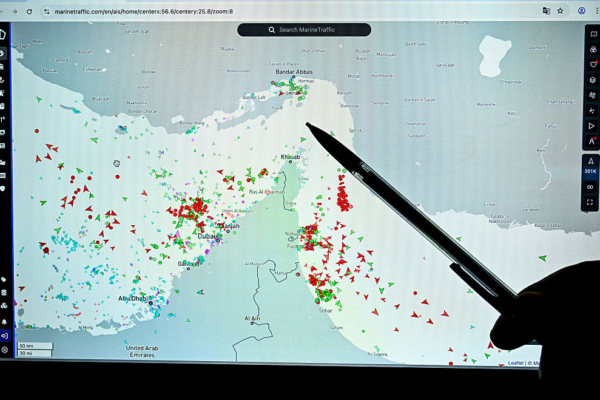
The latest information from the Marine Traffic platform shows that shipping traffic in the Strait of Hormuz remains imbalanced.
They said that the vessel activity in the Strait of Hormuz is ongoing but the traffic pattern remains unbalanced, with limited visibility.
According to MarineTraffic data, between June 10-14, there were a total of 29 verified ship passages involving transportation of crude oil, refined oil, LNG, chemicals, methanol, and general cargo. The activity was mainly concentrated on June 11 and 12, but directional flow remains unbalanced: 23 passages were westbound, while only 6 were eastbound.
They said that route transparency is still a critical issue, as 18 of these passages (about 62%) were classified as “dark sailing” or “unknown route”.
Reuters reported that Asian and European shipping companies stated that confidence in restoring navigation in the Strait of Hormuz may take weeks to rebuild, and sailing can only resume when safety is assured.
The Baltic and International Maritime Council (BIMCO) warns that the statements made by the US and Iran regarding the resumption time and safe routes are too vague to be actionable, and the threat of mines persists. They also stated that a coordinated orderly restart is best managed by neutral entities such as the United Nations.
Lloyd’s List Intelligence also stated that the US-Iran agreement is akin to a 60-day ceasefire agreement, contingent on reaching a still difficult nuclear deal. With the shipping industry still awaiting reliable evidence of security in the region, this critical maritime chokepoint remains at a standstill.
The US-Iran war that began on February 28 has led to a virtual halt in shipping in the Strait of Hormuz. The strait accounts for about a fifth of the world’s oil and LNG supply as well as transportation of important products like aluminum and urea.
A spokesman for the Japan Shipowners’ Association said on Monday that the association welcomes the peace agreement but hopes to “wait and get more specific information”.
He added that given the current complex situation, it is not easy to judge the resumption of navigation based solely on the news of the agreement.
Japan’s largest shipping company, Nippon Yusen, expressed hope for a quick return to normal operations. Mitsui OSK Lines stated that sailing will only resume after full safety assurance.
The German Shipowners’ Association VDR expressed a “cautiously optimistic” attitude towards the possibility of the US-Iran agreement reopening the Strait of Hormuz. German shipping company Hapag-Lloyd expressed hope that ships would be able to pass through the strait this week.
Danish shipping giant Maersk welcomed the development but said it was too early to assess its impact, as the company has not made any adjustments to its operations in the Middle East yet.
Norwegian shipping group Wallenius Wilhelmsen stated, “It is too early to comment on its impact on operations.” Meanwhile, the world’s largest tanker company, Frontline, expressed a positive attitude towards the progress.
According to Kpler’s ship tracking data, as of June 15, there are approximately 155 oil and chemical tankers stranded in the Gulf region, lower than the 201 vessels at the end of May.
Oil Brokerage estimated the number of stranded tankers to be 215.