
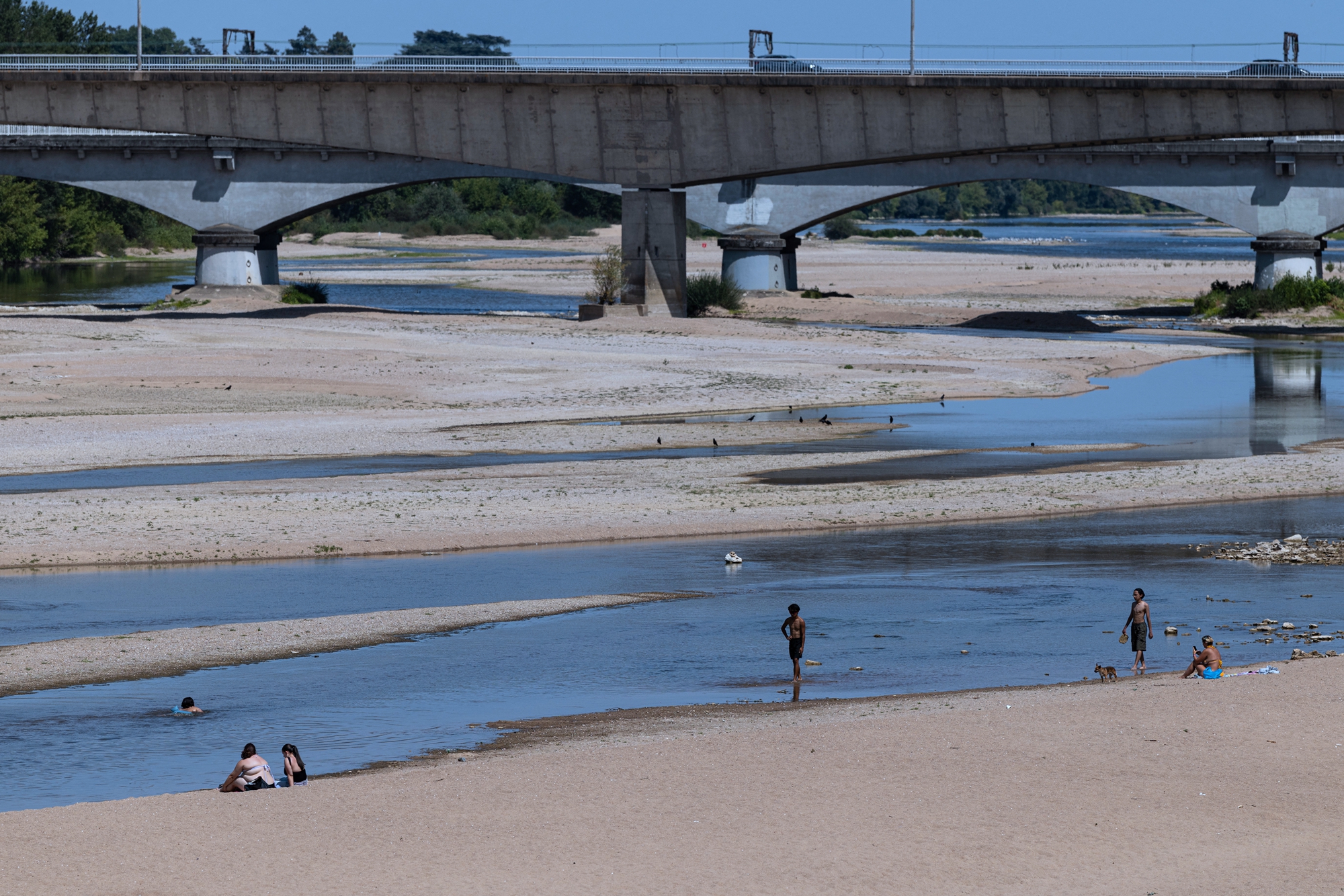
Due to persistent high temperatures and scarce rainfall, the hydropower generation in the Alpine region of Europe and Central Eastern Europe is currently approaching historically low levels.
According to data from the energy intelligence company Montel, in July, the inflow to reservoirs and river-type hydropower plants in Austria and Switzerland was nearly 50% below the long-term average. In July, hydropower generation in Austria only reached 51% of the 15-year average level, with an even more severe situation in Switzerland at 48%. The reductions in Germany (63%) and France (68%) were relatively smaller but still significantly lower than usual.
Michael Strugl, the CEO of Austria’s largest energy company, Verbund, stated, “The amount of water our hydropower plants can currently handle is one-third less than normal.” He pointed out that 2026 has become the driest year the company has experienced in its hydrological records.
Serbia’s largest Iron Gate I hydropower plant is producing only 20% of its maximum capacity due to historically low flow rates in the Danube River.
Senior hydrology analysts from the energy analysis company Montel indicated that there is unlikely to be significant improvement in the Alpine region’s surrounding countries in the short term. Weather forecasts show that the coming weeks will continue to be hot and dry, with potential relief not expected until September.
Hydropower generation is an important source of renewable energy in the European Union. According to data from the global energy think tank Ember, with the decrease in hydropower generation, natural gas generation in the EU increased by 8% from 2024 to 2025.
The drought is also affecting other power facilities. The water levels in the Danube River have reached record lows in multiple areas, posing a threat to several coastal nuclear power plants. Hungary’s Paks nuclear plant will shut down for the first time in nearly half a century due to insufficient cooling water, supplying nearly half of the country’s electricity.
Romania’s state nuclear power company, Nuclearelectrica, was forced to shut down a reactor at the country’s only nuclear plant, Cernavoda, on July 28. The nation has entered an energy alert state, with the military even detonating explosives to blast rocks in riverbeds to cool the nuclear plant.
Many parts of Europe are still under drought alert, including several Central European countries, northern Italy, southern England, and parts of the Iberian Peninsula.
To address grid constraints, Ember proposed a “hybridisation” solution in its latest report, suggesting the combination of wind energy, solar energy, and energy storage technologies at the same grid connection point.
The report indicated that in major hydropower countries in the EU (Austria, Bulgaria, France, Italy, Portugal, Romania, and Spain), hybridisation could allow for approximately 18% of expected new renewable energy by 2030 to be integrated without the need for additional grid capacity.
(Adapted from reports by a European news channel)