
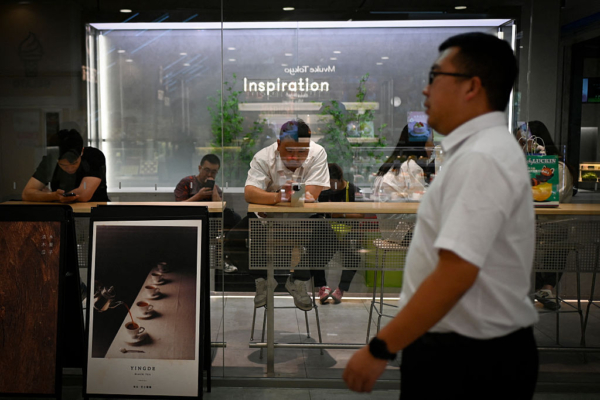
Seesaw Coffee, a mainland chain coffee brand, has recently filed for bankruptcy liquidation. The brand, which was once valued at nearly 1 billion yuan, has seen its number of stores decrease from a peak of 135 to just 34. Both the operating company and founder of the brand have faced multiple restrictions on high consumption this year.
According to “Jiemian News” citing information from the Tianyancha app on June 9th, the operating company of Seesaw – Shanghai Xishe Coffee Co., Ltd. is currently involved in multiple bankruptcy review cases, with applicants including Shanghai Liuli Workshop Glass Art Co., Ltd. and Shanghai Malu Industry Co., Ltd. The applicants believe that Seesaw Coffee is unable to repay its due debts and lacks clear liquidation capacity, thus they have applied to the court for bankruptcy liquidation.
Additionally, Seesaw Coffee has recently added two court notices related to transportation contract disputes and sales contract disputes. Since 2026, Seesaw Coffee and its legal representative, Seesaw founder Wu Xiaomei, have been restricted from high consumption on multiple occasions.
Seesaw Coffee has previously faced various operational and debt risks. In November 2025, the company was listed in the abnormal operation list by the Shanghai Market Supervision Administration due to being unable to contact its registered address or operating location. As of now, Seesaw Coffee has a total of 8 records of executed persons, with a total amount of execution reaching 14.1087 million yuan; and is also involved in 20 records of historical untrustworthy executed persons, with related amounts totaling 10.3799 million yuan.
Public records show that Seesaw Coffee was founded in 2012 and was one of the earlier brands to enter the boutique coffee chain market in mainland China, having received multiple rounds of financing. In June 2017, Seesaw received 45 million yuan in financing, with investors including Baifu Holdings and Wo Sheng Investment; in July 2021, it completed an A+ round of over 100 million yuan in financing, with investors including Heetea, Cornerstone Capital, and Baifu Holdings; and in February 2022, it completed another multi-million yuan A++ round of financing, with investors including Cornerstone Capital and Black Ant Capital. At that time, the brand was valued at nearly 1 billion yuan.
However, despite the support from capital, Seesaw’s store closures have continued. According to reports from mainland media, data from the food and beverage industry platform “Narrow Gate Cat’s Eye” as of May 13, 2026, showed that Seesaw only had 34 operating stores nationwide, compared to over 100 fewer stores from its peak in March 2023.
Seesaw had previously explained store closures as “brand strategic adjustments”, stating that the closed stores did not align with regional focus strategies and brand positioning. Subsequently, the brand was exposed to issues of supplier payment arrears.
According to “Blue Whale News”, in March 2025, Seesaw had already begun to be pursued by multiple suppliers for outstanding payments. The report quoted suppliers as saying that Seesaw had delayed payments, and repeated reminders yielded no results. Additionally, internal employees reflected that the company had unpaid wages, offline direct-operated stores were unable to meet rent, utility payments due to insufficient financial support, equipment damage without repair, ultimately leading to closures.
Currently, Seesaw’s operating stores are mainly located in Zhejiang, Shanghai, Jiangsu, and other areas. On the Seesaw mini-program, only 5 stores are shown in Shanghai, with 2 of them not operating normally. In addition, Seesaw’s social media operations have mostly remained stagnant since November 2025.
Mainland media “Business Weekly” stated that the impact of budget coffee brands and Seesaw’s own high pricing are some of the reasons for its large-scale closures and operational crisis. With intensifying competition in the mainland coffee market, consumers pay more attention to value for money, and standardized operation models and mature supply chains have become key factors in the competition among chain brands.