
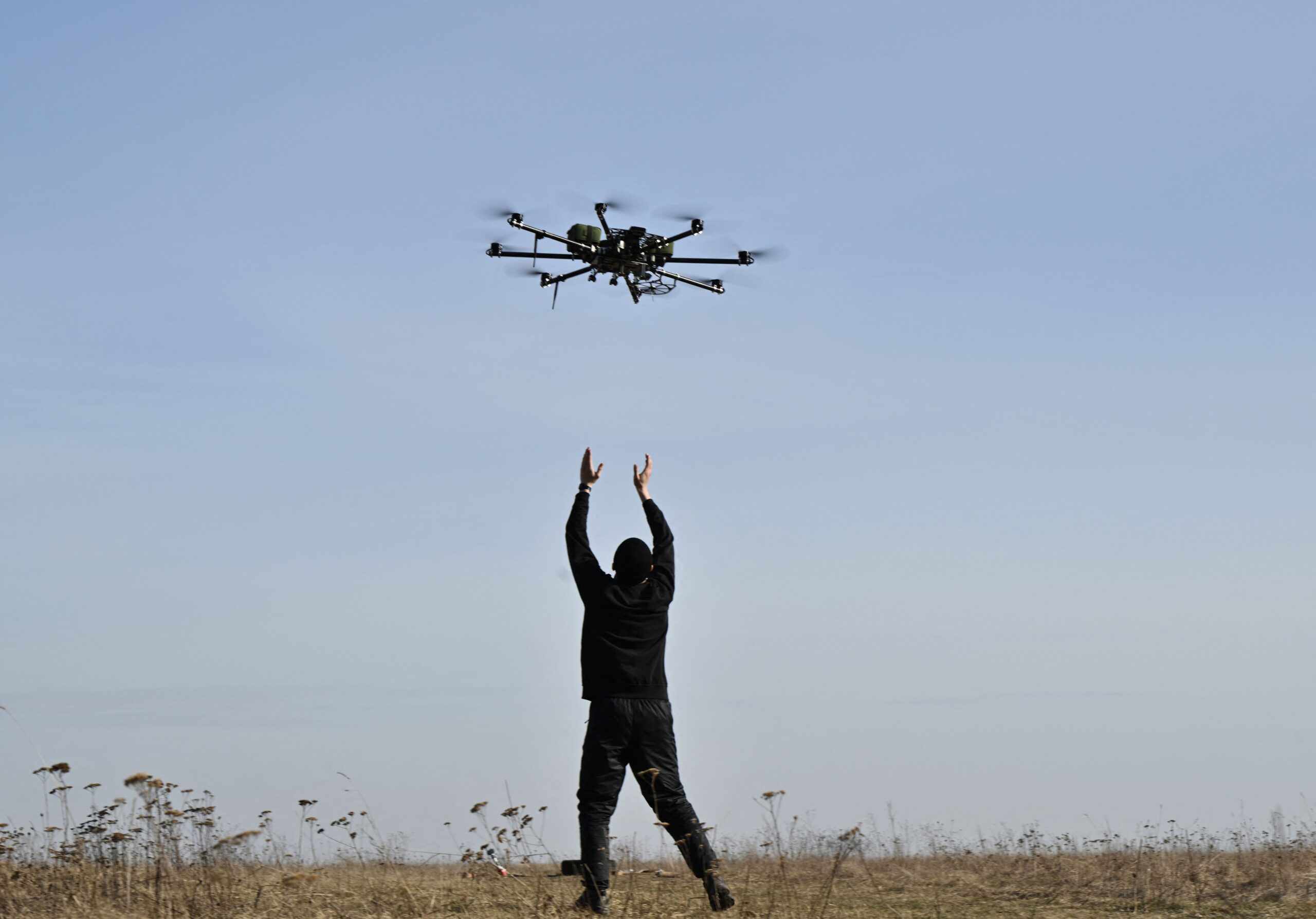
In the ongoing Russia-Ukraine conflict, Ukraine has been using inexpensive and flexible drones to counter the strong Russian military offensive, providing a model for some countries seeking to modernize their armed forces. Recently, the Philippines has also expressed interest in learning from Ukraine’s drone combat experience.
According to experts, establishing a drone partnership with Ukraine could potentially change the strategic landscape for the Philippines, especially amid the continuing tensions in the South China Sea. This partnership could offer the Philippines a fast and flexible asymmetric warfare capability.
However, some experts caution that while Ukraine’s drone tactics have been battle-tested, the Philippines should carefully assess whether these tactics are applicable to the complex situation in the South China Sea.
On July 24th, diplomatic preparations for a “drone agreement” framework between Ukraine and the Philippines were reported by the South China Morning Post. The Ukrainian President’s office stated that both sides have agreed to begin drafting the agreement and are deepening their evolving defense relationship.
Chester Cabalza, the founder of the Manila International Development and Security Cooperation Think Tank, believes that enhancing cooperation with Ukraine in anti-drone technology could significantly boost the Philippines’ deterrence capabilities. He suggests that the Philippines should actively adopt Ukraine’s drone surveillance technology to safeguard its territorial waters.
However, Sylwia Monika Gorska, a political analyst specializing in international relations at Central Lancashire University, warns that the Philippines should not assume unlimited access to Ukrainian technology. Export controls, intellectual property rights, and sensitive military technology data could pose further obstacles. Before seeking solutions from Ukraine, the Philippines must first clarify what issues they aim to address.
Experts emphasize that Ukraine’s success does not solely rely on individual weapons but on its wartime iterative capabilities, such as promptly identifying operational loopholes, integrating battlefield feedback, and rapidly scaling up production.
Arnaud Leveau, a geopolitical studies professor at Paris-Dauphine University, believes that the most valuable lesson the Philippines can learn from Ukraine is its innovation capabilities. Even basic drones, when combined with intelligence, secure communication, and electronic warfare technology, can increase the opponent’s complexity in decision-making, leading to significant strategic impact. For the Philippines, this means enhancing maritime situational awareness, strengthening remote island monitoring, and reducing the number of personnel at risk in disputed waters.
Leveau further adds that while Ukraine’s domestically developed maritime drone systems demonstrate that drones can influence naval strategic deployment without traditional long-range fleets, the South China Sea’s gray zone differs from the Black Sea battlefield. Drones play a larger role in evidence collection and sustained surveillance rather than direct combat in the South China Sea.
Gorska also argues that the South China Sea is not about attrition warfare but about sustained deterrence and careful situation management. As China incorporates unmanned systems in maritime operations, such as the BZK-005 long-endurance surveillance drone on Yongxing Island in the Paracel Islands, the challenge becomes more pressing. In this context, the primary challenge in combat is not about outmatching China in the number of drones but in undermining China’s information advantage, protecting Philippine communication, maintaining situational awareness, and preventing China from converting surveillance superiority into military or political leverage.
Gorska stresses that China’s aim is to shorten the time from detection to decision-making and response, requiring the Philippine military to process information faster and more effectively and make operational choices, not just collect raw data.
Gorska points out that the true test lies in whether through this partnership, the Philippines can identify the real gaps in its force development plans and whether Ukraine is the most suitable partner to address these gaps.
Leveau warns that regardless of the outcome, the agreement should be viewed as an industry and human capital project, not merely another simplistic military procurement process.