
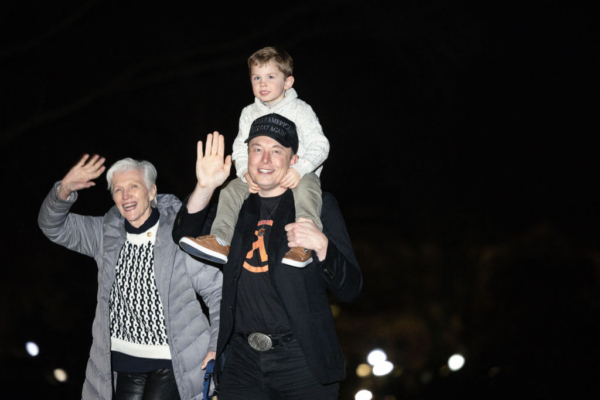
Elon Musk, the world’s richest person, recently saw a surge in his wealth as SpaceX, his aerospace company, went public on the NASDAQ, making him the first person in the world with a net worth exceeding $1 trillion. But what’s the key to his success? It turns out that his mother, Maye Musk, played a crucial role behind the scenes.
Many may not know that Musk has two successful siblings as well. His brother Kimbal is a tech entrepreneur and restaurateur, while his sister Tosca is a film producer.
Maye stated that her goal was always to raise children who are hardworking and independent. She set six strict rules during their upbringing and personally enforced them. The results speak for themselves – her approach not only achieved its initial aim but far exceeded her expectations, shaping her children into independent, resilient individuals.
Maye shared with CNBC that she became a single mother at the age of 31 and had to work hard to support her three children. She encouraged her children to cultivate a similar attitude. Maye herself had started helping her father in his chiropractic business from a young age, and similarly, her children assisted in her nutrition business with tasks they could manage.
She reminisced, saying, “Elon was very good at explaining various functions of the word processor to me. Kimbal also was always willing to help out. Tosca would come to my office and type letters to doctors using the word processor.”
These skills proved beneficial for her children’s futures – Elon and Kimbal engaged in entrepreneurship from a young age, selling homemade chocolates with a markup, gaining valuable experience.
Maye explained, “My parents treated us as trustworthy adults, and this parenting style is reflected in how I raised my children.”
Maye never shied away from the hard work she put in to raise her children. She never shielded them from the challenges of the adult world and highlighted the importance of hard work to establish themselves. This early lesson helped her children mature faster than their peers.
“This greatly benefited my children because they saw me working hard to provide a roof over our heads, food on the table, and even buy second-hand clothing,” she said. Such an approach instilled a sense of responsibility in them and a better understanding of the world around them from an early age.
Granting children the freedom to make autonomous choices not only fosters responsibility but also helps them face the future with confidence, a principle Maye strongly believes in.
Maye never dictated to Elon, Tosca, and Kimbal what they should learn or even which books to read but allowed them to explore and choose for themselves.
“I never told them what to learn, … I never checked their homework, that was their responsibility,” she said. “They all applied to the universities they wanted to attend and handled scholarship and student loan applications on their own.”
Maye didn’t subscribe to the notion of spoiling children. She believed that a humble upbringing would teach them self-reliance.
“I remember when they were in college, living conditions were quite tough: sleeping on mattresses on the floor, with six roommates, or in rundown houses. But they accepted it,” she continued. “If children are not used to luxury, they adapt well. You don’t need to spoil them. Just ensure they are in a safe environment and let them take care of themselves.”
Raising three children on her own was no easy feat for Maye, and despite having the means to provide a comfortable lifestyle, she never thought of affording them any privileges. She insisted that her children must earn the good things in life through hard work.
Maye mentioned that Elon was always curious from a young age, burying himself in books or envisioning future plans. She believed that his creativity nurtured from an early age contributed to his success in business.
Her children were never afraid of failure. Whenever things went wrong, they looked at it as an opportunity for growth and improvement. “Initially, when (Elon’s) rocket exploded, I would curl up in a corner, almost in tears, and Elon would come out and say, ‘Now we have to find out what went wrong and we’ll do it right next time!'”
She continued, “He’s always been curious. After selling PayPal, he asked, ‘Should I do space rockets? Or solar power? Or electric cars?’ I replied at the time, ‘You just need to focus on one thing.’ However, he did not heed that advice.”
Just as she entrusted her children with the final decision on their education choices, Maye also hoped they would take responsibility for their own lives. She believed that instilling a sense of responsibility in children was the best way to foster independence. She always supported her children but never intervened to solve their problems for them.
“Many parents tend to feel anxious for their children,” she said. “My advice is: Let the children handle various documents for university or job applications themselves. They should take responsibility for their own future.”
This article was adapted from a report by the American lifestyle media YourTango.