
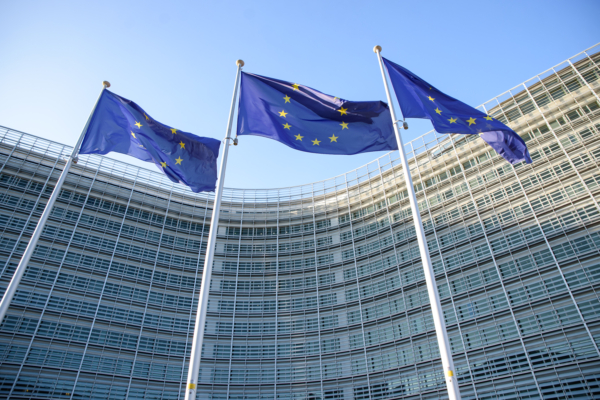
The European Union is planning to further expand its trade defense measures against Chinese goods, including broader use of import quotas, safeguard tariffs, and other restrictive tools to address what Brussels calls a “survival threat” posed by Chinese imports.
According to a report by the Financial Times today (May 28), the European Commission is set to hold a special meeting tomorrow to discuss how the EU should respond to China in order to establish a fair competitive environment.
Stéphane Séjourné, the Vice President in charge of industrial strategy at the European Commission, recently stated in an interview with the Financial Times and other media outlets that the EU will systematically use trade defense tools in the future. The application of these tools will no longer be limited to individual companies or specific raw materials, but will be expanded to entire industry sectors. Sectors such as chemicals, metals, and clean technologies are believed to be under immense pressure from what is perceived as “unfair competition” from China.
Séjourné pointed out that current investigation procedures often take 8 to 9 months, which cannot provide timely assistance to affected industries. Therefore, the EU is committed to establishing a faster and more comprehensive defense mechanism. He emphasized that the EU’s goal is not to “decouple” from China, but to promote a rebalancing of trade relations between the two sides.
The so-called “safeguard measures” are typically initiated when there is a surge in imported goods. They involve setting import quotas and imposing high tariffs on excess amounts to give domestic industries time to adjust and mitigate the impact. Currently, the EU has implemented similar measures in sectors like steel. It is reported that the EU is considering more widespread application of such measures in other strategic industries.
Séjourné also noted that the EU’s trade deficit with China amounts to approximately 10 billion euros per day, and he suggested that China’s overcapacity could threaten around 29 million jobs in Europe. He believes that although Europe has limited dependence on China in certain areas, the EU, as the world’s largest single market, still holds significant negotiation leverage.
In addition to tariffs and import quotas, the EU is also considering promoting measures to diversify supply chains, requiring companies to reduce their reliance on a single country. The EU is studying mandatory diversification of sourcing in supply chains to reduce strategic risks.
Meanwhile, France, Italy, Spain, the Netherlands, and Lithuania – five EU member states, have recently united in calling for the EU to adopt tougher trade defense policies. According to a joint document obtained by the US political news website Politico, the five countries advocate for more frequent initiation of anti-dumping and safeguard investigations by the EU and the establishment of new cross-industry defense mechanisms to address “unfair trade practices” and “structural overcapacity.”
While the document does not directly mention China, it repeatedly points out that some major trading partners are undermining the multilateral trade system and impacting the European market through industrial subsidies and expanded exports, with the widespread belief that the reference is aimed at China.
The five countries also propose incorporating “economic security” as a factor in trade investigations and studying the establishment of a “resilience tool” that would allow the EU to impose additional tariffs or set import quotas when existing legal tools are insufficient to protect key European industry chains.
Séjourné also admitted that the World Trade Organization (WTO) currently struggles to effectively protect Europe’s interests in the short term. He suggested that the WTO now seems more like a long-term construction project rather than a tool to immediately solve problems, which is why the EU needs to establish its own rapid response mechanism.
In recent years, trade friction between the EU and China has been escalating. Apart from investigations into subsidies for electric vehicles, trade conflicts between the two sides in areas such as green technology, solar products, batteries, and machinery have been intensifying.
French President Macron has also openly called for Europe to learn from the United States’ approach and more actively protect its domestic strategic industries to prevent global imbalances in production capacity from impacting European industry.
Overall, the EU appears to be gearing up its trade defense strategies against China amidst growing concerns about unfair trade practices and overcapacity in critical industries, signaling a shift towards a more assertive stance to safeguard its economic interests and maintain a level playing field in global trade.