
Recently, after the end of the Children’s Day performance season, several performance costume businesses in Cao County, Shandong Province, on the mainland were faced with a wave of returns. Many of the returned costumes showed signs of wear, makeup stains, and even damages. Some businesses reported that during the peak season, the return rate could be as high as 90%, with some buyers treating the “seven-day no reason return” policy as a “free rental”.
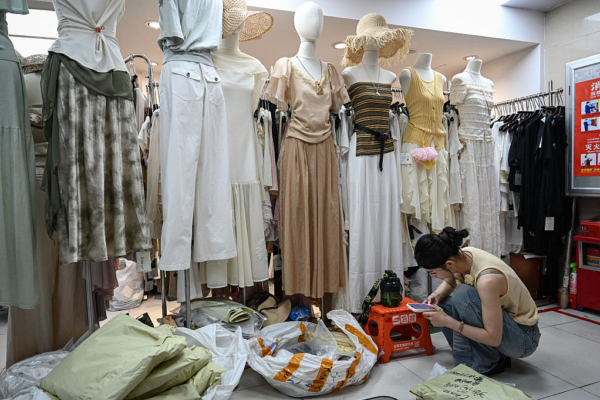
According to a report from “Qilu Evening News” on June 11, Cao County in Heze, Shandong Province is one of the main production and e-commerce sales hubs for performance costumes in China. After the Children’s Day performance season ended, warehouses of many local e-commerce businesses specializing in children’s performance costumes, adult performance costumes, and traditional Chinese clothing were filled with return packages.
Many of the returned performance costumes showed clear signs of use. Some had makeup stains on the collars, stage marks on the skirts, fabric stiffened and deformed from sweat soaking, group costumes missing accessories, and even cases of deliberate damage.
A shop owner specializing in adult formal wear mentioned that a buyer purchased 15 uniforms, and within 5 days of receiving them, they were all returned. The business discovered stains on multiple garments and found that several accessories were missing. Some costumes were beyond cleaning, ironing, or repairing, and had to be treated as waste or discarded.
The report mentioned that while the normal return rate in the industry used to be around 20%, mainly due to size mismatches or style discrepancies, in recent years, the return rate for performance costumes has been steadily increasing. During the peak season, the return rate for adult performance costumes and traditional Chinese clothing can reach up to 70%, with a noticeable rise in the return rate for children’s performance costumes as well. Some businesses operating multiple online stores have an average return rate exceeding 50%, with one store reaching a 76% return rate.
On June 14, CCTV, the state-owned media, also reported that in the warehouse of a performance costume business in Cao County, return packages were piled up to the height of the lower leg. A businessman named Wang stated that before and after Children’s Day, which is a peak period for kindergarten and primary school performances, there is a surge in returns. Delivery personnel would make four to five trips a day for returns, with the return rate peaking at 90%, equivalent to selling ten items and having nine returned.
Returns directly impact the businesses’ operations. Mr. Chu, who specializes in traditional Chinese clothing and vintage performance costumes, stated that the comprehensive refund rate on live e-commerce platforms reaches as high as 60% to 70%. He mentioned that despite his store generating over 84,000 yuan in sales in May, the refund amount exceeded 32,000 yuan, leading to a comprehensive loss of over 11,000 yuan including scrapped items, return shipping costs, manual inspection, and repackaging costs. Another business claimed to be incurring losses of over a hundred thousand yuan instead of making profits.
The report also highlighted situations where the refund payment was processed to the buyer even before the returned goods reached the businesses. Mr. Wang mentioned using video evidence to prove that the clothes sent out were clean and rejecting returned packages, but the platform’s AI review system still supported the buyer’s refund citing “damaged buyer experience,” resulting in a loss of over four thousand yuan for a single order.
As per China’s e-commerce return regulations, consumers are expected to return goods in good condition. However, several businesses expressed to Chinese media that in practical platform operations, providing evidence and making appeals is challenging for businesses. Even when they identify signs of wear or damage on returned items, they fear that it might affect their store ratings and traffic weights, leading them to accept refunds.
This phenomenon has sparked discussions among netizens. Some criticize the practice of using performance costumes and then returning them as exploiting loopholes in platform rules, while others question whether e-commerce platforms excessively emphasize the “buyer experience,” ultimately shifting the cost of returns onto businesses.
Similar return disputes have occurred multiple times in the past. In May 2026, there was a high rate of returns of professional skirts following the end of teacher qualification interviews in China. In April of the same year, parents of students at a school in Shaanxi were accused of applying for “seven-day no reason returns” after using performance costumes.
In January 2025, the stylist of the well-known Chinese band “Wu Tiao Ren” was exposed for purchasing clothing for performances and then returning them. In April 2024, students at a high school in Yinchuan, Ningxia, also faced accusations of mass returns after using performance costumes. These incidents have repeatedly sparked discussions on platform return rules, business rights, and consumer integrity.