
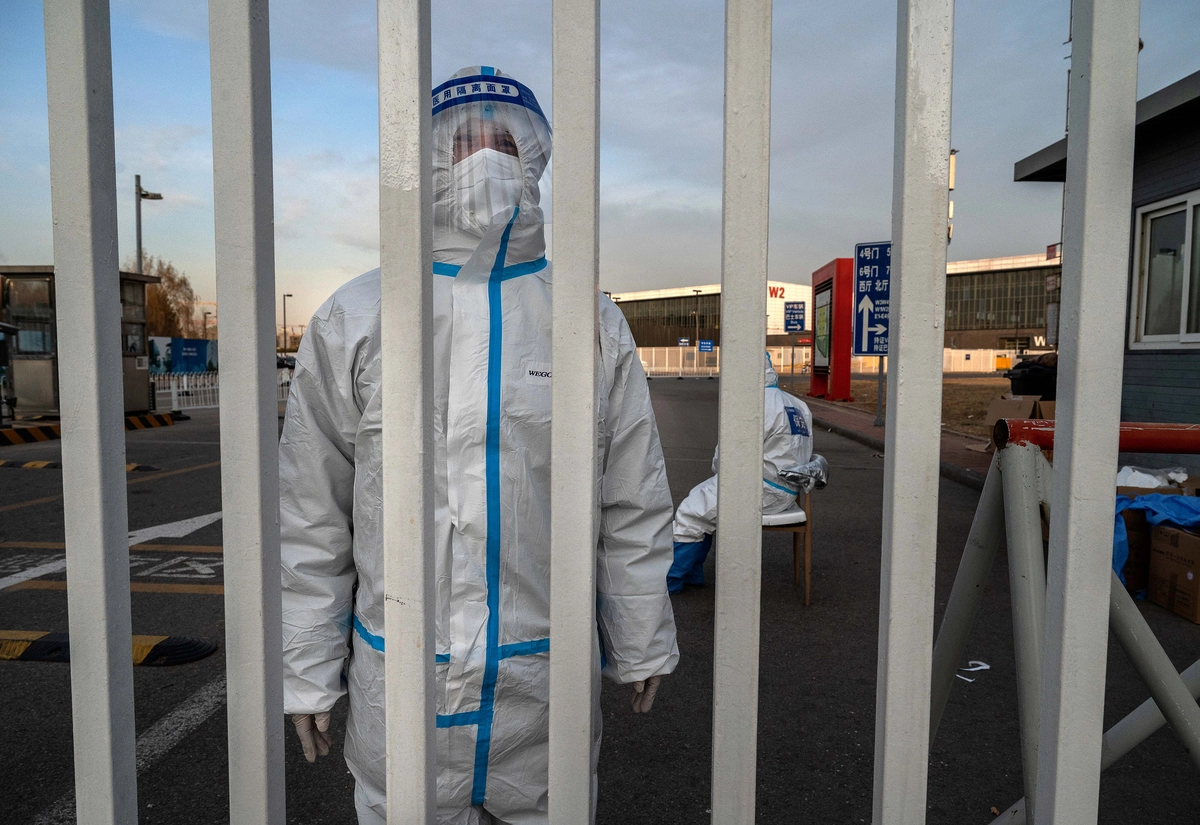
On July 12th, the topic of “COVID-19” has once again become a hot search term. Recently, official data released by the Chinese Communist Party (CCP) showed that there were 79,000 newly confirmed cases of COVID-19 in China in June this year, indicating an increasing trend in reported cases. With the rise in infection cases, discussions on the long-term presence of the COVID-19 virus and changes in immune function after infection have once again attracted attention.
On July 8th, the official website of the CCP’s Center for Disease Control and Prevention released the “National Situation of Novel Coronavirus Infections (June 2026).”
The data revealed that from June 1st to 30th, 2026, a total of 79,000 new confirmed cases were reported in 31 provinces, autonomous regions, directly-controlled municipalities, and the Xinjiang Production and Construction Corps, with 130 severe cases and 1 death case, showing an overall increasing trend in reported cases.
At sentinel hospitals, from the 23rd to the 26th week of 2026, the positivity rate of COVID-19 in flu-like cases in the emergency department consecutively increased to 2.9%, 4.1%, 5.3%, and 6.4%.
Monitoring of virus mutations in domestic cases showed that from June 1st to 30th, a total of 3,741 valid sequences of the COVID-19 virus genome from domestic cases were reported across 31 provinces, autonomous regions, directly-controlled municipalities, and the Xinjiang Production and Construction Corps, all of which were of the Omicron variant.
On July 9th, the official report “National Sentinel Surveillance of Acute Respiratory Infectious Diseases (Week 27, 2026)” was released, showing that the detection positivity rate of the COVID-19 virus ranked second in respiratory samples of flu-like cases in sentinel hospitals, following influenza virus (11.6%), and ahead of intestinal viruses (9.1%).
The report indicated that in week 27 of 2026 (June 29th to July 5th), the proportion of flu-like cases reported by sentinel hospitals nationwide accounted for 4.3% of the total emergency room visits.
In respiratory samples of severe acute respiratory infection cases in hospitals, the top three pathogens with positive detection rates were nose viruses (7.1%), human parainfluenza viruses (5.4%), and influenza viruses (4.5%).
Due to widespread skepticism about the accuracy of official information disclosed by the CCP during past epidemics, the public continues to question the authenticity of the epidemic data released by the authorities, believing that the actual situation may be far more severe than officially reported.
On July 12th, the topic of “COVID-19” briefly topped trending lists on social media platforms such as Weibo, sparking discussions across the internet.
A Weibo-certified influencer, “Lin Buli,” who is a popular social commentator in Zhejiang, posted that if no one is reported to have died from COVID-19 according to official announcements, then the aftermath caused by COVID-19 such as “immune disorders, chronic fatigue, tachycardia, heart pain, chronic cough, allergies, diabetes, kidney damage, anxiety, depression, autonomic dysfunction… what does that matter?”
Lin Buli is a Weibo-certified “super host.” His Weibo account has approximately 234,000 followers. Based on his content, he consistently focuses on topics related to the COVID-19 virus and its long-term effects (long COVID), as well as respiratory infectious disease prevention.
A healthcare influencer with 1.961 million followers, “Medical Notes,” stated that many people struggle to differentiate between common colds, flu, and COVID-19. COVID-19 will not disappear and should not be underestimated.
Some internet users shared their personal experiences. A netizen from Guangdong, “Lonely Expert in a Sea of Similarity,” said: “The last time I was infected, I thought it was just a cold for the first three days, so I took cold medicine. It was later confirmed to be COVID-19, and I had to change my medication after all the trouble.”
A netizen from Shandong, “Propionate in Free State,” stated: “I tested positive back in April.”
A netizen from Jilin, “Can’t Find a Usable ID,” expressed shock, saying: “I know the COVID-19 epidemic hasn’t ended, and I’m shocked to hear that many people are getting infected again.”
A netizen from Guangxi, “Morality of Zero,” commented: “COVID-19 has always been around, it’s just not as widely reported.”
Some internet users pointed out that people are still contracting COVID-19 recently, emphasizing that the virus has not disappeared, and each infection weakens the immune system, highlighting the importance of remaining cautious at all times.