
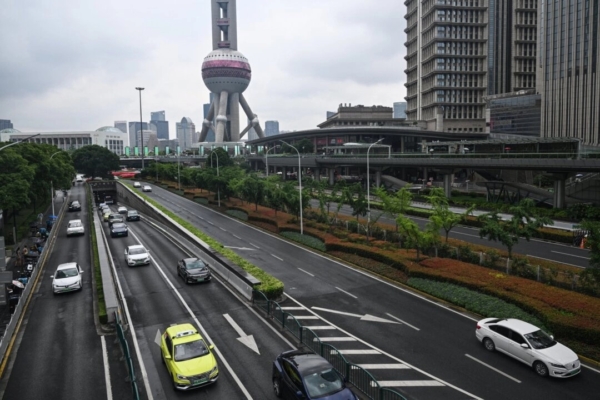
In the current downturn of the real estate market, Shanghai has recently initiated a campaign to acquire existing second-hand homes under the official guidance. Shanghai has acquired a total of 523 housing units so far, mostly small-sized, low-priced, and old second-hand homes in the central urban areas. Across the nation, many major cities are promoting local state-owned enterprises to acquire properties. Analysts believe that the large-scale acquisition of properties by the so-called “national team” of the Chinese Communist Party is essentially an attempt to shift the debt burden, bad debts of banks, and inventory pressure of real estate enterprises outward.
According to a report by “First Financial” on May 21, the Shanghai Municipal Housing Security and House Management Bureau announced on its official WeChat account that Shanghai has acquired 523 existing second-hand homes. The acquired properties are concentrated in the Xuhui, Pudong, and Jing’an districts, focusing mainly on small-sized existing homes with a total price below 4 million yuan. Chinese media described these acquired properties as mostly “old, run-down small” units located in core urban areas.
This year, in the second quarter, the scope of the second-hand home acquisition pilot program in Shanghai has been further expanded to cover central urban regions such as Huangpu, Changning, Hongkou, Putuo, and Yangpu. Shanghai authorities also stated that the pilot program is expected to expand to cover all central urban areas.
“First Financial” reported that Shanghai started a pilot program in early February for state-owned enterprises to acquire existing second-hand homes, mainly focusing on small units located along the rail transit lines, industrial clusters, and areas with concentrated leasing demand; official statements indicate that the acquired properties will be used for affordable rental housing. By the end of March, Jing’an District witnessed Shanghai’s first acquisition case, where a 42-square-meter old property was acquired by a district-owned state enterprise, and the original owner purchased a new 112-square-meter property. This case was highlighted by Chinese media as a pilot example.
The acquisition of existing second-hand homes in Shanghai comes against the backdrop of high real estate inventory and continued sluggishness in the property market on the mainland. China’s real estate market has been enduring a prolonged downturn. Official data shows that from January to March this year, the real estate development investment in the country decreased by 11.2% compared to the same period last year, and the sales of new commercial housing decreased by 16.7%. By the end of the first quarter of this year, the average inventory turnover period for new residential properties in one hundred cities across the country exceeded 27 months, with some third and fourth-tier cities even surpassing 40 months.
Since the end of last year, the Chinese authorities have been promoting the entry of local state-owned enterprises to acquire existing properties and have introduced new policies in over 80 cities, including Shanghai, Guangzhou, Tianjin, Suzhou, and Wuhan, to provide financial support through refinancing and local special bonds.
While Shanghai primarily focuses on acquiring existing second-hand homes, some cities have also started acquiring or revitalizing existing commercial properties, office buildings, and more.
According to a report by “Securities Times” on May 13, cities like Suzhou, Tianjin, and Guangzhou have also initiated moves for local state-owned enterprises to acquire existing commercial properties, which are being used for projects such as dormitories, talent housing, youth apartments, and elderly apartments. Cities like Guangzhou, Zhongshan, Tianjin, Wuhan have proposed revitalizing existing office buildings by converting some into medical, educational, elderly care, hotel, health care, cultural tourism, and other facilities.
Dr. Wang Guochen, Deputy Researcher at the China Economic Research Institute, previously explained in an interview with Dajiyuan that the policy of lease asset securitization (REITs) introduced by Hunan Province is essentially a way to “harvest leeks.” He elaborated that securitization involves cashing in on the future loan income for decades in one go, and the public often lacks understanding of the complex debt structures behind the products; “once problems arise, the responsibility that was originally borne by the banks is now shifted to the public.”
Senior media commentator Mike Li analyzed that the so-called “national team” of the Chinese Communist Party acquiring properties is essentially an attempt to transfer the debt burden, bad debts of banks, and inventory pressure of existing properties away. If local state-owned enterprises buy unsold properties and package them into asset bundles or sell them to the public through real estate investment trust funds (REITs), risks could potentially shift from real estate enterprises and banks to investors and the general public.
As of the end of April this year, the unsold area of commercial housing in mainland China remains high; in the first four months of this year, real estate development investment and sales of new commercial housing continued to decline year-on-year. Experts believe that amidst inadequate consumer confidence, financial pressure on local governments, and unresolved debts of real estate enterprises, acquiring existing properties might not effectively alleviate the downward pressure on the real estate market.