
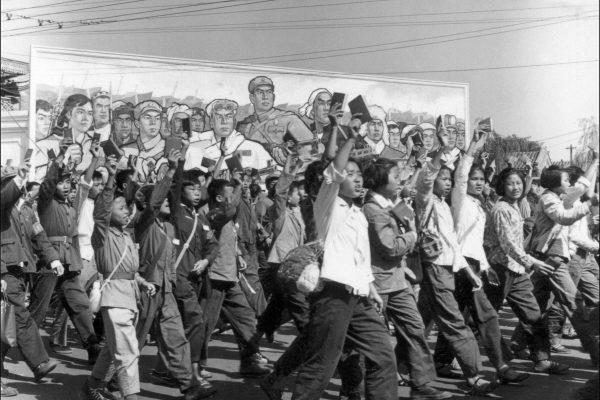
The Cultural Revolution, launched 60 years ago, aimed at toppling Liu Shaoqi, sparking a nationwide upheaval lasting a decade. Mao Zedong believed that Liu’s bureaucratic system no longer obeyed his commands. Mao’s journey to ultimate power involved defeating political adversaries through internal party struggles. Just like today, Xi Jinping swiftly dealt with Zhang Yuexia. Mao once told Liu Shaoqi he could defeat him with a flick of his finger. Given Mao’s prestige and experience in power struggles, toppling Liu shouldn’t have been difficult.
Instead of simply removing Liu through normal procedures, Mao unleashed the Cultural Revolution by mobilizing the masses to denounce and destroy the party’s organizational structures, lasting a tumultuous 10 years. The movement included public criticism, debates, and widespread destruction of party institutions at all levels.
Media veteran and Cultural Revolution scholar Li Su mentioned that after ten years of Liu Shaoqi’s leadership in the bureaucratic system, Mao felt sidelined and sought to dismantle the entrenched power structure. The movement aimed to target capitalist-leaning factions within the party, reform education and culture, and uproot those not aligned with socialist principles.
Li Su explained that Mao’s deification began in the 1930s, culminating with Liu Shaoqi praising him extravagantly at the seventh National Congress in 1945. The party statutes were revised to enshrine Mao Zedong Thought as the guiding principle of all party activities. This deification, coupled with years of personal worship, enabled Mao to mobilize the masses and solidify his power even after disrupting his own party’s structures.
The ironic outcome of Mao’s deification was Liu Shaoqi becoming a sacrificial offering in the Cultural Revolution initiated by the “god” he helped create. The movement was unique in its bottom-up approach, contrasting with the Soviet Union’s top-down purges known for secretive arrests and power struggles.
Mao’s distrust of the bureaucratic machinery, from party to administrative institutions, led to purges of high-ranking officials like Peng Zhen, Luo Ruiqing, and Yang Shangkun. The grassroots nature of the movement allowed Mao to maintain power even after dismantling his own party apparatus.
The extensive deification campaign portrayed Mao as a figure revered by all Chinese, cementing his status as an iconic leader. This hero-worship, combined with decades of shaping Mao into a divine figure, facilitated his ability to rally the masses and maintain control despite upending the party infrastructure.
Ultimately, the very deity Liu Shaoqi helped create became his downfall in the Cultural Revolution. Despite party statutes and constitutional protections, Liu could not escape the fate dictated by the “god” he helped elevate.
In conclusion, the Cultural Revolution was a momentous and unprecedented event in history that highlighted the dangers of authoritarian rule and personality cults. The movement’s legacy serves as a cautionary tale of how absolute power can corrupt and destroy even those who once held influence within the system they helped create.