
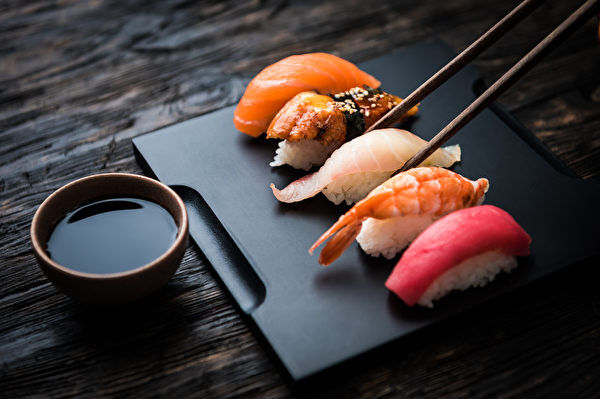
Japan’s revolving sushi restaurant chain, “Sushiro,” has long been a symbol of affordable casual dining in its domestic market. Despite the strained relations between China and Japan, thanks to videos shared on Chinese social media platforms, young Chinese people are flocking to dine at “Sushiro” outlets in China.
According to a report by Bloomberg on June 8th, at a “Sushiro” chain store in China, a group of young diners stacked empty plates on top of each other after finishing their meal, creating a towering structure known as the “Sushiro tower.” The video, lasting only seven seconds, captured a tower exceeding 60 plates in height, which went viral on Chinese social media. Other diners stacked plates even higher, reaching over 80 layers, showcasing how much sushi, rolls, and bite-sized delicacies they could devour in a single meal.
Since Japanese Prime Minister Takanashi Mana’s controversial remarks regarding Taiwan last November, the Chinese Communist Party has imposed various restrictions on Japan. However, when “Sushiro” opened its doors at two locations in Shanghai on December 6th, about 700 groups of diners were already queuing up, with some waiting as long as 14 hours to get a table.
In cities like Guangzhou and Shenzhen, the number of tables with waiting queues on weekends is often between 200 to 500. In the most popular districts, young diners sometimes wait up to five hours for a table. Some even pay around 30 Chinese yuan to scalpers or sellers on second-hand platforms to secure a spot in line.
The allure of “Sushiro” in China partly stems from its affordable prices, especially appealing to consumers feeling the pinch of economic uncertainty in China, which has been experiencing deflationary pressures for several years.
Dishes at “Sushiro” outlets in China are priced between 8 to 28 Chinese yuan (starting at just over 1 USD), allowing customers to enjoy Japanese-style sushi at a relatively low cost, while also indulging in innovative and seasonal dishes, as well as limited-time specialty items.
“In comparison to similar sushi chains, its prices are more budget-friendly while the quality remains excellent,” said 24-year-old Shenzhen resident Danson Deng to Bloomberg. He frequents “Sushiro” about once a week, often consuming up to 25 plates of sushi in a single meal, spending around 200 Chinese yuan. His favorite is a seasonal limited-edition foie gras beef sushi, priced at only 8 yuan, which he believes is great value for money.
The company has introduced interactive activities to enhance customer engagement. Their system called “Digiro” (Digital Sushiro Vision) allows customers to participate in a lucky draw game for every 60 yuan spent, with a chance to win restaurant mascot dolls. These mascots are adorable sushi-themed characters hugging colorful sushi ingredients like salmon roe or eggs with tiny limbs.