
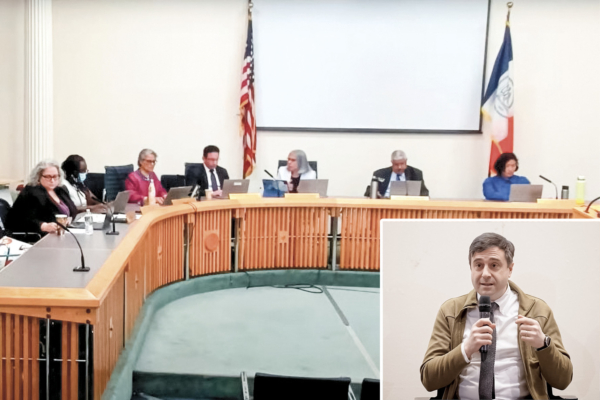
Recently, Mayor Mamdani of New York City nominated John Mangin, the Director of Housing at the New York City Planning Department (DCP), to serve as the Chairman of the New York City Board of Standards and Appeals (BSA). This appointment is pending confirmation by the City Council and has garnered significant attention due to the pivotal role BSA plays as one of the city’s most important zoning and administrative appeal bodies, especially amidst the city’s efforts to drive housing reform.
John Mangin has been actively involved in shaping housing policies in New York City, including being a key proponent of recent zone reforms like the “City of Yes for Housing Opportunity” initiative and the “Mandatory Inclusionary Housing” (MIH) policy. He also served as the Director of Policy and Research for the 2025 Charter Revision Commission last year, aiding in the reform of the land use review system.
The goal of this reform initiative, as stated by the city government, is to expedite the construction of affordable housing, streamline land use approval processes, and facilitate quicker approvals for eligible housing projects.
The BSA is composed of five commissioners responsible for reviewing zoning changes, granting special permits, adjudicating administrative appeals, and reviewing challenges to enforcement decisions made by city agencies like the Department of Buildings (DOB).
With the passage of the 2025 City Charter amendment through a voter referendum in November, New York City established a new Expedited Land Use Review Process (ELURP) for affordable housing. Moving forward, certain affordable housing developments constructed by nonprofit housing development fund corporations (HDFCs) receiving government subsidies can now undergo direct review by the BSA without having to go through the traditional lengthy Uniform Land Use Review Procedure (ULURP) and City Council review process.
This charter amendment is seen as a significant reshuffling of land and housing approval powers in New York in recent years. Its core objectives include shortening approval timelines significantly, reducing the traditional ULURP process from about 7 months to 90 days, breaking the convention of “council deference,” lowering administrative barriers, and addressing the past practice of local council members collectively voting against proposals if any one member disagrees.
This signifies that moving forward, the BSA will not only be a quasi-judicial body dealing with individual zoning disputes but will play a more critical role in executing New York’s housing policies.
Mayor Mamdani expressed, “John Mangin has dedicated his life to New York City’s housing policy, and I am honored to nominate him to lead the BSA during a crucial time when we need to speed up the construction of more affordable housing.”
In a statement released by the city government, Mangin emphasized, “The housing crisis demands urgent action, and BSA plays a crucial role in the ‘whole of government’ collaborative effort to create a more affordable city.”
Upon assuming his role at BSA, Mangin will face immediate challenges. Notably, Mangin had previously collaborated with the advocacy group Fair Share Housing in New Jersey, which was established post the landmark Mount Laurel decision requiring regions to provide a “fair share” of affordable housing.
As a key architect of New York’s MIH program, how Mangin navigates major disputes brought to BSA regarding the applicability or exceptions of MIH, balancing policy goals and legal interpretations, will be closely watched by observers.
One of the most closely watched cases by the community is the development project led by homeless individuals at 2134 Coyle Street in Sheepshead Bay, Brooklyn. Residents have protested against the project, alleging a “bait and switch” tactic.
The project initially underwent rezoning under the MIH system, where developers secured approval to change the zoning from low-density R4/C1-2 to high-density R6A/C2-4 in 2021 based on the promise of constructing permanent affordable housing. However, the actual usage was later switched to a “Transitional Housing” facility operated by the nonprofit Westhab, accommodating approximately 175 family units.
This move has sparked strong objections from residents, who have lodged an administrative appeal with BSA. The community asserts that the New York City Zoning Resolution has a clear definition for “supportive housing”: it must be operated by a nonprofit organization and must be reserved solely for permanent affordable housing for special needs individuals. However, the regulatory agreement has not been made public at this time.
At the center of the dispute is whether a facility labeled as a “transitional shelter” legally qualifies as “permanent affordable supportive housing” under MIH’s exception criteria; and if lacking a formal regulatory agreement, whether it still qualifies for exemptions related to supportive housing, raises questions on the interpretation and application of the MIH program.
Given that HDFCs are nonprofit housing development corporations established under New York state law, responsible for many supportive housing and transitional shelter initiatives, the legal boundaries between residences, supportive housing, and transitional shelters have become a focal point of recent land use controversies.