
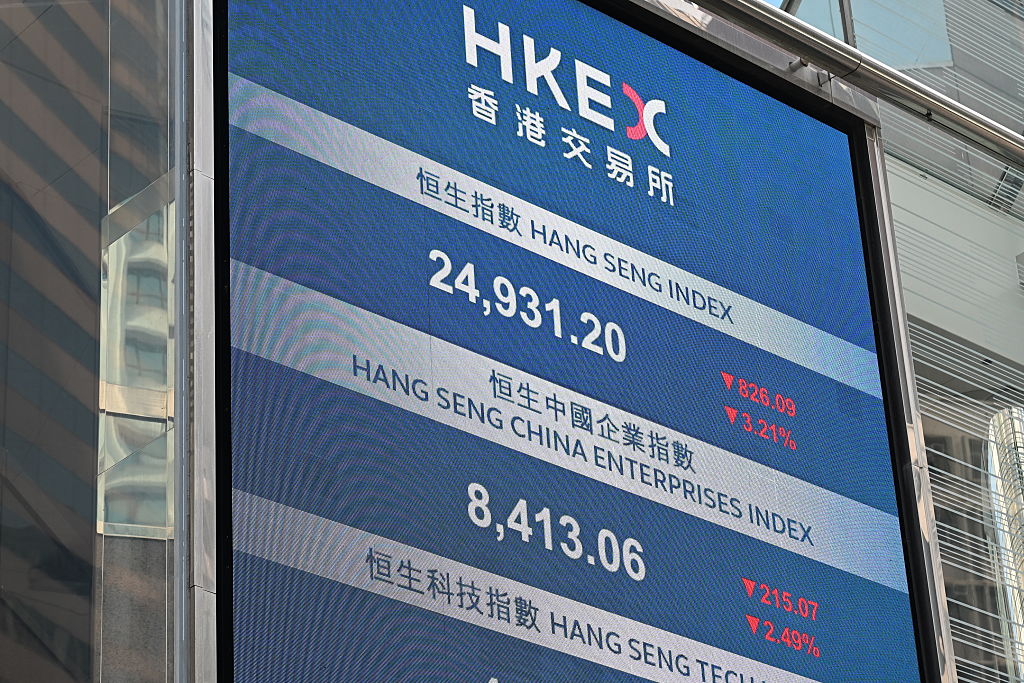
On July 10th, the semiconductor sector of the Hong Kong stock market experienced a significant slump. Despite ZTE Corporation predicting a year-on-year profit growth of about 1099% for the first half of the year, its H-shares fell sharply by 21.05%. Lanqi Technology, Huahong Power, and Semiconductor Manufacturing International Corporation (SMIC) also saw a collective downturn.
According to reports from mainland Chinese media, on July 10th, the Hang Seng Index rose by 0.6%, while the Hang Seng Tech Index fell by 0.21%. The semiconductor sector was among the major decliners of the day, with ZTE Corporation closing at 742.5 Hong Kong dollars, a decrease of 21.05%. Lanqi Technology and Huahong Power both dropped by over 8%, while SMIC fell by over 4%.
These stocks had seen significant increases just the day before. On July 9th, ZTE Corporation had surged nearly 22%, with Lanqi Technology, SMIC, and Huahong Power also showing substantial gains. However, within a single trading day, many semiconductor stocks shifted from rising to falling.
Following its strong opening, ZTE Corporation swiftly tumbled. The stock had reached 1248 Hong Kong dollars on June 29th but had plummeted to 742.5 Hong Kong dollars by July 10th, marking a decline of over 40% from its recent high.
The evening before the sharp drop in stock prices, ZTE Corporation had released a forecast of its half-year performance. It was reported that the company expected its operating income for the first half of 2026 to be around 11.5 billion yuan, a 177% year-on-year increase, with a net profit attributable to shareholders of approximately 6.9 billion yuan, a 1099% year-on-year growth. The net profit after deducting non-recurring gains or losses was projected to be about 4.85 billion yuan, a 791% increase from the previous year.
ZTE Corporation attributed its revenue growth to tight supply in storage chip market, rising product prices, and increased shipments of microcontrollers. The performance forecast also indicated a significant increase in income from the fair value of the company’s securities investments. There was a gap of about 2.05 billion yuan between the net profit attributable to shareholders and the adjusted net profit, and not all of this difference was due to income from securities investments.
Regarding the performance of ZTE Corporation’s A-shares, the investment information platform “Golden Education” cited analysts on July 10th, stating that the stock had experienced significant gains in the previous two months, leading to a short-term accumulation of profit positions. After the performance forecast announcement, some funds chose to reduce their holdings, leading to a high opening and low closing for ZTE Corporation’s A-shares, ultimately ending with a 7.76% decline.
On June 29th, ZTE Corporation had issued a risk warning. The company mentioned that the current price of storage chips was at a high level, and any changes in supply and demand dynamics in the future could result in a price drop, affecting product prices, profit margins, and financial performance.
Market data indicated that on July 13th, ZTE Corporation’s H-shares would face a lifting of the restriction on cornerstone investors, involving 18 shareholders and totaling approximately 14.3943 million shares. The imminent lifting of restrictions had also garnered market attention.
In its risk warning, the company also stated that the rapid increase in storage chip prices had already begun to affect some downstream demand. Any future changes in supply and demand dynamics could potentially lead to fluctuations in the company’s performance.
On the same day, other technology and new energy stocks in the Hong Kong market also experienced significant declines, with Zhipu falling by 19.29%, MiniMax by 9.68%, CATL H-shares by 7.92%, Netease by over 2%, dragging down the performance of the Hang Seng Tech Index.