
In the first half of 2026, German car manufacturers such as Mercedes-Benz, BMW, and Audi collectively experienced double-digit declines in deliveries in the Chinese market, as price wars and the transition to electric vehicles failed to reverse the downward trend. Experts point out that this is not simply an economic cycle issue, but rather a structural competitive crisis caused by multiple factors including the slowdown of the Chinese economy, consumer downgrading, distorted industrial policies, and support for new energy policies.
During the first half of this year, Mercedes-Benz, BMW, Audi, and other German car brands saw double-digit declines in deliveries in the Chinese market, with the growth in European and American markets unable to fill the gap, leading to a continued weakening of the position of German cars in the world’s largest single market.
According to the German newspaper Handelsblatt, Mercedes-Benz delivered approximately 837,000 vehicles globally in the first half of the year, a decrease of around 7% year-on-year. Specifically in China, deliveries of 210,200 vehicles plummeted by 28%, significantly impacting overall performance, especially in the second quarter.
In contrast, the European and American markets saw growth of approximately 5% and 15% respectively, but it was not enough to offset the decline in the Chinese market.
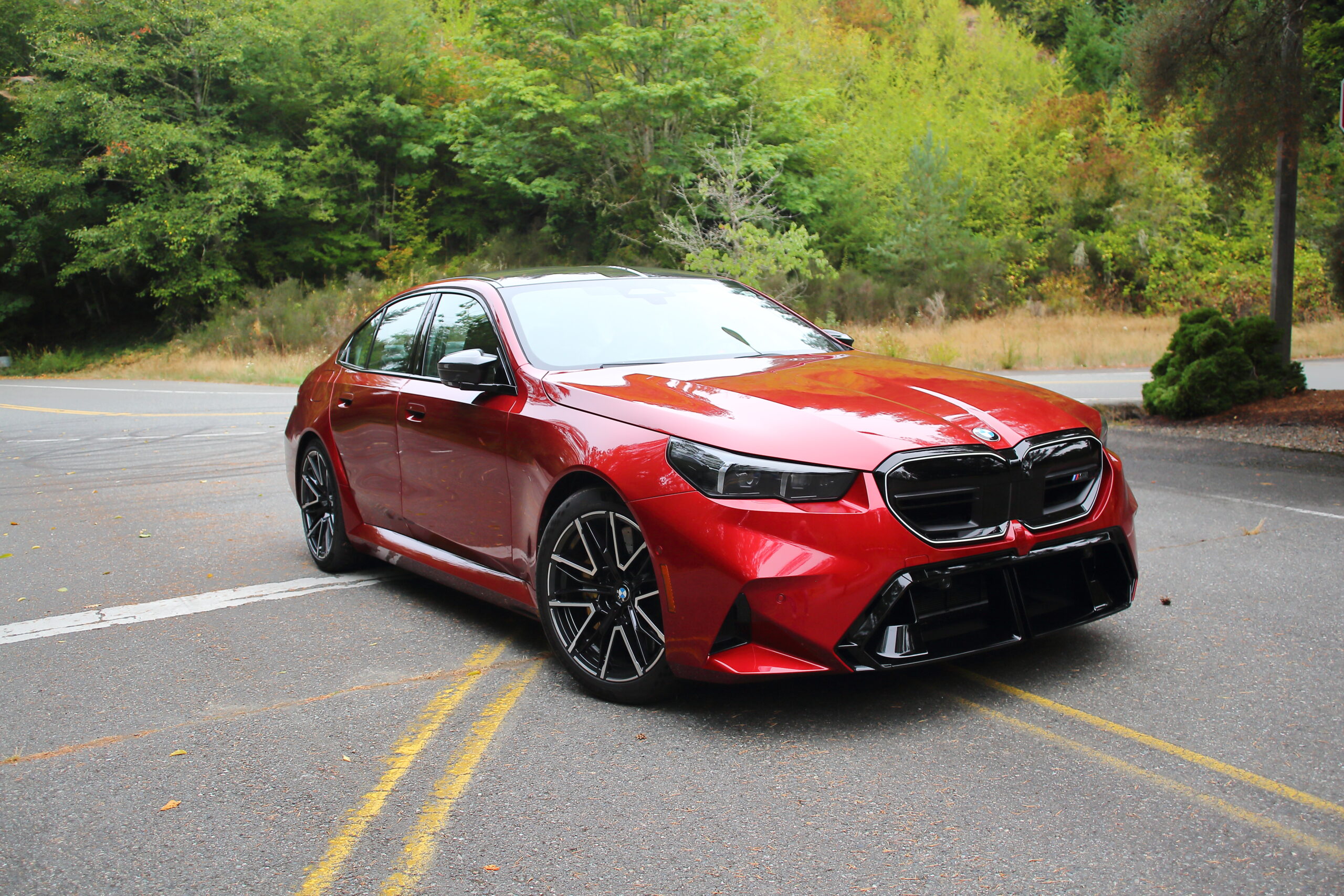
BMW faced a similar situation. In the first half of this year, BMW delivered about 1.15 million vehicles globally, a decrease of over 4%, with deliveries in China dropping by approximately 30% in the second quarter.
According to data from Marklines, BMW’s new car registration volume in China was around 195,000 vehicles in the first five months of the year, reaching the lowest level in at least six years.
Meanwhile, sales of BMW in the United States and Europe grew by approximately 4% and 5.4% respectively, with electric vehicle deliveries for BMW and MINI totaling 116,800 vehicles in the second quarter, a 5.2% increase.
As reported by dpa, Audi, a brand under the Volkswagen Group, delivered 367,139 vehicles in the second quarter, an 8.2% decrease year-on-year, continuing the trend of several previous quarters, with poor performance in the Chinese and American markets. However, orders in Western Europe increased by 7%, with the Q3 and A6 e-tron models being more popular.
The pressure at the Volkswagen Group level is even more significant. Marco Schubert, Head of Sales at Volkswagen Group, stated that the situation in the Chinese market remains challenging. Due to the rise in fuel prices caused by the conflict in Iran, the Chinese fuel car market has significantly shrunk, with Volkswagen’s sales in China declining by over a quarter in the first half of the year.
Regarding the reasons for the slowdown of German luxury cars in China, American economist Davy J. Wong, in an interview with Dajiyuan, stated that the decline of German luxury cars in China is not attributable to a single factor, but rather a result of the intertwining of multiple factors such as the economic downturn in China, consumer downgrading, automotive industry policies, and China-EU trade frictions.
He said, “German luxury cars in China once represented premium status. When the economy slows down and assets shrink, the middle class tends to cut back on non-essential consumption such as luxury cars.”
Professor Sun Guoxiang from Nanhua University in Taiwan told Dajiyuan that the Chinese automotive market has shifted rapidly from emphasizing fuel cars, mechanical performance, and brand premium to pursuing electrification, smart cabins, in-car software, assisted driving, and rapid product updates.
“The economic downturn in China has reduced overall demand, but the industrial transformation and rise of Chinese brands have amplified the decline of German cars,” he said.
Once dominating over 70% of the luxury car market in China, the BBA (Mercedes-Benz, BMW, Audi) alliance has resorted to a dual-edged sword strategy of “price wars” to revive their declining sales.
As reported by “Hai Bao News,” in the Chinese market, the price of the Audi A6L has dropped to around 260,000 yuan, the BMW 5 Series to 280,000 yuan, and the Mercedes-Benz E-Class to 300,000 yuan. What’s even more astounding is that entry-level luxury models like the Mercedes-Benz C-Class 200L Sport with a guide price of 304,600 yuan, actually sells for just over 220,000 yuan; the BMW 3 Series with a guide price of 258,000 yuan is being sold for just over 190,000 yuan; and the loan price of the Audi A4L has dropped to less than 170,000 yuan.
In terms of the reasons behind BBA’s struggles in China, Chinese media pointed out that the core issue lies in the relative lag in product competitiveness, especially in the race towards electrification.
However, Davy J. Wong believes that this is not simply a matter of market competition, “but rather a policy gamble that Beijing is playing using the new energy race.”
He pointed out that the Chinese fuel car industry has long been constrained by core technologies such as engines and transmissions, while electric vehicles have lowered the traditional manufacturing barriers of automobiles, allowing officials to take advantage of new energy industries to achieve what is known as “overtaking on corners.”
Wong noted that the rapid expansion of China’s new energy vehicle sector is due to long-term support from Beijing in terms of taxes, subsidies, and administrative policies.
“But in the pursuit of speed, it has also brought about safety and quality issues,” he added.
He further pointed out that in Western countries, in the event of a major safety accident involving a vehicle, companies usually face independent investigations, class-action lawsuits, hefty compensations, and mandatory recalls; whereas in China, due to different information controls and institutional environments, the market constraints resulting from safety accidents differ significantly.
Regarding the rapid expansion of market share by Chinese brands, Sun Guoxiang believes that German brands are facing a situation where Chinese brands can offer more digital features at lower prices. In a weakened economic environment in China, consumers are more focused on value for money, further weakening the brand aura that German brands have relied on in the past.
In the first half of 2026, the Chinese automotive market showed a stark contrast between “cool domestic demand and hot exports.”
On the domestic consumption front, data from the China Association of Automobile Manufacturers (referred to as “CAAM”) showed a 23.3% year-on-year decline in domestic car sales in June, with a cumulative 21.1% year-on-year decline in sales in the first half of the year.
In stark contrast to the sluggish domestic demand, there was an explosive growth in exports. CAAM data showed that in the first half of 2026, cumulative automobile exports surged by 65.3% year-on-year.
While German car market share in China continues to decline, the European Union is also accelerating the construction of trade barriers, with a series of tariffs and regulatory measures targeting Chinese products being successively introduced.
The European Commission recently announced that the EU had issued regulations on July 7 to impose anti-dumping duties ranging from 4.3% to 45.3% on passenger car and light truck tires imported from China.
Meanwhile, EU member state leaders have discussed the need for potentially stricter new measures to curb the ever-expanding EU trade deficit with China.
According to a report by Handelsblatt, the aim of the European Commission is to levy additional anti-subsidy duties on cars produced by Chinese manufacturers such as BYD, Chery, and SAIC.
Regarding Germany’s future policy towards China, Sun Guoxiang believes that Germany’s future direction is likely to maintain a strategy of leaning towards the United States on security, cooperating with China economically, and aligning with the EU on policy to mitigate risks; however, if Beijing continues to expand export subsidies, restrict exports of key raw materials, or if its international actions continue to raise concerns in Europe, Germany may further strengthen its trade defense measures.