
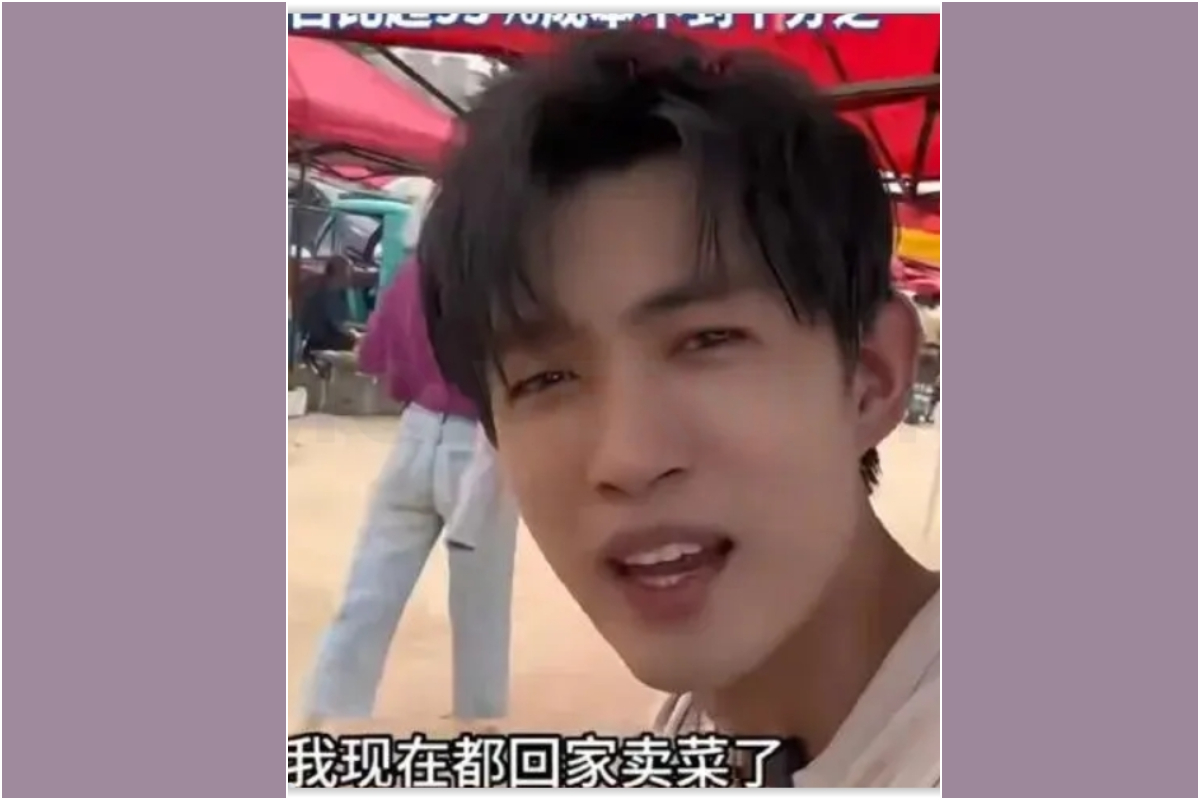
In recent years, the film and television industry in mainland China has experienced a harsh winter since the beginning of the year. Many actors from micro-short dramas have been forced to return to their hometowns to sell vegetables and farm, attributing the lack of roles to AI production replacing human actors.
The founder and CEO of “Le Hua Entertainment”, Du Hua, recently commented on the current situation on the variety show “Sisters Take Charge” Season 2, stating that “half of the entertainment industry’s artists are unemployed.” She made sharp remarks towards her own artists, saying, “AI won’t replace top-tier artists, but it will replace you.”
Actor Xu Peng, known for his role as “President Ba”, has starred in dramas such as “One Thought to Close the Mountain” and “Dark River Legend”. He recently stated that with the emergence of AI-produced short dramas, he has found himself in a situation with no roles to play. Now, he can only return to his rural hometown in Shandong, where he helps his grandfather sell vegetables at the market. Jiang Feng, 34, who was also an actor in micro-short dramas, has not received any film or television invitations since the beginning of 2026, leading him to return home to help his mother sell vegetables. Feeling that selling vegetables was undignified, the mother and son were seen crying helplessly.
The experiences of these two short drama actors are seen as a microcosm of the impact AI has on the Chinese film and television industry.
Data shows that in the first quarter of 2026, there were around 128,000 micro-short dramas released in China, with AI-produced ones accounting for about 122,000, over 95% of the total.
The cost of producing a short AI drama is only 3,000 to 5,000 yuan, with a three-person team capable of producing 80 episodes in five days. In contrast, live-action productions cost between 500,000 to 1,000,000 yuan, showing a cost difference of over a hundredfold.
According to reports, after the Chinese New Year this year, the number of short drama productions in Hengdian plummeted by 80%. Out of nearly ten thousand registered extras, only 700 to 800 have roles to play, and the hourly wage dropped from 300 yuan to 13.5 yuan, leaving over 60% of people with a monthly income of less than 2000 yuan.
It was reported that even Hengdian’s “Drama King” Wu Weibin was without any roles for over 40 days, forcing a 39-year-old actor who used to earn 30,000 yuan a month to go into the mountains and forage for vegetables. Renowned actors in commercial blockbusters like Liu Haoran and Dong Zijian also pleaded for work in public appearances.
Regarding the widespread discussion on the wave of unemployment in the Chinese entertainment industry and the reduction of film and television projects, Du Hua, the founder and CEO of “Le Hua Entertainment” on the show “Sisters Take Charge” Season 2, mentioned that “half of the entertainment industry’s artists are unemployed.” Her words stirred controversy both inside and outside the industry, as she not only showed no mercy towards her own artists when she mentioned that “AI won’t replace top-tier artists, but it will replace you”, but also revealed a harsh reality: artists without their own personal brand are facing joblessness, and a decline in wages has become inevitable.
Du Hua explained that top-tier artists rely on a dual barrier of “personal branding” and “talent” that AI cannot imitate. However, for those lacking personal uniqueness and solely relying on appearance and popularity, their prospects are not as fortunate. Du Hua bluntly stated that this group is the most susceptible to being replaced by low-cost AI dramas and animations. She warned her own artists not to be complacent, as the industry’s peak period is fading, and the decline in wages is irreversible.
Du Hua revealed on the show that since the introduction of new video generation models earlier this year, the number of Hengdian productions has significantly decreased, leading to a shrinking job market for artists. AI is now capable of completing basic performance tasks such as appearing on screen and dubbing at low costs, directly diverting traditional film and television production roles. With the rise of AI animated dramas, many short drama actors are now facing unemployment due to their lower production costs and decent quality.
Therefore, Du Hua views China’s harsh film and television winter as a selection process: eliminating mediocre industry practitioners and pushing the entertainment industry back to a merit-based ecosystem. She believes that technological change is compelling the industry to reshuffle.
Du Hua’s founded “Le Hua Entertainment” is a well-known artist management and entertainment company in China. Initially focusing on the idol market with the inclusion of Hangeng, in 2014, the company set up a branch in Korea and is now listed on the Hong Kong Stock Exchange, known as the “top artist management in China.” The company’s revenue heavily relies on top-tier artists like Wang Yibo, who previously contributed over 60% of the artist management income.
During the show, Du Hua was asked a sharp question by the host: “Without Wang Yibo, can you still succeed?” Du Hua expressed feeling “very lucky to have met Wang Yibo”, followed by adding that “conversely, Wang Yibo was also lucky to have met her”. She defined this as a “mutual achievement”, believing that it is not a case of one side fulfilling the other, but a mutually supportive relationship. She also positioned Wang Yibo as a “top-tier artist” and believed that AI cannot replace him.
However, many netizens think that Du Hua “got the roles reversed”, as it was actually Du Hua who was lucky to have encountered Wang Yibo. Opponents argue that out of over forty artists signed with “Le Hua”, none have replicated Wang Yibo’s success, proving that Wang Yibo’s popularity is the result of his own hard skills.