
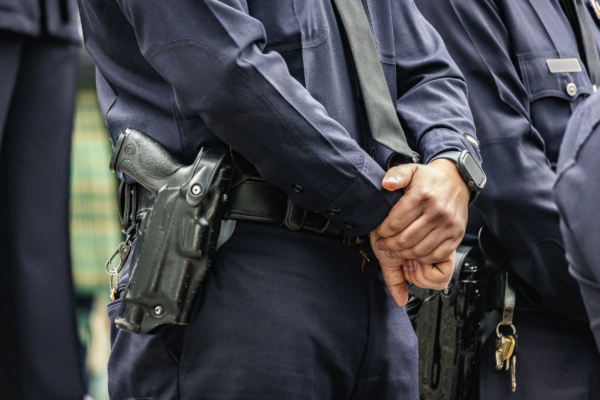
As the 2028 Los Angeles Summer Olympics (LA28) and Paralympics approach, concerns have been raised over the shortage of police force in the city. Officials in Los Angeles have stated that both events are expected to require over 24,000 law enforcement officers over the span of a little more than a month, with the LAPD facing a deficit of around 4,400 personnel per day.
In the summer of 2028, the Olympics will take place in Los Angeles for the third time, with the opening ceremony scheduled for July 14th and the games running until the 30th. Subsequently, the 2028 Los Angeles Paralympics will commence on August 15th and conclude on the 27th.
Organizers have indicated that during the events, a minimum of 24,000 police officers will be needed to ensure the security of various sports venues across Southern California. On days with simultaneous peak events, approximately 6,700 officers will be required for security and traffic control in the vicinity of just eight venues within city limits and certain road projects.
The security for the Olympics is not solely the responsibility of the local authorities. The Olympics have been designated as a “National Special Security Event,” meaning that federal agencies such as the Secret Service will also play a crucial role. Congress has approved a $1 billion budget for the security operations of the Olympics. However, federal support does not replace the need for local law enforcement efforts.
The Los Angeles Police Department is the third-largest municipal police force in the United States, following New York City and Chicago. Last year, the LAPD projected to decrease its personnel to around 8,620 by June 30th – the lowest in nearly thirty years – excluding civilian staff. In contrast, around 12,000 officers, including civilian staff, were part of the force in the vicinity of 2020.
According to LA Magazine’s website, as of the end of March this year, the LAPD had 8,500 officers on its roster, estimated to provide around 2,200 officers for peak days of the Olympics. LAPD Commander Mario Mota, who is responsible for the coordination of security planning for the Olympics, expressed that considering the daily need for 6,700 officers, over 4,400 officers are lacking each day.
Overall, he anticipates that “for the events within the city, approximately 12,000 to 15,000 LAPD officers will be needed for security.” “The Olympic events outside the city will also require around 12,000 to 15,000 officers, totaling to 24,000 to 30,000 officers.”
To address the anticipated shortfall, Mayor Karen Bass is supporting a state legislative proposal that would allow qualified law enforcement officers from other states to temporarily serve in California during the Olympics. Supporters believe that this proposal will expand the pool of available personnel, aiding in ensuring the safety of athletes, spectators, and visitors.
Assemblywoman Tina McKinnor, a Democrat representing the 61st district, initiated the proposal. She stated, “All out-of-state officers will undergo training from the California POST (Peace Officer Standards and Training Commission) and will be required to adhere to and enforce all California laws.” Potentially, thousands of out-of-state officers will undergo training before the events, and arrangements need to be made for their accommodation in Los Angeles.
The LAPD is also discussing the possibility of suspending police academy courses in 2028 to allow trained officers to engage in street duties, among various strategies to increase manpower. Some officials are concerned that canceling courses may impact officer recruitment.
Bass has prioritized recruiting officers, proposing a city budget to hire hundreds of officers and expedite the recruitment process. Critics argue that her actions are lagging, and new officers may not complete training and be deployed until around the time of the lighting of the Olympic torch.
For residents and tourists, this means that waiting times for emergency assistance during critical situations may become longer, or the visibility of police patrols in communities already facing public safety concerns could decrease. Hosting the Olympics is a prime moment to showcase a city’s history, diverse cultures, urban landscape, and traffic management to the world, but it may also expose vulnerabilities within the city. ◇