
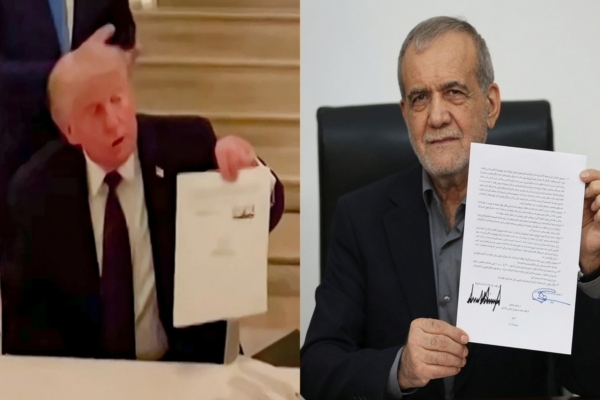
The United States and Iran signed a peace agreement on Wednesday (June 18) aimed at ending the Middle East conflict, with the reopening of the Strait of Hormuz following suit.
However, negotiations on thorny issues including Iran’s nuclear program will be delayed by 60 days, sparking concerns over the durability of the agreement.
The impact of this agreement on the daily lives and financial situations of ordinary people has also become a focus of attention. According to a report by the British Broadcasting Corporation (BBC), the daily lives and wallets of the people may be affected in five aspects.
After the outbreak of hostilities in Iran in February this year, oil production and transportation in the Middle East were disrupted, leading to a sharp rise in prices of fuels like gasoline. In recent weeks, with growing hope in the market for a peace agreement, gas prices at the pump have started to gradually decline.
In the United States, although the average price of gasoline has fallen from its peak of $4.50 per gallon to $3.97, it still remains significantly higher than the pre-war price of $2.98; meanwhile, the price of diesel during the same period has risen from $3.76 to $5.09.
According to the BBC report, Simon Williams, the policy director of the Royal Automobile Club in the UK, stated that if the downward trend in oil prices continues, gas prices at the pump are expected to drop significantly, but the speed of decline being as rapid as the initial increase remains the biggest question.
The report mentioned that during the initial outbreak of conflict in Iran, the UK’s benchmark natural gas price almost doubled, and although it has since fallen somewhat, the independent energy advisory firm Cornwall Insight warned that expecting prices to quickly return to pre-conflict levels is considered “overly optimistic.”
The UK’s energy regulator Ofgem has confirmed that it will raise the cap on household energy prices in July, with average energy bills for around 33 million households in England, Wales, and Scotland expected to increase by 13%.
The Gulf region supplies about half of Europe’s aviation fuel. After the outbreak of the Middle East conflict, aviation fuel prices surged from $784 per ton to $1,838, leading to an increase in airfares.
Although prices have since significantly dropped to around $967 per ton, Amaar Khan, an aviation fuel expert with the energy information agency Argus Media, predicts that for most of this year, aviation fuel prices will still be higher than pre-war levels, making it difficult for passengers to see significant fare reductions in the short term.
Concerns arise over the prospect of inflation. The conflict in Iran has disrupted the global downward trend in inflation. According to data reported by the BBC, the UK’s inflation rate rose from 3% in February to 3.3% in March, then fell to 2.8% in April and May, but is expected to rise again with the hike in energy prices in July.
Charlotte O’Leary, Deputy Economist at the National Institute of Economic and Social Research in the UK, anticipates that inflation will be significantly impacted in an upward direction.
Both the US and EU have experienced noticeable increases in inflation rates during the conflict, and the pressure of rising prices has not fully dissipated. Related data shows that the US inflation rate rose from 2.4% in the same period to 4.2% in May, while the EU increased from 2.1% to 3.3%.
Many people hoping to purchase homes after further interest rate cuts by banks may be disappointed. Due to the uncertainty in energy price trends and in an effort to control inflation, central banks worldwide have generally opted to stand firm on interest rate cuts.
This week, the Bank of England maintained its interest rate at 3.75% for the fourth consecutive time, with Governor Andrew Bailey expressing being “encouraged” by the recent drop in oil prices, but noting that inflationary pressures accumulated during the war period have not yet dissipated.
The Federal Reserve in the US likewise kept its interest rate at 3.5% to 3.75%, listing the Middle East conflict as one of the reasons for the status quo.
Last week, the European Central Bank announced its first rate hike in three years, raising rates to 2.25%.
Market expectations generally indicate that interest rates in major global economies will remain unchanged for the remainder of this year, with possible rate cuts not expected until next year at the earliest.