
In a fierce power struggle within the Chinese Communist Party (CCP) top leadership, at least four individuals have been identified as thorns in Xi Jinping’s side in recent years. These individuals have either died, been imprisoned, or are under house arrest. The four key figures seen as obstacles to Xi are Li Keqiang, Liu Yazhou, Zhang Yuxia, and Wang Qishan.
Wang Qishan, a former Vice President of the CCP, was once a close friend of Xi Jinping and headed the Central Commission for Discipline Inspection during Xi’s first term. In recent years, many of Wang Qishan’s associates have been taken down, with the latest being Li Xiaohong, the former director of the CCP Central Inspection Office who was investigated in early June this year.
According to a commentary by independent commentator Du Zheng in Taiwan’s “Up Report,” Wang Qishan’s influence in the political arena has solidified, especially given his ties within the financial system. This has been perceived by Xi as an obstacle to his control over financial matters. Xi’s real aversion towards Wang Qishan stems from political reasons, as Wang’s close friend Ren Zhiqiang got involved in what was referred to as the “improper discussion of central authorities” issue, leading Xi to believe that Wang was behind Ren.
In March 2020, Ren Zhiqiang criticized Xi Jinping for his handling of the pandemic, calling him a “clown who insists on playing the emperor even when stripped naked.” Subsequently, in September of the same year, Ren was sentenced to 18 years in prison.
Another concern for Xi Jinping is the rumor circulating overseas in 2025 that the “Crown Prince Party” intends to support Wang Qishan to replace Xi at the upcoming 21st Party Congress, aiming to prevent Xi’s reelection. While it is unlikely that Wang Qishan would dare to challenge Xi, such rumors have made Xi the subject of ridicule in the political arena, leading him to take drastic measures against Wang. There have long been rumors of Wang Qishan being under house arrest, which are believed to be true.
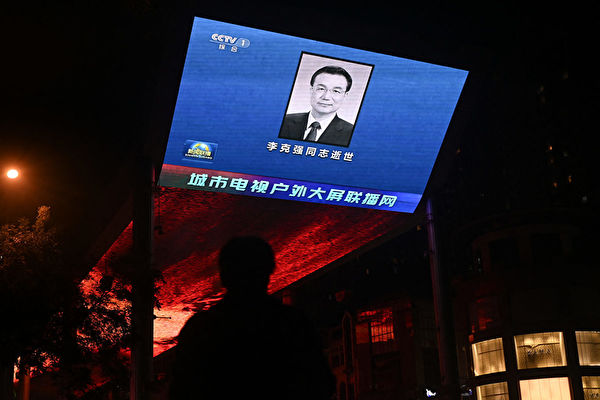
Former Premier of the CCP, Li Keqiang, is also considered a thorn in Xi’s side. On October 27, 2023, while purportedly “resting in Shanghai,” Li Keqiang passed away from a sudden heart attack at the age of 68. Xinhua News Agency journalist Gu Wanming openly questioned that Li Keqiang was harmed by “ambitious party members, conspirators, and corrupt elements,” and as a result, Gu was secretly sentenced and lost his retirement benefits.
Du Zheng analyzed that during his tenure, Li Keqiang was a relatively weak premier, especially during his second term when Xi Jinping, under the pretext of “strengthening the Party’s leadership,” sidelined many of Li’s powers. Despite this, the biggest obstacle to Xi’s pursuit of centralized power remains Li Keqiang. Xi has refrained from interfering with positions that were originally held by Li Keqiang, such as the director of the Central Institutional Organization Committee.
The Central Institutional Organization Committee is responsible for national institutional reform and organizational management. Traditionally, this role was held by the Premier of the State Council like Li Peng, Zhu Rongji, Wen Jiabao, and Li Keqiang. After Li Keqiang retired in March 2023, Xi Jinping immediately assumed the role himself, while the new premier, Li Qiang, only became the deputy director.
Du Zheng believes that the pairing of Xi Jinping and Li Keqiang was initially a compromise among various factions within the CCP and not Xi’s preference. This allowed Li Keqiang to maintain some level of authority during his tenure as premier, unlike the current deputy role played by Li Qiang.
Before Li Keqiang retired, there were widespread speculations both in official circles and among the public of a potential “Xi stepping down, Li stepping up” scenario. Du Zheng notes that Li Keqiang was seen as a representative of the reformist faction in both official and public perception. Even in retirement, Li remained a thorn in Xi’s side. His mere existence was a form of irony towards Xi, and even in death, Li Keqiang was strictly guarded against spontaneous public commemorations, revealing Xi’s jealousy. In the eyes of Xi’s allies, Li Keqiang had to be eliminated.
Following the June 4th commemoration this year, on the 5th, a web user spotted a search term “Why did Xi Jinping kill Li Keqiang” in the related searches section of a seemingly ordinary video on Douyin, which gained traction on overseas social media platforms.
Du Zheng argues that this indicates discussions surrounding the cause of Li Keqiang’s death have not faded over time. The suspicious circumstances around Li Keqiang’s death are a shared societal concern, albeit one currently suppressed by authorities. Just as Hu Yaobang’s death sparked protests, Li Keqiang’s death could potentially become a catalyst for anti-Xi movements in the future.
Additionally, Du Zheng points out that former Political Commissar of the National Defense University, General Liu Yazhou, is also one of Xi Jinping’s nemeses. Liu Yazhou was rumored to be under investigation towards the end of 2021. In March 2024, it was reported that Liu Yazhou had been sentenced to life imprisonment. Unlike other high-ranking officials whose cases were publicly announced, there has been no official confirmation regarding the “Liu Yazhou case” to date.
Du Zheng suggests that the political issues for which Liu Yazhou was targeted likely involve “improper discussion of central authorities.” The prevailing rumor is that Liu Yazhou’s strategic discussions regarding military actions towards Taiwan displeased Xi Jinping.
Surprisingly, Zhang Yuxia also emerged as a thorn in Xi’s side. Post the 20th National Congress of the CCP, Vice Chairman of the Military Commission, Zhang Yuxia, maintained close ties with several senior CCP figures with political ambitions, which posed a threat to Xi to some extent within the military ranks. Zhang Yuxia also clashed with Xi’s confidants in the military, He Weidong and Miao Huafa, resulting in the downfall of both. Xi Jinping feared that by the time of the 21st National Congress of the CCP, he might be replaced by someone supported by Zhang Yuxia. Ultimately, Zhang Yuxia was removed from power in January this year.
Du Zheng further disclosed that experts in physiognomy have analyzed Xi Jinping’s characteristics through videos and photos, revealing he is vindictive, selfish, paranoid, and extremely combative, capable of bringing disaster to China and potentially the world. However, Du Zheng believes that without the devilish ideology of communism, Xi would not have been able to cause such upheaval.