
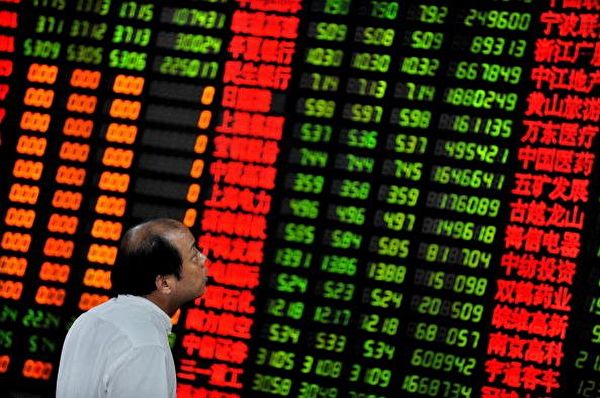
Four more A-share companies are set to be delisted, affecting approximately 60,000 shareholders. According to reports from mainland China, *ST Rock, *ST Panda, *ST Guohua, and *ST Huarong simultaneously announced on the evening of May 22nd that they had received the decision from the Shanghai Stock Exchange to delist their stocks. The stocks of these four companies will enter the delisting consolidation period on June 1st, with the expected final trading day being June 22nd.
In an article reposted by “Sina Finance” from “Manager Network” on May 23rd, it was reported that all four companies received the delisting decision from the Shanghai Stock Exchange due to triggering the conditions for delisting. The delisting consolidation period will last for 15 trading days, following which the exchange will delist the stocks within five trading days.
The four companies have run into issues such as not meeting financial benchmarks, abnormal audit opinions, and internal control deficiencies. Reports from mainland China indicate that *ST Rock, *ST Guohua, and *ST Huarong all had a negative net profit for the fiscal year 2025 with operating income below 300 million yuan; *ST Rock and *ST Panda also had abnormal audit opinions on their financial reports or internal controls.
*ST Rock’s announcement stated that the company had a negative net profit for the fiscal year 2025 and operating income below 300 million yuan, with qualified audit opinions on financial statements and a negative audit opinion on internal controls, triggering the conditions for delisting.
As of the closing date of April 29th, *ST Rock’s stock price was only 1.31 yuan per share. The company, which has undergone multiple name changes since its listing on the Shanghai Stock Exchange in 1993, has shifted its main business focus between real estate, P2P internet finance, and liquor industries.
It is reported that *ST Rock will become the first delisted liquor stock in the A-share market.
*ST Panda was once known as the “leading fireworks stock” on the A-share market. According to a report by Caixin on May 23rd, the company had issues with its 2025 financial report being unable to be expressed in opinion, along with a negative opinion on internal controls, leading to the delisting decision.
The report also mentioned that the problems related to *ST Panda’s small loan business extended to the 2025 financial report. Due to the company’s failure to provide valid borrower information, loan contract data, and evidence of repayment ability, its financial reports for 2024 and 2025 received unqualified audit opinions for two consecutive years. Issues such as deficiencies in small loan business controls and small loan debt transfer and capital arrangement controls persisted into the 2025 fiscal year, becoming significant factors in triggering the delisting conditions.
*ST Guohua also received the delisting decision. According to Manager Network, the company had a negative net profit for the fiscal year 2025, operating income below 300 million yuan, and a negative opinion on internal controls, triggering the conditions for delisting.
*ST Guohua, formerly known as Guoxin Culture Holdings Co., Ltd., is a listed company controlled by a central enterprise under the Communist Party of China, with main business operations in educational informatization and vocational education. Despite its background of being controlled by a central enterprise, the company is now in the delisting process.
*ST Huarong announced that due to a negative net profit for the fiscal year 2025 and operating income below 300 million yuan, meeting financial criteria for delisting. The company’s stocks will enter the delisting consolidation period on June 1st, with the final trading day expected to be on June 22nd.
Public reports show that *ST Huarong’s business mainly focuses on the field of prefabricated construction, with core operations including PC mold, mold base, and truss reinforcement manufacturing. In recent years, the company’s performance has been under pressure. With the financial indicators for 2025 triggering the delisting standards, the company ultimately received the delisting decision from the Shanghai Stock Exchange.
According to a report by Yangtze Evening News’s financial WeChat public account “Money Eye” on May 23rd, the delisting of the above four companies affects approximately 60,000 shareholders.
As of March 31, 2026, *ST Panda had 13,500 shareholders, *ST Rock had 21,700 shareholders, *ST Guohua had 21,600 shareholders, and *ST Huarong had 5,200 shareholders.
All four companies will enter the delisting consolidation period in June, and their related stocks will subsequently be delisted. According to the China Fund News, after the delisting consolidation period ends and the stocks are delisted, the related stocks will be transferred for trading on the National Equities Exchange and Quotations system. For ordinary investors, as the companies enter the delisting consolidation period, the trading period for stocks will be limited, and there will be changes in liquidity and exit arrangements.
Public reports indicate that there has been a continuous increase in delisting cases in the A-share market since 2026. Previously, many companies have triggered delisting conditions due to issues such as financial indicators, internal controls, information disclosure, and abnormal audit opinions.
Reports from mainland China state that in recent years, aside from long-term financial losses, issues such as insufficient sustainability of core business operations, non-standard audit opinions on financial reports, and negative opinions on internal controls have frequently emerged in A-share delisting cases. The delisting of the aforementioned four companies contributes to the expanding list of delisted companies in the A-share market.